
Laser education center since 2008 · Zagreb & Daruvar
Laser Tattoo Removal in Croatia
Whether a tattoo can be removed with a laser depends on its colors, pigment depth, age, size, and the way it was made. Before starting a series, we assess how many treatments might be needed — and whether the realistic goal is complete removal or visible lightening.
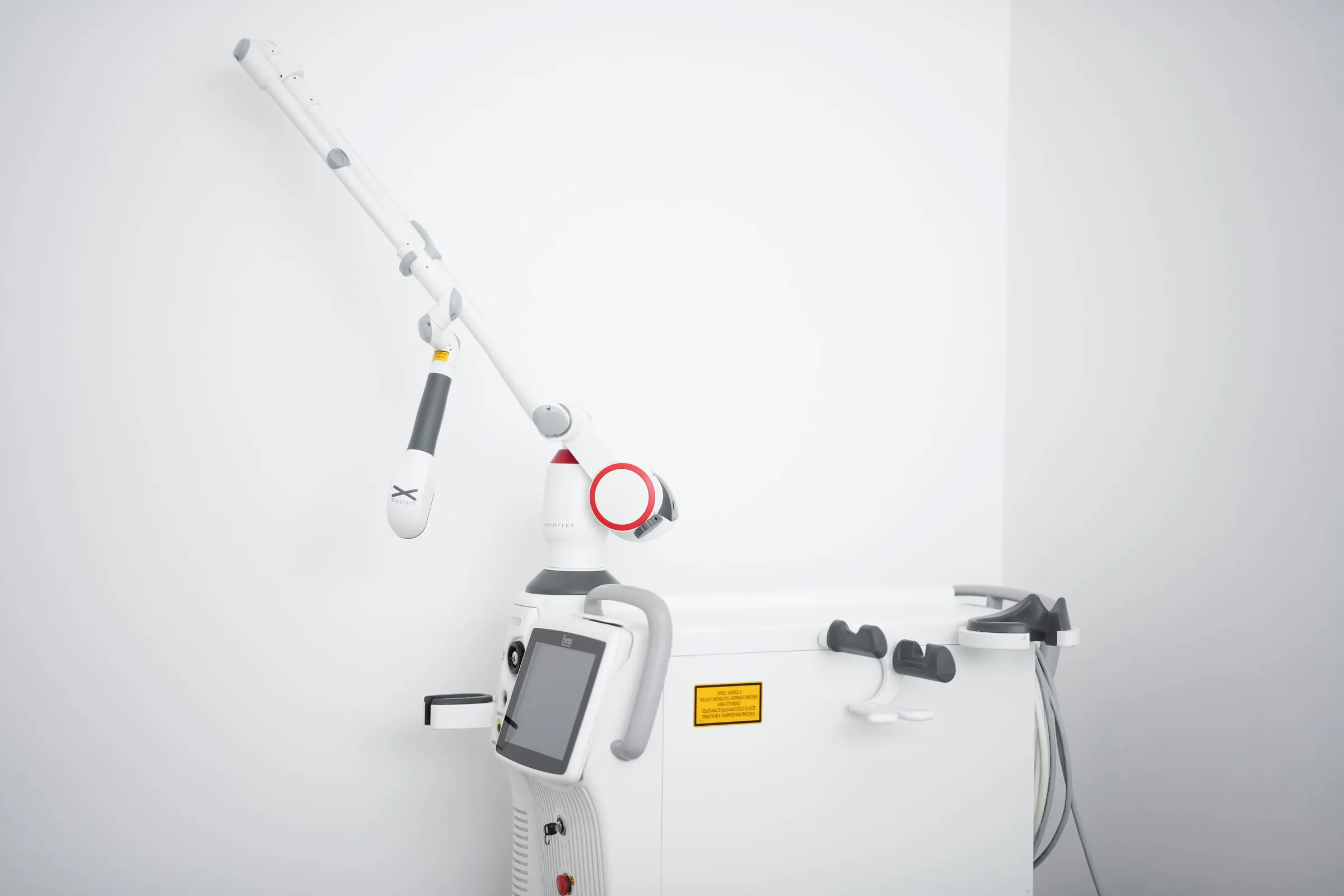
How well laser tattoo removal works depends on the colors, depth, and amount of pigment, the age of the tattoo, and whether it has been covered up or layered. At the examination we estimate the number of treatments needed and whether complete removal or partial lightening is possible.
Is this for me?
What determines the removal plan
The treatment plan depends on the colors, depth, and amount of pigment, the age of the tattoo, and whether it is a professional, amateur, covered-up, or multi-layered tattoo. We also assess its size, its location, and the condition of the skin after any earlier removal attempts.
Realistic expectations
What laser tattoo removal can and cannot do
During tattooing, pigment is placed by needle into the deeper layers of the skin. Its particles are large enough to stay in the tissue, which is why a tattoo is permanent. A Q-switched laser uses a very short pulse to break the pigment particles into smaller fragments, which the body then clears over time through the lymphatic system. That is why a tattoo fades gradually over a series of treatments.
The speed of breakdown differs between patients and between tattoos, so the plan is adjusted to how the pigment and the skin respond.
Colors, workmanship, and the age of the tattoo
Black and dark blue absorb the most laser energy and usually respond best. Green, light blue, and yellow are more demanding to remove and can require more treatments, and with some pigments complete removal is not possible.
Workmanship affects the outcome too. Professional tattoos usually contain more pigment placed deeper in the skin, so they can require more treatments than amateur ones. Older tattoos have often already partly faded and can be easier to remove than newer ones.
When complete removal is not realistic
For a share of tattoos, complete removal is not possible. Covered-up and multi-layered tattoos are especially demanding, because the skin contains more pigment than is visible on the surface. With those, the risk of burns, pigmentation changes, and scarring is also higher, so the treatments are performed more cautiously and at longer intervals.
For such tattoos, the goal can be partial lightening instead of complete removal. The tattoo can be faded to a level where it is less noticeable or better suited for covering with a new tattoo.
“Some tattoos can be removed almost completely, while for others the realistic goal is visible lightening. That depends on the colors, the depth and amount of pigment, and the way the tattoo responds to the first treatments.”
How it is performed
What the treatment looks like with us — two lasers in one visit
After the area is disinfected, the treatment is performed in two steps, with a fractional Er:YAG and a Q-switched laser. Throughout the procedure, eye protection with appropriate goggles is mandatory, regardless of the size of the tattoo.
- Number of treatments
- most often 2–10, depending on size, colors, and pigment depth
- Anesthesia
- Anesthetic cream and cooling throughout the treatment
- Recovery
- cream and a dressing for 2–3 days; sun protection for a month
- Performed by
- Ines Maletić, MD, and Mario Bartol, MD
Preparation with a fractional Er:YAG laser
The first step is preparing the skin with a fractional Er:YAG laser, which creates a series of microscopic channels in the surface layer of the skin. This allows the Q-switched laser to work more effectively and can reduce the total number of treatments needed.
The combination of fractional Er:YAG preparation and a Q-switched laser is described in the peer-reviewed professional literature, where it has been linked to more effective pigment breakdown and faster healing compared with using a Q-switched laser alone.
Pigment removal with a Q-switched laser
In the second step, the pigment is treated with a Q-switched laser with an extremely short pulse. The energy is transferred to the pigment before any significant heat spreads into the surrounding tissue. The handpiece and wavelength are chosen according to the color of the pigment, because different colors absorb different wavelengths.
Throughout the treatment, the skin is cooled with a device that directs cold air onto the treated area.
How many treatments are needed and how long the whole process takes
Most often between two and ten treatments are needed, at intervals of at least two to three months. That interval is needed so the skin can heal and the body can gradually clear the broken-down pigment particles. Shorter intervals do not speed up the process and can increase the risk of side effects.
Removing a larger, multicolored, or multi-layered tattoo can therefore take several months, and sometimes more than a year. An initial estimate is given at the examination, and after the first treatments the plan is adjusted to the skin’s reaction and the speed of pigment breakdown.
The technology behind the results
The lasers we work with
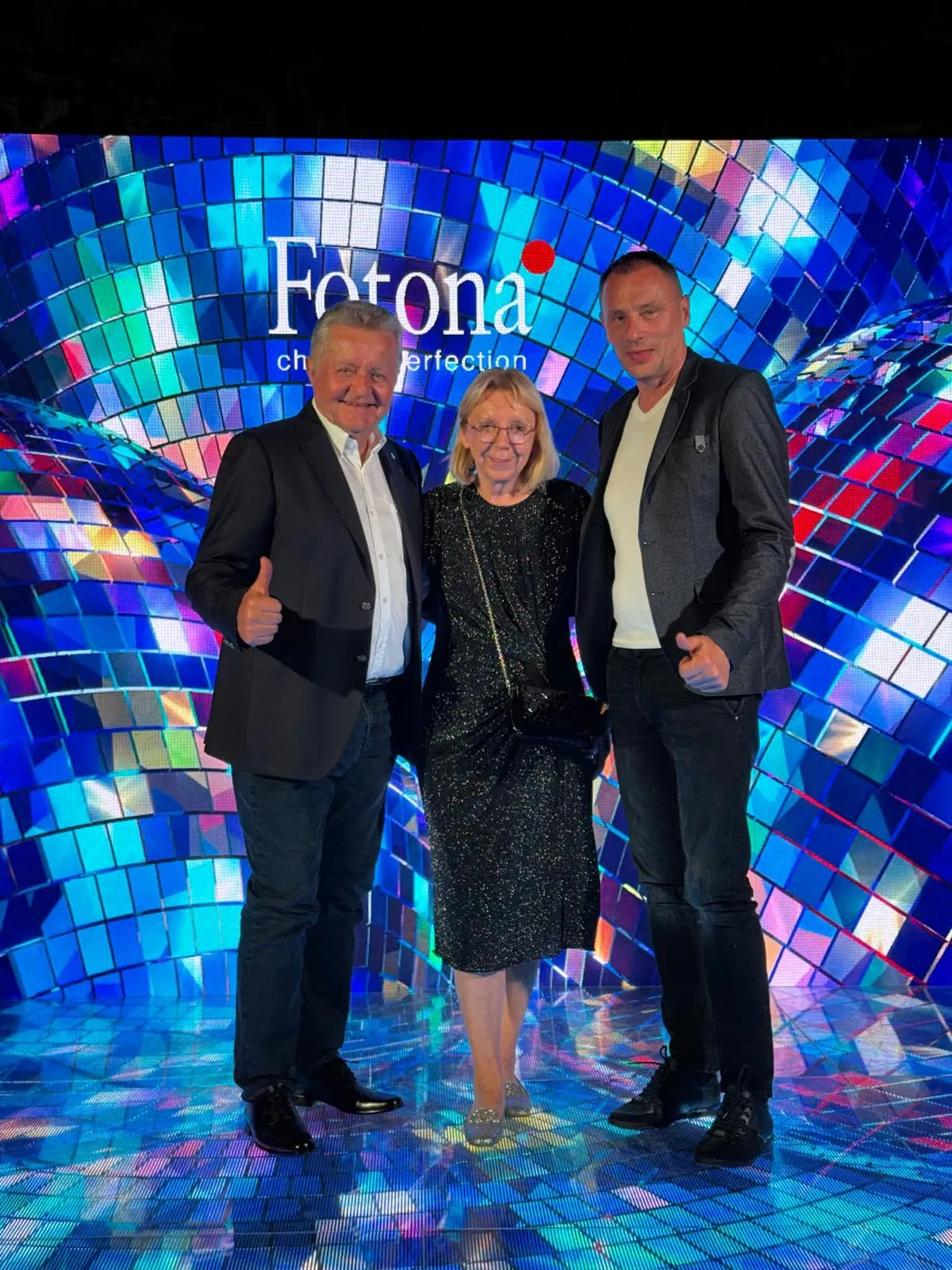
At Polyclinic Maletić we work exclusively with lasers made by Fotona, a cooperation that dates back to 2008, when we also became its education center. The device, though, is only one part — the outcome of a procedure is decided by the knowledge behind it.
Physicians from the United States, Canada, Australia, Dubai, Russia, Israel, Turkey, and other parts of the world come to our Polyclinic to learn about laser procedures and see how we work. In Daruvar, an education hall carries a live feed from the operating room, so learning happens on real clinical cases.
Our physicians — Ines Maletić, Duško Maletić, MD, MSc, and Mario Bartol — regularly take part in Fotona’s international meetings, which bring together experts in laser medicine. What they learn there, we apply in our work with patients.
For tattoo removal we use a fractional Er:YAG laser to prepare the skin and a Q-switched laser to break down the pigment.
- Education center since 2008
- Fotona Laser & Health Academy
- Live feed from the operating room
Why us
Why choose us for laser tattoo removal
Education center since 2008
In cooperation with the Fotona Laser & Health Academy, we train physicians from other countries in laser procedures.
Exclusively Fotona lasers
For this treatment we use a fractional Er:YAG laser and a Q-switched Fotona laser.
Er:YAG and Q-switched laser
The skin is first prepared with a fractional Er:YAG laser, then the pigment is treated with a Q-switched laser, which can reduce the number of treatments needed.
A protocol described in the professional literature
The combination of fractional Er:YAG preparation and a Q-switched laser is described in peer-reviewed professional papers.
Parameters matched to your tattoo
Wavelength, energy, and operating mode are adjusted to the colors, pigment depth, age, and the way the tattoo was made.
A test patch for permanent makeup
With cosmetic pigments, a small area is treated first, because some colors can darken under the laser.
An honest assessment of the possible result
Before the series, we assess whether complete removal is realistic or whether visible lightening of the tattoo is the goal.
A family polyclinic since 1998
Two generations of the Maletić family work at the Polyclinic today, in Zagreb and Daruvar.
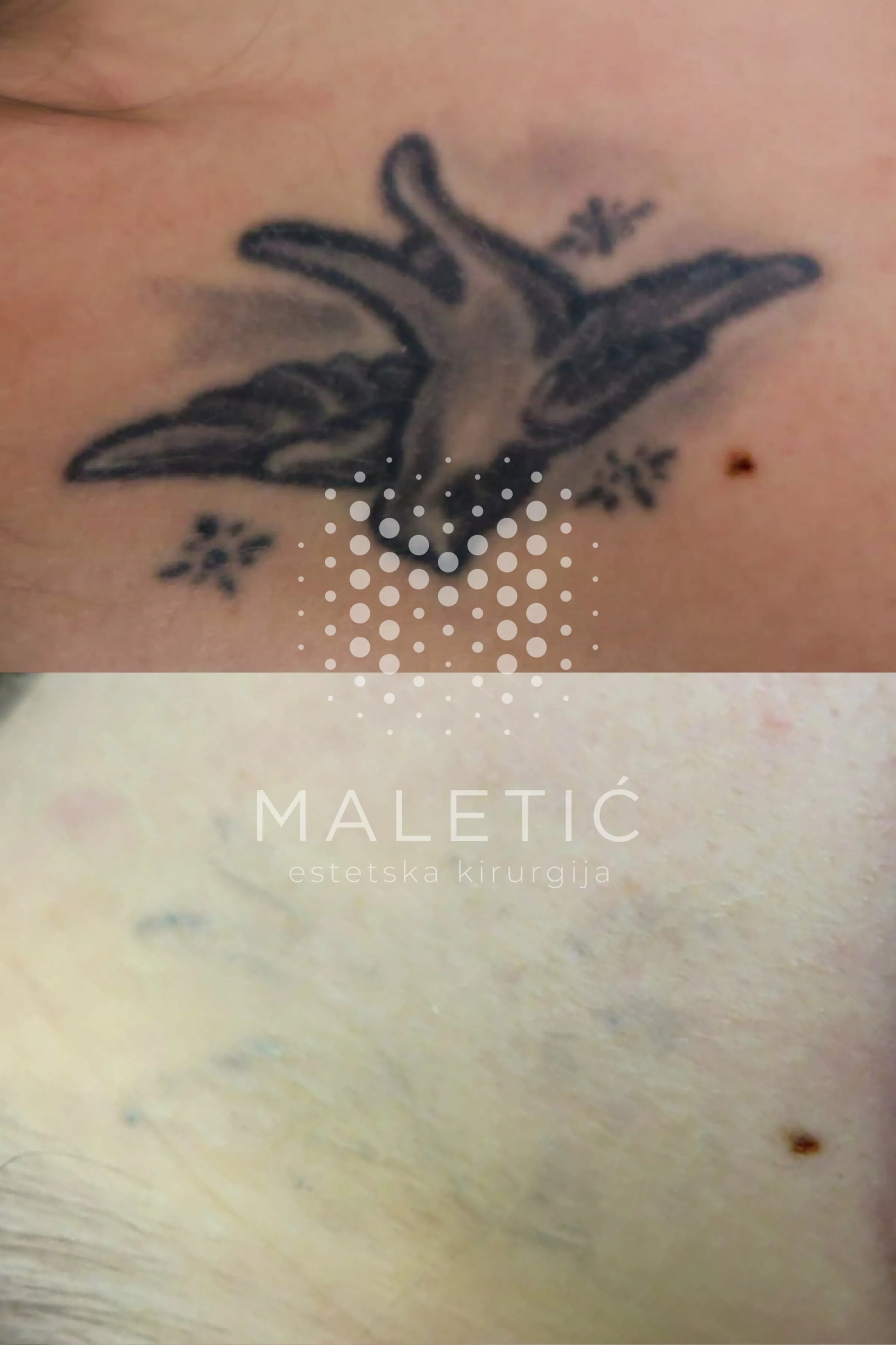
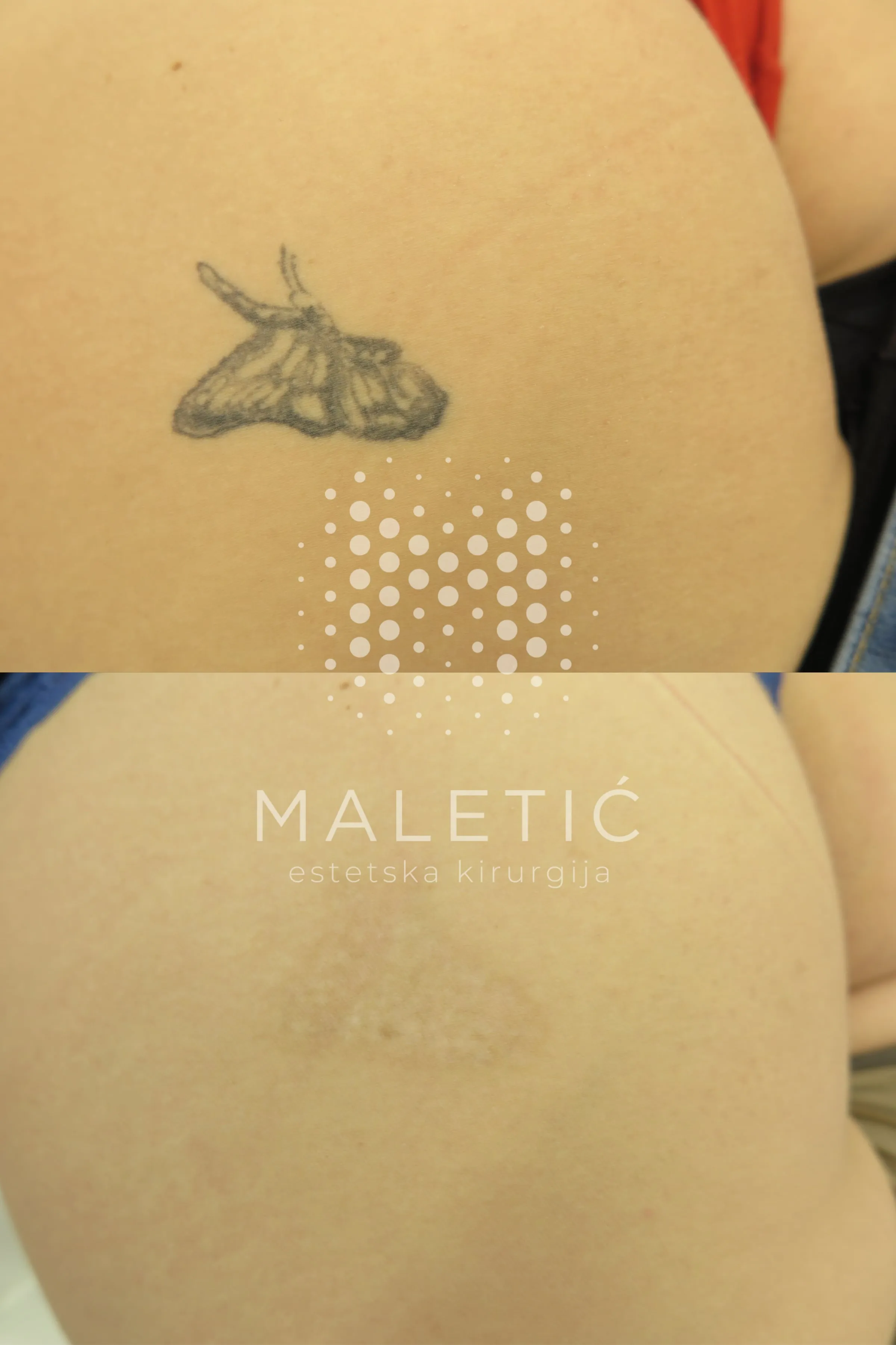
Real results
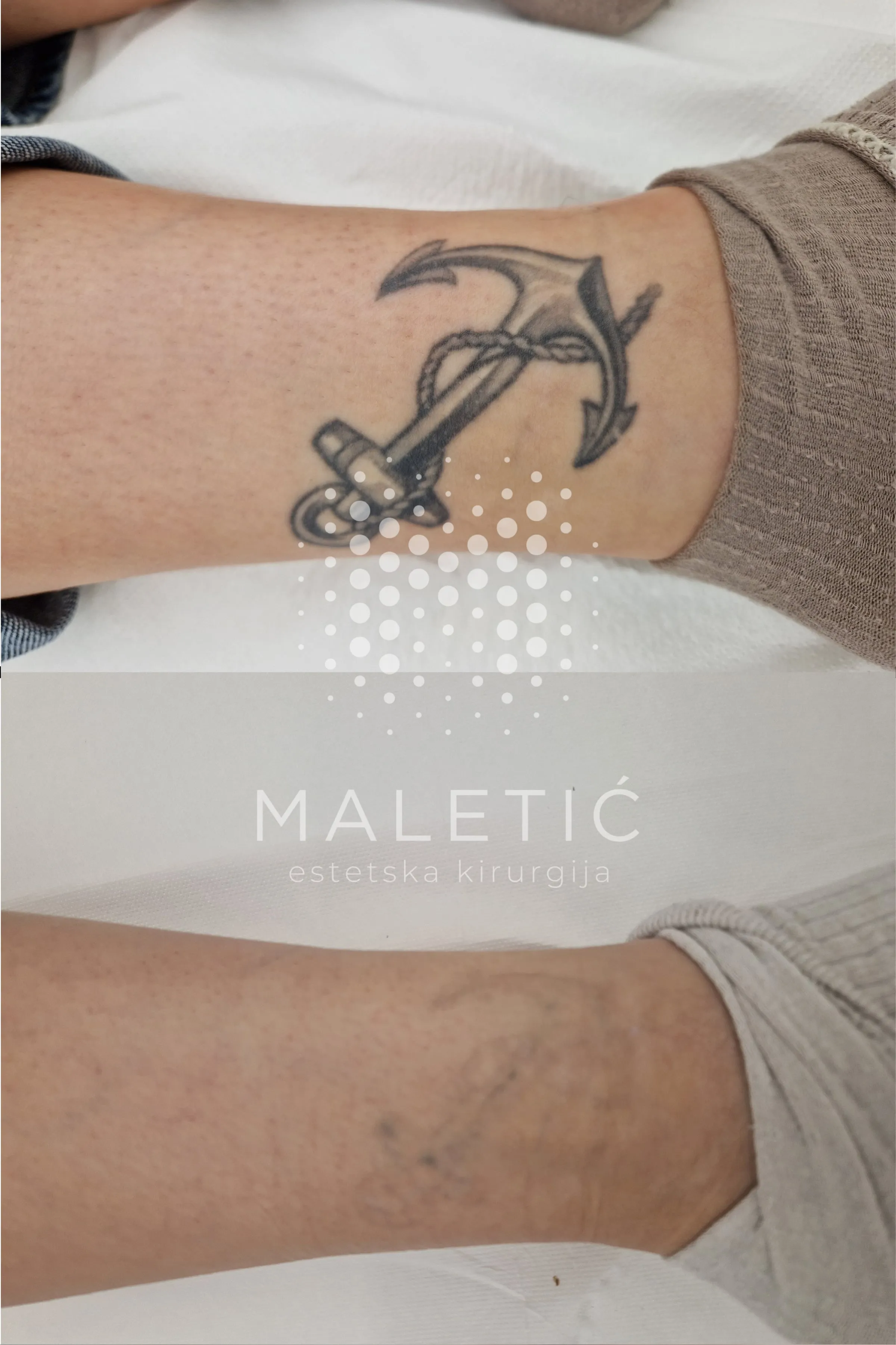
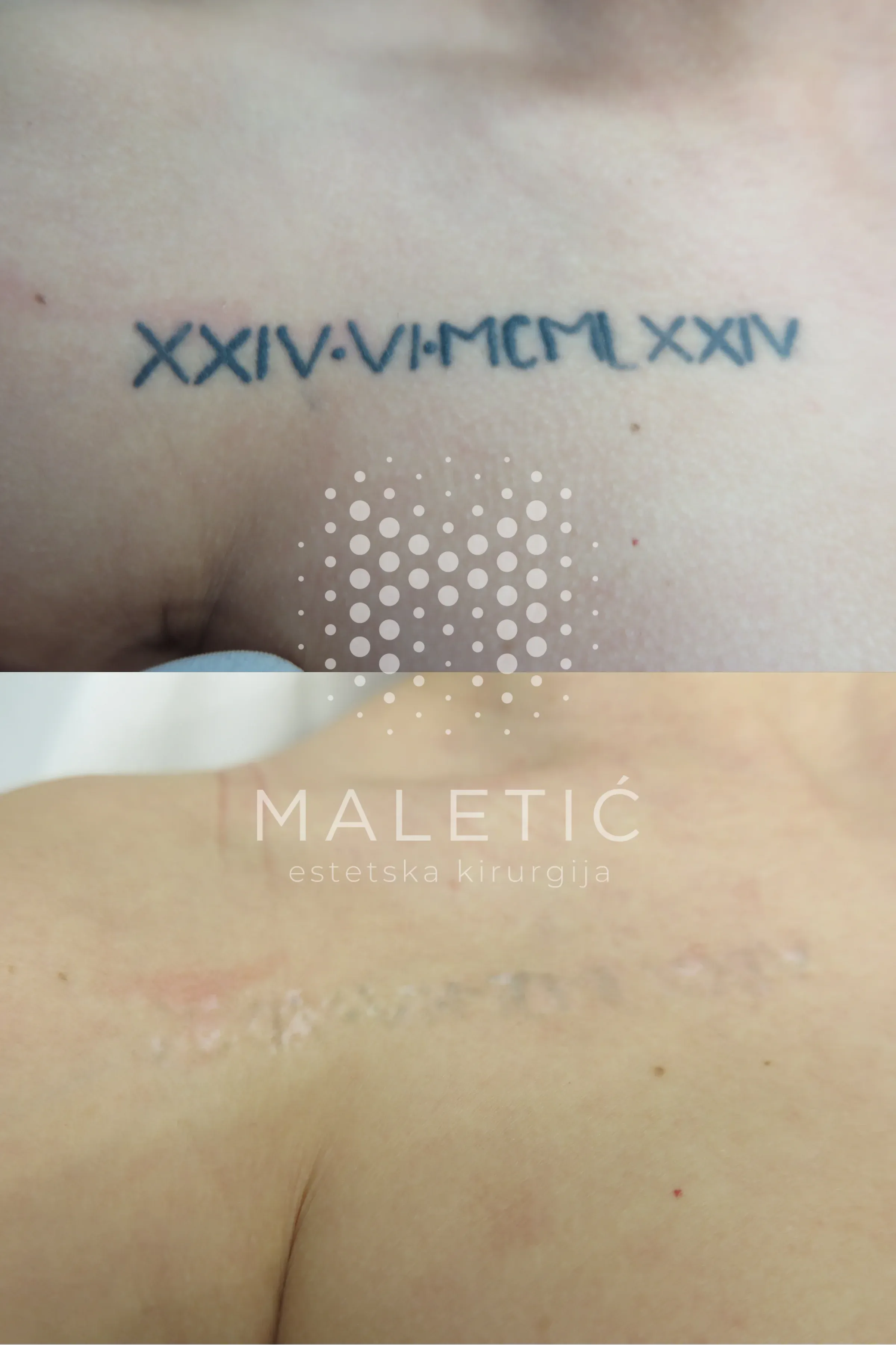
Before and after laser tattoo removal
We show our patients’ results discreetly and only with their consent.
A special case
Removing permanent makeup and micropigmentation
Permanent makeup on the eyebrows, lips, and eyeliner is also a form of tattoo, but the pigment is usually placed more shallowly and in smaller amounts. That can mean fewer treatments than a classic body tattoo — but the removal is approached with extra caution.
Why we start with a test patch
Cosmetic pigments often contain iron and titanium compounds. Under the laser they can react chemically and darken instead of lightening, especially with white, skin-toned, pink, and red shades. Because of this known reaction, a test patch is treated before the whole region.
“With permanent makeup and light pigments, we start with a test patch, because some colors can react unpredictably and darken. It is safer to assess the reaction on a small area before treating the whole region.”
The treatment experience
Does it hurt, and what the skin looks like afterward
Laser tattoo removal can be uncomfortable. The sensation is often described as the snap of a stretched rubber band against the skin, and the discomfort can be more pronounced in areas with thinner skin and close to bone.
“Tattoo removal is not completely painless, but the treatments are short. We cool the skin as we work, and adjust the energy and pace to its reaction and to what you feel.”
After the treatment, the area is covered with Bepanthen cream and protected with a dressing. The care is repeated several times a day over the next two to three days. Redness, swelling, small crusts, and the occasional blister can appear as part of the skin’s expected reaction. The treated area should be protected from the sun for the following month.
Honest about the risks
Risks, and when the treatment should be postponed
Possible side effects include lightening or darkening of the treated skin, a change in its texture, scarring, pinpoint bleeding, and infection, especially if the recommended aftercare is not followed. Pigmentation changes usually fade over several months.
The treatment is postponed or not performed on a fresh tattoo, on tanned or inflamed skin, and in people prone to keloids or with earlier healing difficulties. You should also tell the physician about any previous removal attempts, because they can change the pigment, the condition of the skin, and the plan for further treatments.
Who we are
Who performs the treatment, and where
The treatment in Zagreb and Daruvar is performed by the physicians of the Polyclinic Maletić Laser Center. The parameters are set according to the colors, pigment depth, the condition of the skin, and the response to previous treatments.
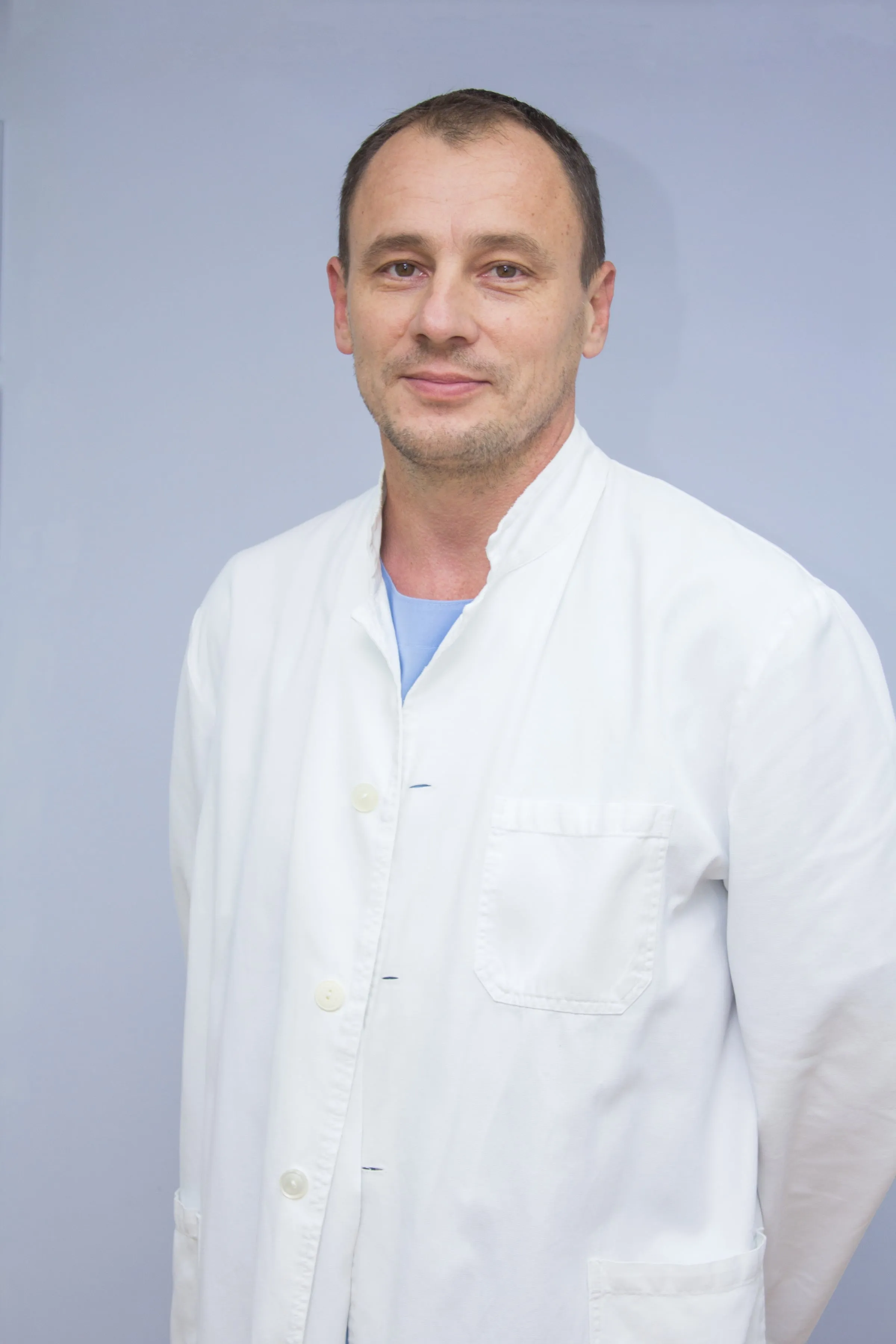
Ines Maletić, MD, is a co-founder of the Polyclinic and one of the two physicians who opened it in Daruvar in 1998. Alongside her specialization in anesthesiology, resuscitation, and intensive care and further training in the Czech Republic and Austria, she is an Expert Clinical Lecturer at the Laser & Health Academy. She has performed laser treatments, among them laser tattoo removal, since the Laser Center began its work.

Mario Bartol, MD, is a specialist in surgery and a subspecialist in traumatology and orthopedics, a member of the Polyclinic’s professional team since 2008, and a permanent court expert witness. He performed the first laser vein surgery in Croatia, and alongside laser surgery he also performs laser treatments, including laser tattoo removal.
Since 2008, the Polyclinic has served as an education center in cooperation with the Fotona Laser & Health Academy, where physicians from other countries are trained. Throughout the series, the same team follows the skin’s reaction and the changes in the pigment so the parameters can be adjusted for each following visit. The nurses also take part in the aftercare instructions.
Meet the whole teamAfter the series
What the end of the process looks like
The final result is not assessed immediately after the last treatment. Pigment breakdown and clearance continue over the following months. Differences in skin tone that remain after the series ends can gradually soften over six to twelve months.
Laser removal cannot guarantee that the skin will look exactly like the surrounding skin once the series is over. In a share of patients, a slight difference in tone or texture can remain permanently.
Price
The price of laser tattoo removal
The price per treatment for laser tattoo removal is listed in the table below and depends on the size of the tattoo and the colors being removed. Since a series is needed, after the examination you receive an estimate of the number of visits and the total cost. The full price list is available on the Prices page.
At the examination we assess whether complete removal is realistic or whether the expected result is partial lightening of the tattoo. Based on that assessment, the approximate number of treatments and the plan for the series are set.
-
Laser tattoo removal (includes preparation with an Er:YAG laser and removal with a Q-switched laser)
The price is per treatment and depends on the size of the tattoo and the colors being removed. How many treatments are needed is assessed at the examination.
See the full price listPatient reviews
What our patients say
Reviews taken from our Google Business profiles, Zagreb and Daruvar, translated from Croatian.
★★★★★
“Since high school I watched the double chin I inherited from my father become more and more pronounced — and 15 years later, the double chin is gone. A big thank you to Dr. Maletić and the whole team for fulfilling my wish. The procedure was painless, as was the recovery, and the results were visible within a few days. The whole team was extremely kind and cheerful, and the atmosphere very pleasant. I left the polyclinic satisfied, and when, two days after the swelling went down, I saw that the double chin was gone, my satisfaction knew no bounds. I warmly recommend Polyclinic Maletić.”
★★★★★
“My experience with breast augmentation with Dr. Maletić in Daruvar was excellent. I am extremely satisfied with the result. All the nurses are very kind and professional. I absolutely recommend them.”
★★★★★
“All praise for Polyclinic Maletić in Daruvar! I had lip augmentation with fillers and I am very satisfied with the result. I would especially like to praise Dr. Mario Bartol, who is extremely kind, professional, and has a wonderful approach to patients, which made me feel comfortable and safe throughout the treatment. All the nurses are also very kind, helpful, and professional. I warmly recommend them to anyone thinking about aesthetic treatments!”
★★★★★
“Laser acne treatment is the only treatment that has helped me, and I would not choose any other facial treatment over it. Dr. Ines is one of the kindest people I have ever met and always has useful advice. Kind staff and top service — I warmly recommend her to everyone!”
★★★★★
“I had a wart on my face removed with a laser. Very professional service with excellent results. The wart was quite large, but after just one treatment it was gone. All recommendations!”
★★★★★
“I recently had a varicose vein procedure. All praise to the whole team.”
★★★★★
“Blepharoplasty, 4D laser, and double chin. Perfect. All recommendations!”
★★★★★
“The best team of physicians, extremely professional and kind. I have been loyal to Polyclinic Maletić for more than 10 years and I am always satisfied with the results. Thank you.”
★★★★★
“I can only recommend Dr. Maletić’s practice, both in Daruvar and in Zagreb — and I have had several procedures there — because I felt very comfortable and in expert hands!”
★★★★★
“An extremely professional, pleasant, and expert team that knows and loves its work. It is a good feeling to be in the hands of some of the greatest experts in their field, who provide the kind of service I would wish for and recommend to anyone.”
Questions and answers
Frequently asked questions
How many treatments does tattoo removal take?
Most often between two and ten treatments are needed. The number depends on the size, colors, pigment depth, and age of the tattoo, and on whether it was done professionally or by an amateur. An initial estimate is given at the examination and becomes more precise after the first treatments, once we see how quickly the pigment is breaking down and clearing.
Does laser tattoo removal hurt?
Before treatment, anesthetic cream is applied to the tattooed area to make the procedure as painless as possible. During the treatment you may feel a discomfort similar to the snap of a stretched rubber band against the skin. The treatments are short, the skin is cooled with a stream of cold air, and the energy and pace of work are adjusted to the skin’s reaction and to what you feel.
Does laser tattoo removal leave a scar?
A scar is possible, but with correctly chosen parameters and proper aftercare it is rare. More common is temporary lightening or darkening of the treated skin, which usually fades over several months. The risk is higher with covered-up and multi-layered tattoos, because there is more pigment in the skin.
Can colored tattoos be removed?
Black and dark blue respond best to the laser, while green, light blue, and yellow are more demanding and may require more treatments. With some colors, complete removal is not possible, so the expected result is assessed according to the composition and combination of the pigments.
How long should I wait after getting a tattoo?
Fresh tattoos are not treated with a laser. The skin needs to recover fully and the pigment to stabilize, which as a rule means six to twelve months after tattooing.
Can permanent makeup on the eyebrows or lips be removed?
Permanent makeup is also a form of tattoo, but its removal is approached with extra caution. Under the laser, eyebrow and lip pigments can change color unpredictably or darken, so a small test patch is treated first. The further plan is set according to how the pigment reacts.
How long does the whole removal process take?
At least two to three months have to pass between treatments so the skin can heal and the body can gradually clear the broken-down pigment. Removing a larger or multicolored tattoo can therefore take several months, and sometimes more than a year.