
Since 1998 · Zagreb & Daruvar
Scalp Fat Transfer in Croatia
A crown showing more and more clearly through the hair, a part line that keeps widening, and shedding that continues no matter what you have tried so far. Transferring your own fat tissue strengthens weakened follicles and the scalp around them — but not follicles that are already gone, and we will tell you that before you decide on anything.
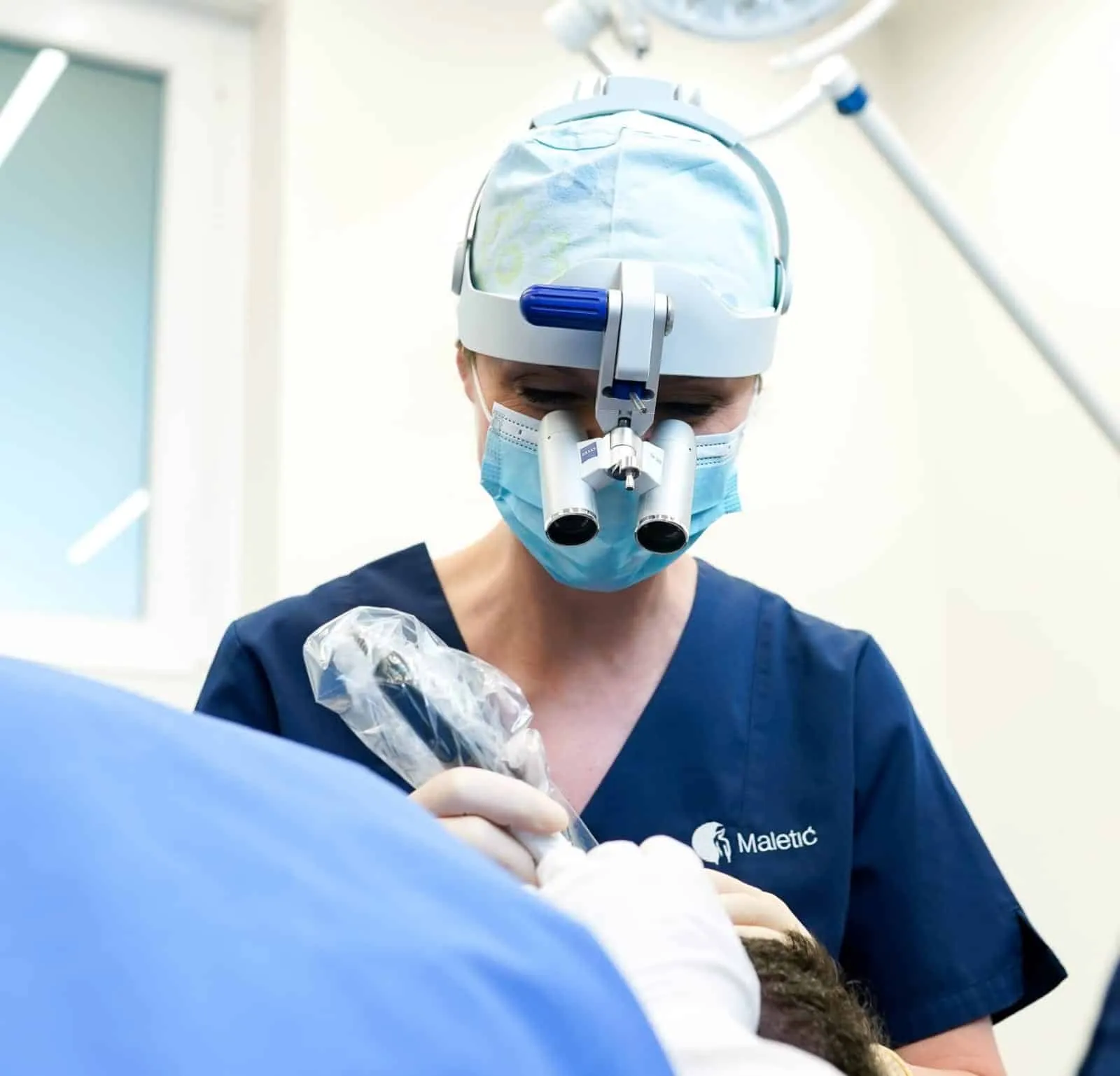
When hair starts falling out in earnest, a few clicks put a whole row of treatments in front of you, all with very similar promises — and nowhere does it say which one is yours. Here they are all performed under one roof, from PRP and scalp mesotherapy to laser treatment, fat transfer, and hair transplantation, so we have no reason to steer you toward a single solution. In milder, early forms the right answer is most often PRP; with more pronounced weakening and shedding, fat transfer; and where there are no follicles left, only transplantation. Which is the right choice for you is read from the scalp findings, not from a description of the problem.
Is this for me?
What fat transfer to the scalp is
Fat transfer to the scalp is a procedure in which, under local anesthesia, a small amount of your own fat tissue is taken, processed, and injected into areas of the scalp where the hair is weakening or thinning. The goal is not to fill a bald spot as in hair transplantation, but to strengthen the follicles and the hair root, so the hair grows stronger and sheds less.
We use only your own tissue, with no preparation supplied by a laboratory. This distinguishes the procedure from similarly named treatments that use ready-made preparations.
Why fat tissue, of all things
Fat tissue contains stem cells that regenerate damaged tissue. It has anti-inflammatory and anti-androgenic properties. It also acts on scalp blood vessels and improves circulation. In addition, introducing fat thickens the subcutaneous layer of the scalp, which is generally thinned in androgenetic alopecia.
With this procedure, then, we do not act directly on the hair, but on the ground it grows from.
Why this is not the same as PRP
The two procedures are often confused, because on many websites PRP is called stem cell therapy — and it is not the same thing.
With PRP, a tube of your blood is taken and centrifuged to isolate growth factors, which are then injected into the scalp. With scalp fat transfer, the tissue introduced is a considerably richer and longer-lasting source of regenerative cells, but tissue must also be harvested from the body.
These procedures therefore follow one another rather than being opposing options, and can often be combined. Read more about PRP treatment for hair and scalp on its dedicated page.
The right indication
Who it helps — and who it does not
In milder, early forms of alopecia we most often recommend PRP. In advanced cases of weakening and shedding, when the scalp has become a poorer environment for the follicle, we recommend fat transfer. That decision is not made from a description of the problem over the phone, but after an examination with a trichoscopic camera.
“Before deciding which treatment to apply, we examine the scalp in detail, because its condition determines which treatment would be the better choice.” — Ana Maletić, MD, PhD
While the follicle still exists
That is the one hard limit of this treatment, and we talk about it at the start of the conversation. Transferred fat tissue can stimulate a follicle that is weakened, thinned, or dormant. It cannot create a follicle that no longer exists.
If analysis shows that an area no longer has follicles, this treatment has nothing to stimulate there and we will not recommend it. For such areas, we discuss hair transplantation, which is an entirely different solution.
What this treatment cannot do
All hair-strengthening therapies can slow and reduce hair loss, but a medicine that would prevent or cure baldness has not yet been found. For hormonally driven baldness, the gold standard remains FUE hair transplantation, the only method that gives a lasting, natural result where the hair is already gone.
“With this treatment we can strengthen what you still have, but I cannot promise to stop baldness, because no one has yet found a cure for it. Whoever promises you that is promising something they cannot know.” — Ana Maletić, MD, PhD
That is why we do not present this treatment as a replacement for transplantation, but as support for the scalp and for what still grows on it.
How it is performed
How we perform the procedure
- Anesthesia
- local
- Number of treatments
- one procedure, repeated if needed
- Diagnostics
- trichoscopic scalp analysis before any decision on treatment
- Performed by
- Ana Maletić, MD, PhD
Harvesting the fat tissue
We perform the procedure under local anesthesia, in an operating room. The needed amount of fat tissue is taken with special cannulas about two millimeters in diameter, most often from the abdominal wall or from another region where there is a surplus.
It is a small amount and the cannulas are thin, which sets this apart from liposuction, whose goal is body contouring. Here the only goal is to obtain material.
Processing and injection into the scalp
The harvested fat tissue is then prepared and processed in devices intended for that purpose, so it retains as much regenerative potential as possible. The processed tissue is injected into the areas of the scalp where the hair is shedding or weakened.
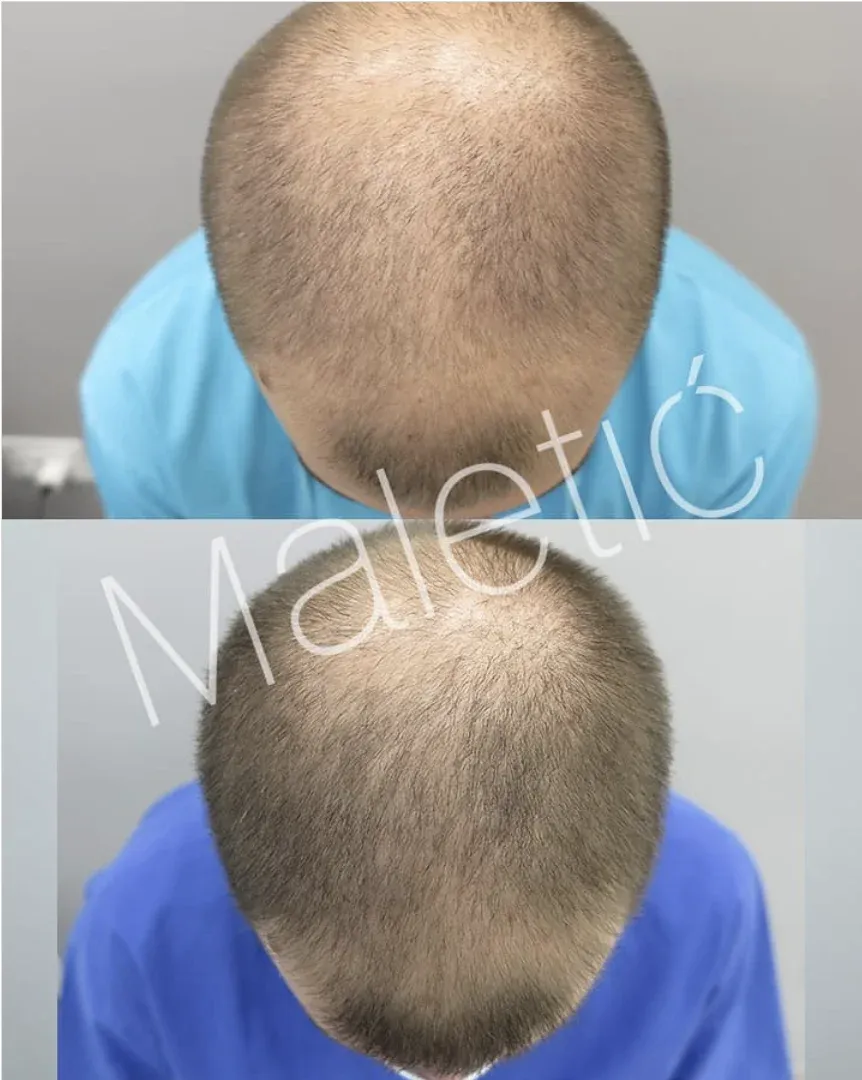
All of this takes place in one procedure on the same day. You receive written aftercare instructions, and at follow-up we analyse the result by comparing photographs taken before and after treatment.
Open about the evidence
What the profession actually says about this method
We write this section because pages about this method rarely cite a single source, and success percentages are quoted without support.
Reviews of randomized clinical trials show that preparations made from your own fat tissue increase hair density and hair count in androgenetic alopecia, and that side effects are mild and transient, most often redness. A systematic review from 2024, covering twelve randomized trials and more than five hundred participants, concluded that such therapies are safe and effective in improving hair density.
The method has its strongest effect in scarring alopecia and generally where the scalp itself is a poor environment for follicles. In androgenetic alopecia, it strengthens follicles and reduces hair loss, but does not replace hair transplantation.
That is the state of things as it is, and we do not dress it up. If someone promises you an exact success percentage, they are promising something the profession does not yet know.
Combining it with PRP and with hair transplantation
In some patients these techniques are combined. PRP and fat transfer can be performed in the same session, and both can, when needed, be combined with hair transplantation — either before it, or as support for the scalp after it.
The findings determine which methods are combined and in what order. Alongside these two treatments, we offer laser hair growth treatment, mesotherapy, polynucleotides, scalp fillers, hair transplantation and scalp diagnostics, so the protocol is based on what you need rather than the only treatment we offer.
A realistic expectation
What the outcome looks like and when it settles
The scalp changes slowly because treatment acts on the hair growth cycle, which takes months. Increased hair density in the treated area can be measured as early as three months after the procedure and is clearer after six months, while changes in hair thickness are slower and vary between individuals. The final picture therefore emerges over the first year, not at the first follow-up.
In everyday life, the benefit is small and concrete: a crown that shows less through the hair under overhead lighting.
The result is denser, stronger hair where there already is hair — not a new scalp.
Why us
Why choose us for a scalp fat transfer
ABHRS Diplomate
Dr. Ana Maletić is the only physician in Croatia with this title, one of 260 physicians worldwide
The only ISHRS Fellow from Croatia
the most distinguished membership level in the international hair transplantation society
A trichoscopic exam before every decision
we do not recommend this treatment generically, but only once we have seen the state of the scalp
All diagnostic and therapeutic methods in-house
we develop a separate protocol for each patient
Your own tissue, no purchased preparations
only your own fat tissue is used, harvested and returned in the same procedure
Performed in an operating room
4 operating rooms with air-recuperation systems
Photographic documentation
we measure and compare progress — we do not judge it by impression
Who we are
Who performs the procedure
The procedure is performed by Ana Maletić, MD, PhD, a specialist in plastic, reconstructive and aesthetic surgery and Head of the Hair Center. She is an ABHRS Diplomate, the only physician in Croatia with this title and one of 260 worldwide. She is the only full ISHRS member from Croatia and also holds ISHRS Fellow status.
The decision to recommend PRP, fat transfer, hair transplantation or another scalp treatment is made by a physician who uses all these methods and knows when each is most appropriate, so there is no reason to direct you towards the only method she can perform.
The polyclinic has operated as a family institution since 1998, and two generations of the same family work here today. Training in hair transplantation began in 1996, two years before the Polyclinic opened.
Meet the whole team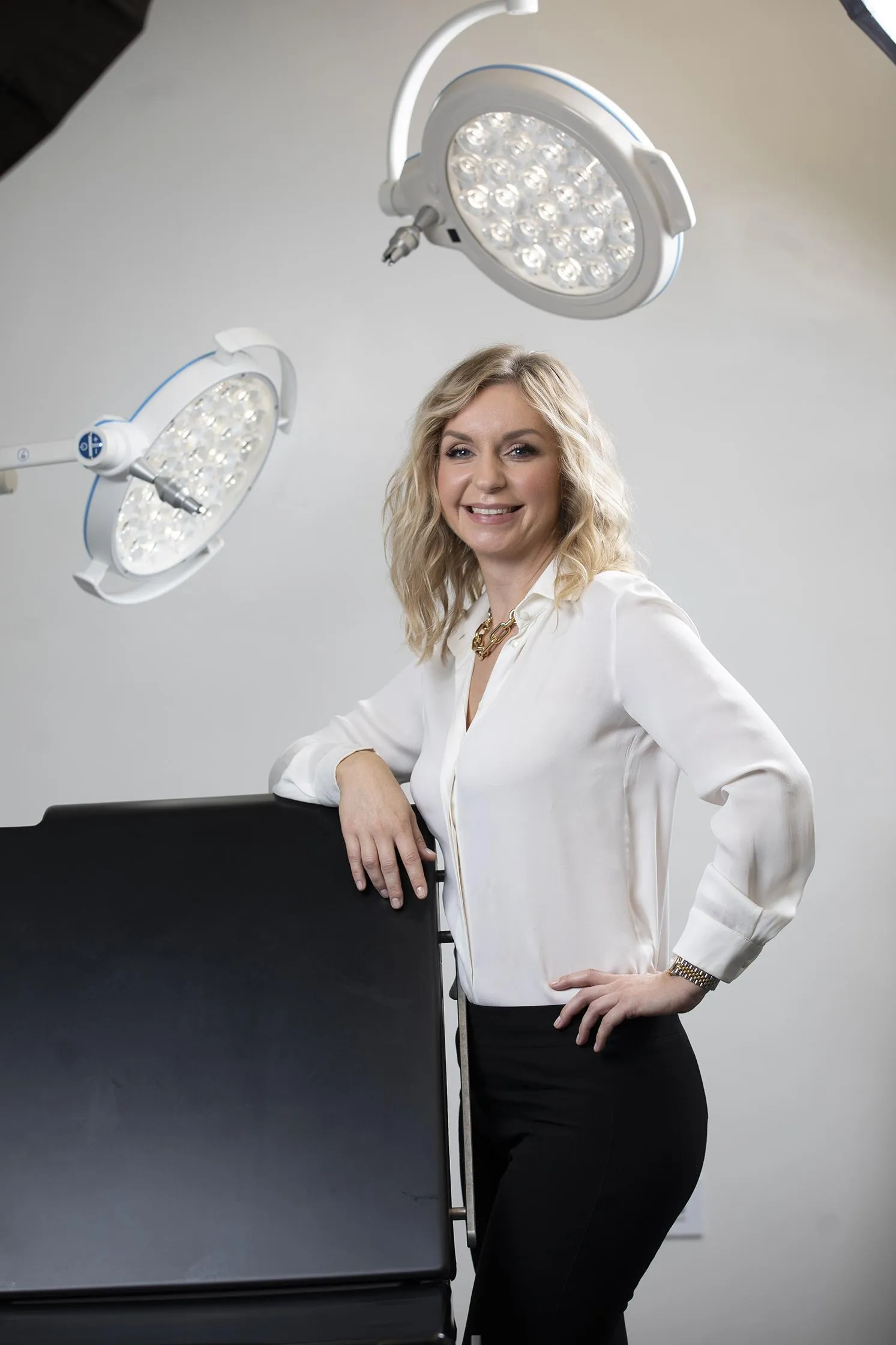
Watch
See what a scalp analysis looks like
TrichoLab Studio: precise scalp diagnostics
Price
Price and the first step
The price of fat transfer to the scalp is listed in the table below. The price of the trichoscopic scalp analysis is listed in the table below. The price of the PRP treatment is listed in the price list — we mention it here because for some people it, and not this procedure, is the correct answer.
At the consultation, we recommend therapy after a detailed examination. We perform the procedure in Zagreb and Daruvar. Prices for all procedures are available in the price list, and other hair and scalp treatments in the Hair Center.
If you are not sure whether this treatment is the right decision for you, that is exactly the reason to come. We will tell you even when the answer is no.
-
Fat transfer to the scalp
-
Trichoscopic scalp analysis (TrichoLAB FotoFinder)
-
PRP hair loss treatment (platelet-rich plasma)
Patient reviews
What our patients say
Reviews taken from our Google Business profiles, Zagreb and Daruvar, translated from Croatian.
★★★★★
“A month ago I had an FUE hair transplant with Dr. Ana Maletić. From the professional side, my hair was done perfectly. I was lucky that my hair did not shed and started growing right away. Dr. Maletić’s expertise is obvious and makes her, without question, the leader in this field in Croatia. But my real satisfaction and gratitude lie in how the Polyclinic treats its patients. They are highly professional, yet approachable and compassionate at the same time. Nurses Matea M. and Valerija left a positive mark on my whole experience and made it more pleasant and calming. To anyone in Croatia looking for a hair transplant, I warmly recommend this Polyclinic. You will get top results and excellent care!”
★★★★★
“I had a hair transplant and I am more than satisfied with this extraordinary, exceptionally professional, life-changing procedure! A big thank you to Dr. Ana, Danijela, Romana, and everyone else who took part in this wonderful experience. My sincerest thanks! Marko S.”
★★★★★
“All praise to the entire staff of the polyclinic. I have already had my second PRP scalp treatment and I can only commend the whole team. I would especially like to praise the doctor for her exceptional expertise, patience, and warm approach. From the first examination to the procedure itself I felt safe and informed. The whole course of treatment was professional and well organized — I received clear and detailed instructions before, during, and after the procedure, which gave me extra confidence. The procedure itself was stress-free, with every step explained along the way, which meant a lot to me. The atmosphere is pleasant and relaxing, and the staff exceptionally kind and helpful. I am very satisfied with the results so far and look forward to further progress. I definitely recommend it to anyone considering a PRP scalp treatment — you are in safe and expert hands!”
★★★★★
“A few years ago I saw Dr. Ana Maletić for a facial hair correction using the FUE method, which made my beard somewhat denser. The results are fantastic — the work was done with such dedication and care. From the first meeting at the polyclinic she radiated confidence and knowledge of her work, along with a readiness and kindness to answer every question I had. All recommendations for Dr. Ana and her entire professional and friendly team.”
★★★★★
“I have been their patient and admirer for years. They have always known how to make my mom and me feel comfortable and welcome. My mom had a neck lift six years ago, and today I came in for PRP for hair growth. I cannot recommend them enough. Thank you, Ana!”
★★★★★
“I am very satisfied with Dr. Maletić’s results, from the beginning to the end of the hair transplant process. Five months after the procedure my hair looks phenomenal. The results I got, considering the number of grafts transplanted, pleasantly surprised me when compared with other clinics outside Croatia. As for the price, there is no big difference compared to clinics abroad, while the quality and expertise are on the level of top clinics. A big plus is that I did not have to travel outside the country, which made the whole process far less stressful for me.”
★★★★★
“I have rarely experienced such a professional, coordinated, and harmonious team. The atmosphere during the hair transplant was so pleasant that they even treated me to the occasional musical number. That relaxed atmosphere made the boredom of the procedure easier to bear. Although I do wonder whether some of you might be better off on a stage than in an operating room. Once again, a big thank you — I am already looking forward to the results in a few months!”
★★★★★
“A great experience, team, and final result. In short, I had an eyebrow transplant. Everything went exactly as Dr. Ana Maletić explained. The whole team was very kind and professional from start to finish, and I am now at peace because I finally have eyebrows. They look very natural, and the density is just as it should be. All recommendations!”
★★★★★
“A more than positive experience at Polyclinic Maletić, both in Zagreb and in Daruvar. I had a hair transplant and I am very satisfied with the approach and the procedure. I recommend it to everyone, especially to women who, like me, lost their hair after an illness. Once again, thank you to the kind team, and especially to Dr. Ana Maletić.”
★★★★★
“I just had a hair transplant. I am satisfied. Well done to Dr. Duško Maletić and the team in Daruvar. They are kind, professional, and do quality work. I recommend them.”
Questions and answers
Frequently asked questions
Is fat transfer the same thing as PRP?
No, although the two terms are constantly mixed up. With PRP, a tube of your blood is drawn, growth factors are separated from it, and they are injected into the scalp. With fat transfer, your own fat tissue is delivered into the scalp — a considerably richer source of regenerative cells that also thickens the thinned subcutaneous layer. In some patients the two procedures are combined, but only once the scalp findings are in.
Do I have to undergo liposuction for my hair?
Not in the sense liposuction is usually imagined. A small amount of fat tissue is taken, with thin cannulas and under local anesthesia, most often from the abdominal wall or another region where there is a surplus. This is not body contouring but harvesting material, and it happens in the same procedure in which the tissue is returned to the scalp.
Does the procedure hurt?
The procedure is performed under local anesthesia and is not painful. Only the initial injection of local anesthetic is uncomfortable. Afterwards, mild tenderness and bruising may occur at the fat harvest site and on the scalp. You receive written instructions on what to do and which precautions to follow.
How many treatments does it take, and is it repeated?
It is usually a single procedure that can be repeated if needed. Unlike PRP, which is most often performed three times a year, a series is not planned in advance. The decision to repeat treatment is made at follow-up based on scalp analysis rather than impressions.
When are the results visible?
Not immediately. The treatment stimulates follicles, so its effect is monitored over months. We therefore take photographs before the procedure to allow comparison afterwards.
Does it work equally in women and in men?
Yes, everything described applies equally to women and men. For some women with diffuse thinning across the entire scalp, a hair transplant is not an option, because there is no safe donor area to take from, so regenerative treatments are one of the few solutions that remain available to them.
Does it make sense if my crown is already bald?
Where there are no follicles left, there is nothing to stimulate — and we will tell you that openly. This treatment strengthens what still exists, while for areas where hair is gone there is hair transplantation. That is exactly why we start with a scalp analysis, because it shows whether there is anything to work with.