
Since 1998 · Zagreb and Daruvar, Croatia
Body Surgery in Zagreb and Daruvar
Changes on the abdomen, hips, upper arms and thighs can come from localized fat tissue, excess skin, or a combination of the two. During the examination we assess the amount of fat tissue, the elasticity of the skin, the condition of the abdominal wall — and whether surgery is the right step at this moment.
Localized fat tissue, excess skin and a weakened abdominal wall can look alike, yet they call for different procedures. The examination assesses the amount and position of the fat tissue, the elasticity of the skin, the stability of your body weight and the condition of the abdominal wall. The findings then determine the right method — and whether to operate now or wait.
Is this for me?
Reasons to come in for an examination
The reasons usually fall into three groups, which often overlap.
- Localized deposits of fat tissue. Fat can persist on the abdomen, hips, thighs or upper arms despite a sensible diet and regular exercise. Where it settles is largely inherited.
- Excess skin after pregnancy or weight loss. After prolonged stretching, the skin may not fully adapt to the body’s reduced volume — and no amount of exercise can shorten it. The excess is often most visible on the abdomen, upper arms and inner thighs.
- Symptoms that call for a medical workup. Heaviness and swelling of the legs with visible varicose veins, and recurring inflammation in the tailbone area, are medical indications, not aesthetic ones.
All three groups are a valid reason to come in for an examination. That, however, does not mean surgery is necessary.
Honesty first
Fat tissue, skin, or both
The difference between fat tissue and excess skin determines the treatment plan. The findings can look similar, but they require different procedures, a different extent of surgery and a different recovery.
During the examination we assess the amount of fat tissue, the elasticity of the skin and the condition of the abdominal wall. The method follows from those findings.
| Procedure | What it removes | Area | Scar | When it is not the right choice |
|---|---|---|---|---|
| Liposuction | fat tissue; it does not shorten the skin | abdomen and waist, hips, thighs and calves, buttocks, upper arms | tiny incisions | when the real problem is overall body weight, or when the skin has lost its elasticity |
| Tummy tuck | excess abdominal skin, along with the fat tissue attached to it | the lower abdomen, with reconstruction of the abdominal wall where needed | permanent, placed low on the lower abdomen | when you still plan to lose significant weight or become pregnant, or when the main cause is fat tissue inside the abdominal cavity |
| Skin tightening | excess skin of the upper arms and thighs | upper arms (brachioplasty) and thighs (thigh lift) | permanent, along the upper arm or in the groin area | when the excess skin is small and the expected change does not justify the length of the scar |
Liposuction
What it removes
fat tissue; it does not shorten the skin
Area
abdomen and waist, hips, thighs and calves, buttocks, upper arms
Scar
tiny incisions
When it is not the right choice
when the real problem is overall body weight, or when the skin has lost its elasticity
Tummy tuck
What it removes
excess abdominal skin, along with the fat tissue attached to it
Area
the lower abdomen, with reconstruction of the abdominal wall where needed
Scar
permanent, placed low on the lower abdomen
When it is not the right choice
when you still plan to lose significant weight or become pregnant, or when the main cause is fat tissue inside the abdominal cavity
Skin tightening
What it removes
excess skin of the upper arms and thighs
Area
upper arms (brachioplasty) and thighs (thigh lift)
Scar
permanent, along the upper arm or in the groin area
When it is not the right choice
when the excess skin is small and the expected change does not justify the length of the scar
Liposuction removes fat tissue, but it does not shorten the skin. A tummy tuck and skin tightening remove skin — and only the fat tissue that comes away with it.
When both excess fat and excess skin are present, the procedures can be combined in a single operation. If the extent of a combined operation would increase the risk, they are planned as two separate appointments. The decision follows the findings and your general health.
The examination may show that a different procedure suits your findings better than the one you first had in mind — or that the operation should be postponed for now.
Honesty first
When surgery should be postponed
The fact that a procedure can be performed is not, on its own, a reason to perform it. We also weigh the stability of your findings, the expected benefit, the length of the recovery and the scar the procedure leaves.
Postponement is considered in the following situations:
- Your body weight is not yet stable. Further weight loss can change the amount and position of the excess skin again and make the result less durable.
- You are planning a pregnancy or have recently given birth. A new pregnancy can stretch the skin and the reconstructed abdominal wall all over again. After childbirth, we recommend waiting at least six months — most often nine to twelve — after breastfeeding has ended.
- The excess skin is small. If the expected change is small compared with the length of a permanent scar, the operation can wait until the findings justify such a procedure.
- Diastasis without significant excess skin. The first line of treatment is not surgery but targeted physiotherapy, which in some patients can narrow the gap and improve the function of the abdominal wall.
- Smoking. Before more extensive procedures, you need to stop smoking at least a month in advance, because smoking measurably impairs healing.
If you are planning a pregnancy or your body weight is not yet stable, the procedure should be postponed until the findings stabilize, so the result is predictable over the longer term.
For more extensive operations, a second opinion can be a useful part of making the decision. An examination does not have to end with a booked surgery date — not if the findings show the procedure should be postponed, or is not currently indicated.
Aesthetic surgery since 1998
We have practiced aesthetic surgery for more than 27 years, and today two generations of the family work at the Polyclinic.
Assessing whether you are ready
A procedure may be postponed if your body weight is not stable, you are planning a pregnancy, or the findings do not justify the recovery and the scar.
Anesthesia included in the price
For liposuction, tummy tuck and skin tightening, the price includes the appropriate type of anesthesia.
A permanent anesthesiology team
Ines Maletić, MD, co-founder of the Polyclinic and specialist in anesthesiology, reanimatology and intensive care, leads the pre-anesthesia workup, the anesthesia itself and postoperative monitoring.
Four operating rooms
The operating rooms are equipped with heat recovery units and systems for continuous air purification.
Postoperative monitoring
After more extensive procedures, you recover in a single room under 24-hour medical supervision.
Procedure scope based on your findings
When combining procedures would increase the extent and risk of the operation, they can be planned as two separate appointments.
Laser methods since 2008
Laser-assisted liposuction was introduced in 2008 — the same year the first laser vein surgery in Croatia was performed.
The surgeons who operate
Procedures are performed by Duško Maletić, MD, MSc, and Mario Bartol, MD.
The people behind it
The surgical and anesthesiology team
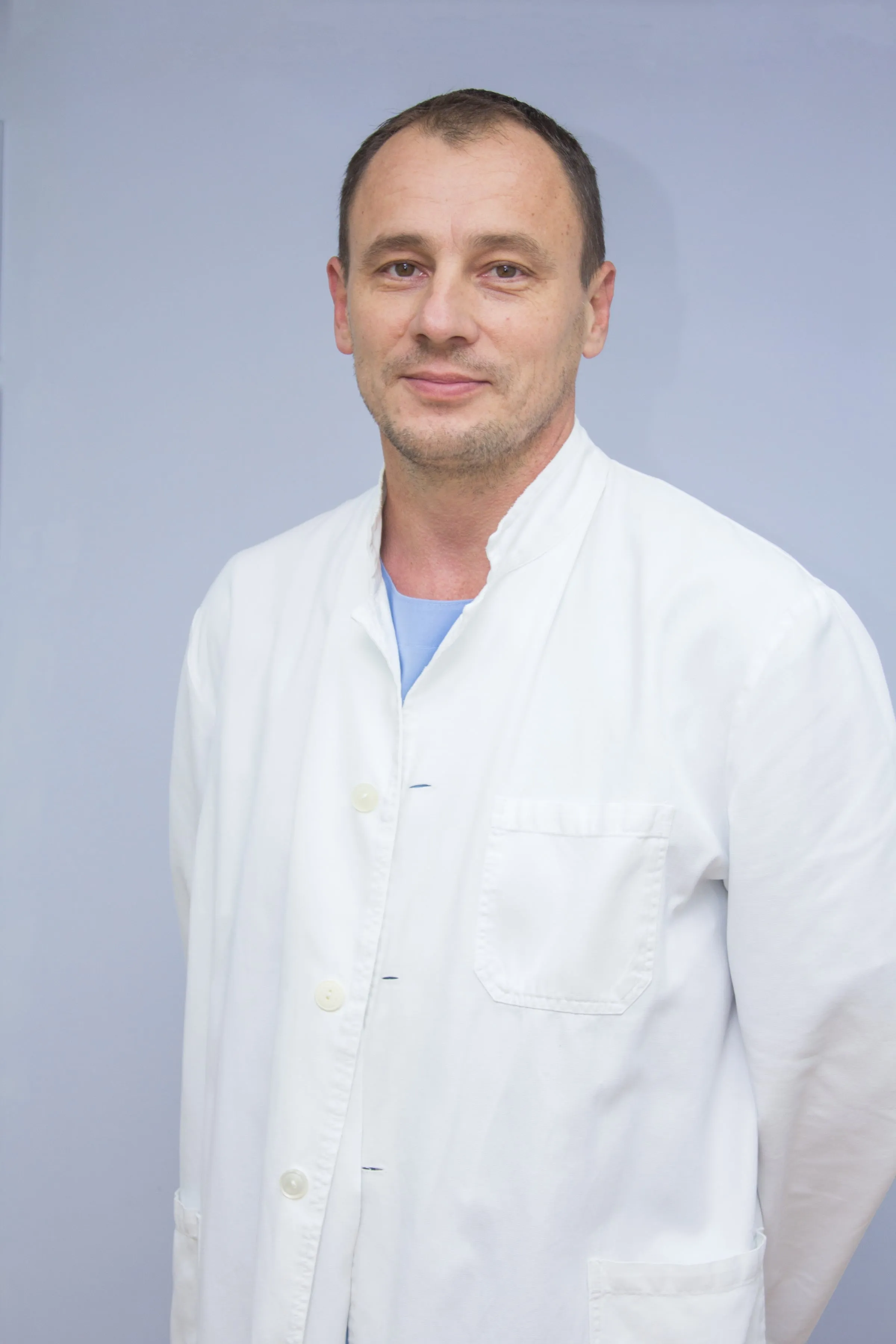
Body surgery procedures are performed by Duško Maletić, MD, MSc, a specialist in surgery since 1984 and in urology since 1988 and co-founder of the Polyclinic, and Mario Bartol, MD, a specialist in surgery, subspecialist in traumatology and orthopedics, permanent court expert witness and member of the professional team since 2008.
Anesthesia is led by Ines Maletić, MD, co-founder of the Polyclinic and specialist in anesthesiology, reanimatology and intensive care. She leads the pre-anesthesia workup, the anesthesia during the procedure and postoperative monitoring.
Through preparation, surgery, recovery and follow-up visits, the same team of nurses stays with you. The Polyclinic is a family institution where two generations of the family work today, with clearly divided professional responsibilities.
We have been developing laser methods in this field since 2008, when the Polyclinic also became an education center for laser procedures. Mario Bartol, MD, performed the first laser vein surgery in Croatia, and laser-assisted liposuction was introduced that same year.
Meet the whole team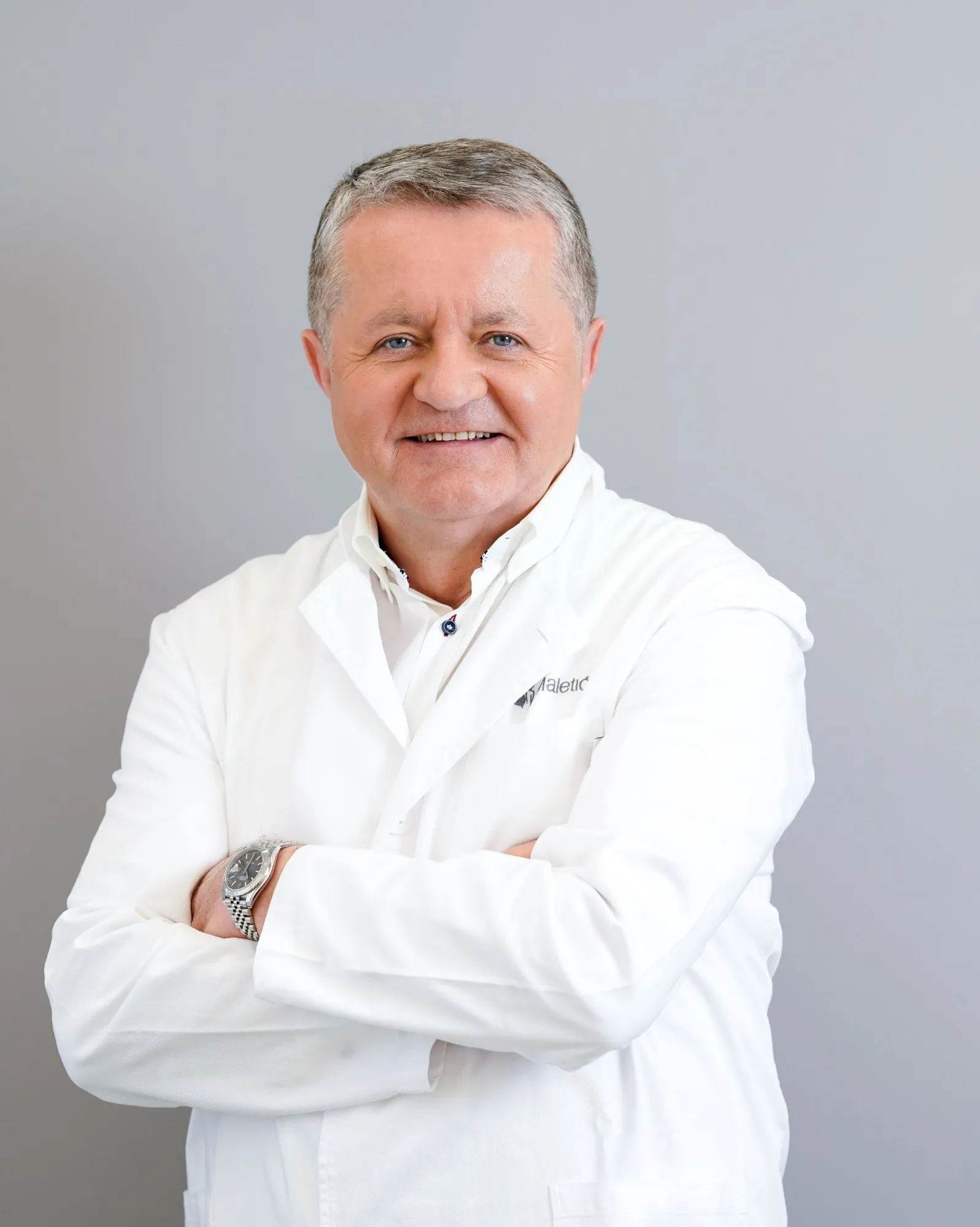
Our procedures
The procedures we perform
Details on the course of each procedure, the recovery, the risks and the price are on each procedure’s own page.
Liposuction
Localized deposits of fat tissue are removed with vibration-assisted and laser-assisted liposuction, in people close to their usual body weight.
Tummy Tuck (Abdominoplasty)
A tummy tuck removes excess abdominal skin, with reconstruction of the abdominal wall when indicated, most often after pregnancy or major weight loss.
Upper Arm & Thigh Skin Tightening
Brachioplasty and a thigh lift remove excess skin of the upper arms and thighs, most often after major weight loss.
Medical, not aesthetic, indications
Laser Varicose Vein Surgery
Endovenous laser ablation closes the diseased vein from the inside, without a classic incision, after a color Doppler examination establishes the indication.
Pilonidal Sinus Laser Surgery
The sinus tract is treated through an opening about five millimeters wide, under local anesthesia, without stitches or prolonged dressing changes.
Liposuction removes localized deposits of fat tissue by aspiration through small incisions. It is performed with a vibration technique, with a laser that can stimulate moderate skin tightening. It suits people close to their own usual weight whose skin has kept its elasticity.
A tummy tuck removes excess skin of the lower abdomen, and when needed the abdominal wall is reconstructed with special sutures. A smaller-scale procedure is performed using the Avelar technique, under local tumescent anesthesia, while a more extensive one requires spinal or general anesthesia.
Upper arm and thigh skin tightening covers brachioplasty and the thigh lift. In these procedures, part of the skin with its attached fat tissue is removed and the rest is tightened. The scar is permanent, so its position and length are agreed before the procedure.
Alongside body contouring procedures, we also perform two laser operations whose indication is medical, so neither the examination nor the course of treatment follows the pattern of aesthetic procedures.
Laser varicose vein surgery treats venous insufficiency with endovenous laser ablation — closing the diseased vein from the inside, without a classic incision. The indication for surgery is established by a color Doppler examination.
Pilonidal sinus laser surgery is performed through an opening about five millimeters wide, under local anesthesia and as an outpatient procedure. With active inflammation, drainage comes first, and laser treatment follows once the inflammation has settled.
The right procedure is determined at the examination, based on the clinical findings and the cause of your symptoms.
Related areas
Other areas of body surgery
Alongside the procedures above, the Maletić Polyclinic also covers the following areas, each with its own page.
Breast surgery covers breast augmentation, reduction and lift, as well as gynecomastia surgery. Any agreement on a procedure is preceded by an examination and an ultrasound, because the composition of the tissue determines the choice of method.
Female genital aesthetic surgery covers labiaplasty, labia majora correction and mons pubis reduction. The examination assesses whether there is an indication for surgery or whether it is a normal anatomical variation.
Male genital aesthetic surgery covers penis enlargement, circumcision and testicular prosthesis placement. The procedures are performed by a physician who is a specialist in both surgery and urology, so appearance and function are assessed together.
What changes
What most often changes
The result of a procedure can be judged by the change in contour, by functional symptoms and by everyday activities. For excess skin after major weight loss, published studies record improved physical functioning and fewer symptoms caused by skin folds rubbing.
- reduction of localized fat deposits in the treated area
- removal of excess skin of the abdomen, upper arms or thighs
- less friction and irritation in skin folds
- improved body contour after stabilized weight loss
- improved abdominal wall function when reconstruction is indicated
A tummy tuck, brachioplasty and thigh lift leave permanent scars. Before the procedure, the expected change is weighed against the position and length of the scar, so you can make an informed decision.
None of these procedures changes your body weight, or the need to keep maintaining the weight you have reached.
Next step
Booking an examination
You can book an examination by phone or through the contact page, in Zagreb or Daruvar. During the examination, we assess the findings, the indication, the surgical options and the expected recovery.
Prices are the same at both locations and listed in the price list; each procedure’s price is also stated on its own page. You can find our other treatments and operations on the Aesthetic Surgery page.