
Since 1998 · Zagreb & Daruvar
Pilonidal Sinus Laser Surgery in Croatia
Pilonidal sinus laser surgery is performed through an opening about five millimeters across, under local anesthesia and without stitches. The procedure takes roughly 30 minutes, and you go home the same day.
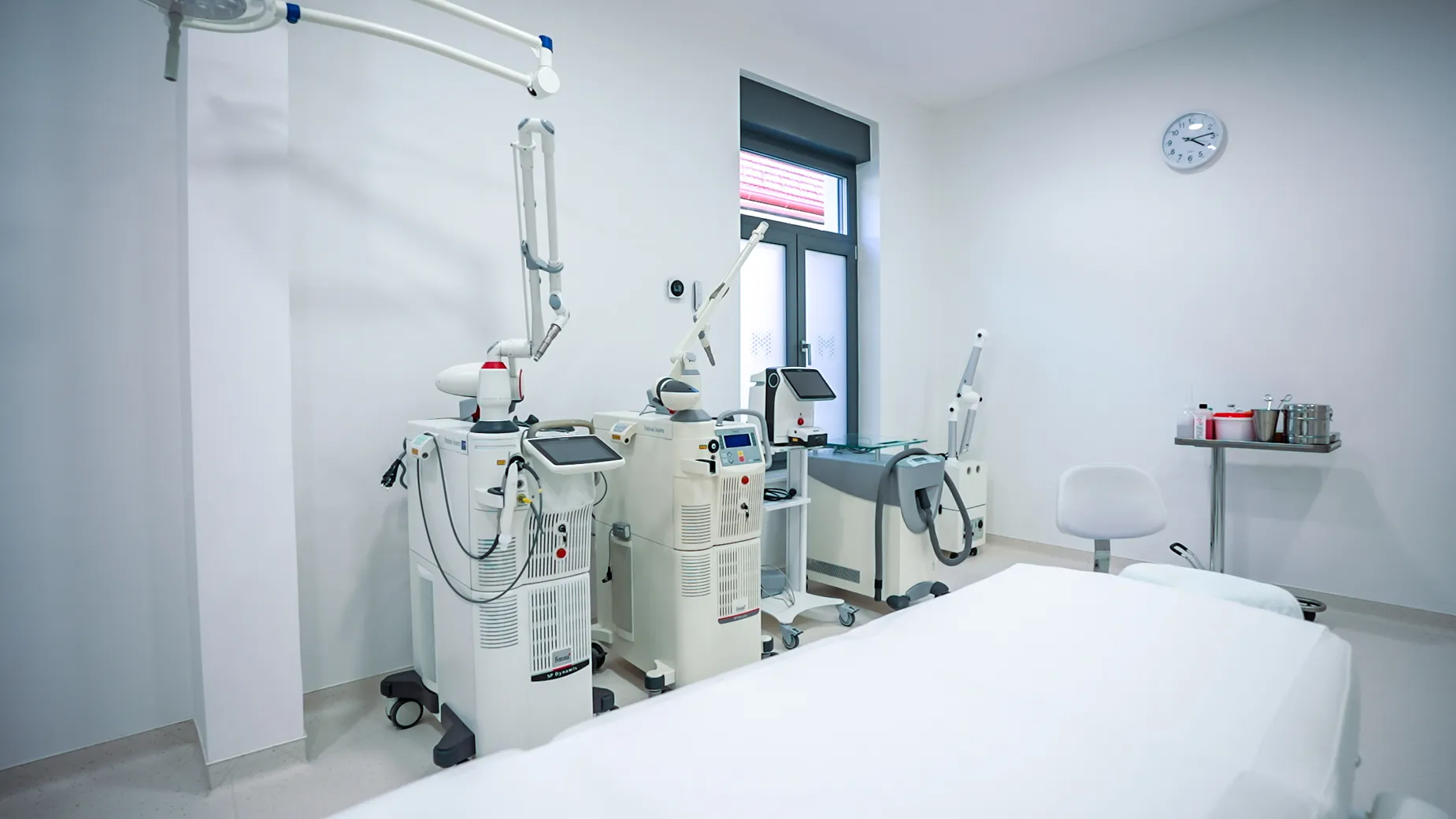
Pilonidal sinus most often affects men between the ages of 15 and 40, who make up as much as 90% of those affected, and in roughly a third there is a family predisposition. The disease can cause recurring inflammation, pain, swelling, and discharge. The laser procedure is performed under local anesthesia through an opening about five millimeters across, without a large open wound or prolonged dressing. The Polyclinic has performed and taught laser procedures since 2008, in cooperation with the Fotona Laser & Health Academy.
Is this for me?
What a pilonidal sinus is
A pilonidal sinus, often called a pilonidal cyst or an ingrown hair, is a chronic inflammatory disease of the skin and subcutaneous tissue in the cleft between the buttocks. Hairs penetrate or become trapped under the skin, where they act as a foreign body and trigger inflammation and the formation of sinus tracts.
Friction, pressure, heavier hair growth, and a deeper natal cleft all contribute to its development. The disease is more common in men, in people who sit for more than six hours a day, in drivers, students, people working in IT, and athletes exposed to repeated friction in that area. The predisposition is partly hereditary.
A pilonidal sinus is not the result of poor hygiene, but of a combination of hairs, friction, pressure, and anatomy.
The acute and the chronic form
Pilonidal disease can appear in an acute or a chronic form.
Acute inflammation (abscess): a painful, tense swelling in the tailbone area, redness and warmth of the skin, difficulty sitting and walking, purulent or blood-tinged discharge, sometimes a fever. It develops quickly, over a few days.
The chronic form: one or more tiny openings in the skin, occasional or constant discharge, an unpleasant odor, mild to moderate pain when sitting or lying on your back, and flare-ups that settle down and then return.
Why it does not go away on its own
When an abscess bursts on its own, the pain and tension may ease for a while — but the sinus tract, the hairs, and the inflammatory material often remain under the skin. That is why the inflammation can flare up again.
Antibiotics can calm the infection, but they do not remove the sinus tract and its contents. Squeezing likewise brings only temporary relief. Without proper treatment, the number and extent of the tracts under the skin can grow, which can make a later procedure more complex.
“The laser method makes it possible to treat the sinus through a small opening, without a large open wound or a recovery that would take months.”
What you fear most
The difference between classic and laser surgery
In classic excision, the sinus is removed together with the affected tissue. If the disease is extensive, the wound may be left open to heal secondarily, with regular showering, dressing changes, and follow-up visits. That kind of healing takes roughly a month and a half to two months. With the sutured technique, recovery takes about two to three weeks, but the risk of infection is higher.
Laser surgery is performed through an opening about five millimeters across, without a large incision, stitches, or months of dressing changes. For a chronic pilonidal sinus without active severe inflammation, the Polyclinic uses it as the method of first choice.
“With the laser, we treat the sinus through an opening of about five millimeters, without a large incision, stitches, or months of dressing changes.”
How it is performed
What pilonidal sinus laser surgery looks like
The procedure is performed under local anesthesia, on an outpatient basis, without a hospital stay, and takes about thirty minutes.
The existing opening in the skin is widened circularly to a diameter of about five millimeters. A thin laser fiber is introduced through it to treat the inflamed and necrotic tissue inside the sinus tract. The sinus is then cleaned and rinsed, and the thermal effect of the laser energy also has an antimicrobial action, which helps reduce the risk of postoperative infection.
The procedure, step by step
- Examination and consultation — the surgeon assesses the extent of the disease, the number of tracts, and any previous procedures.
- Preparation and local anesthesia — the procedure is performed without general anesthesia.
- Widening the opening — the existing fistulous opening is widened circularly to roughly 5 mm.
- Cleaning the sinus — the ingrown hairs and the inflamed and necrotic tissue are removed.
- Laser treatment — the laser fiber treats the tract, acts antimicrobially, and stimulates healing.
- Rinsing and dressing — the opening is not stitched but covered with a sealed dressing.
- Going home — you leave the Polyclinic the same day.
- Duration
- about 30 minutes
- Anesthesia
- local
- Recovery
- back to work in 3–5 days
- Performed by
- Mario Bartol, MD
When the laser is not the right method
If the inflammation is active right now, laser surgery is not the first step. Drainage comes first — a small incision to empty the pus. Antibiotics cannot replace drainage of an abscess. The definitive procedure follows once the inflammation has settled, usually after four to six weeks.
With a very extensive sinus or several previous operations, the surgeon assesses whether the laser method is suitable or whether another surgical technique might give a better result.
With a lesion that causes no symptoms and shows no signs of inflammation, monitoring may be recommended, along with instructions on the symptoms that should prompt you to come back.
“If the inflammation is active, the laser is not the first step. First the inflammation is calmed down, and only then comes the definitive solution.”See the full price list
Recovery
Recovery, day by day
The same day
You go home; gentle walking is encouraged.
After 24 hours
You may shower with liquid soap, drying the area by gentle patting, without rubbing.
The first few days
Painkillers are taken as needed, and prolonged sitting should be avoided.
3–5 days
A return to office work is possible; for physically demanding work, plan on about a week off.
The first week
Heavier physical exertion should be avoided.
6–8 weeks
Cycling is not recommended; swimming should be postponed until the wound has fully healed.
Within 4 weeks
Complete healing is expected.
During the first weeks, light cotton underwear is recommended, along with a diet with enough fiber to avoid straining, and reducing friction and sweating in the operated area.
“A return to office work is most often possible after three to five days, while physically demanding work calls for about a week.”
Why trust us
The possibility of a pilonidal sinus coming back
Pilonidal sinus is a disease that can return even after surgery. For some classic techniques, the professional literature reports recurrence rates of roughly 7–30%. The laser method records lower recurrence rates than some classic techniques, but no method can guarantee that the disease will not come back.
Hair removal as part of preventing recurrence
Ingrown and trapped hairs are an important factor in the development of a pilonidal sinus. Surgery removes the existing sinus and its contents, but it does not remove the tendency for hairs to grow in again.
The risk of recurrence is influenced by regular hair removal, hygiene, avoiding prolonged sitting, and maintaining a healthy body weight. The professional literature lists permanent hair removal as a useful complement to surgical treatment, because it can reduce the rate of the disease returning.
At the follow-up examination, you receive specific instructions tailored to your findings, your lifestyle, and your work.
Why us
Why choose us for pilonidal sinus laser surgery
Laser procedures since 2008
Laser methods have been part of the Polyclinic’s clinical and teaching work since 2008.
Fotona Laser & Health Academy
Since 2008 the Polyclinic has operated as a training center where physicians from other countries train in laser procedures.
About 30 minutes under local anesthesia
The procedure is outpatient, with no general anesthesia and no overnight stay — you go home the same day.
An opening of about 5 mm, no stitches
The procedure is performed without a large incision or prolonged wound dressing, and after healing what usually remains is a barely visible mark.
A family polyclinic since 1998
Polyclinic Maletić has operated continuously since 1998, today in Zagreb and Daruvar.
Four operating rooms
The operating rooms are equipped with air-recuperation systems that provide continuous air exchange and purification, helping reduce the risk of postoperative complications.
The possibility of recurrence
No method can guarantee that a pilonidal sinus will not come back, so the risk is assessed from your findings and the possible factors behind recurrence.
Zagreb and Daruvar
The same methods, the same equipment, and the same standards at both locations.
Who we are
Who will be taking care of you
The procedure is performed by Mario Bartol, MD, a specialist in surgery and subspecialist in traumatology and orthopedics, a member of the Polyclinic Maletić team since 2008.
Polyclinic Maletić is a family polyclinic that has operated since 1998. Since 2008 it has also served as a training center in cooperation with the Fotona Laser & Health Academy, where physicians from other countries come to train. The procedure is performed with a Fotona laser, and the operating rooms are equipped with air-recuperation systems that purify and exchange the air, helping reduce the risk of postoperative complications.
Before the procedure, you have an examination and a conversation with the surgeon, who explains the treatment options, the risks, the expected result, and the recovery. After the operation, follow-up examinations continue until the wound has fully healed.
Examinations and procedures are available in Zagreb and Daruvar, with the Polyclinic’s same methods, equipment, and standards.
Meet the whole team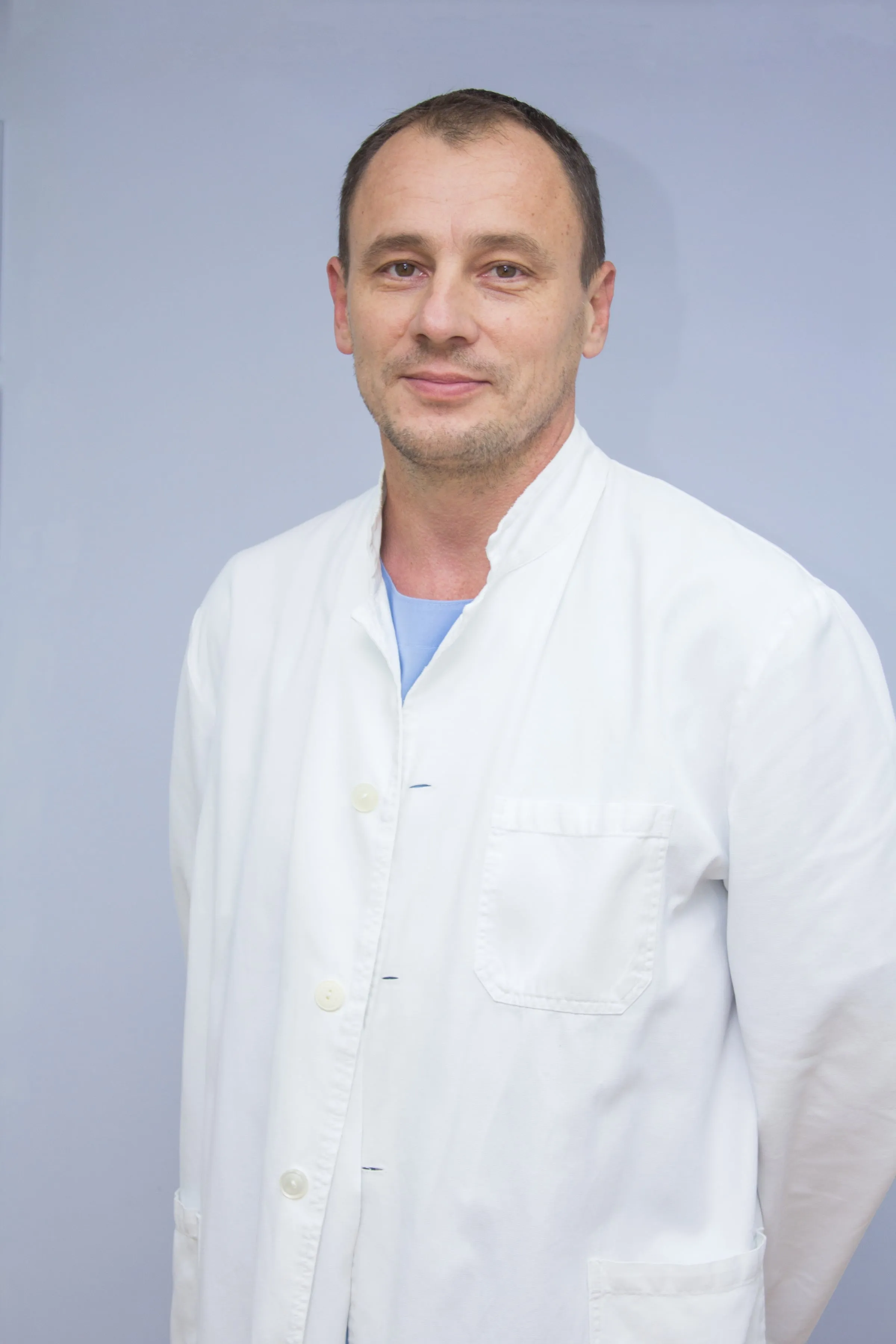
Price
Price and the first step
The price of pilonidal sinus laser surgery is listed in the table below. The prices of all procedures are available in the price list.
At the examination, the surgeon assesses whether this is an acute inflammation or a chronic sinus, how extensive the disease is, and whether the laser method is suitable for your findings.
-
Pilonidal Sinus Laser Surgery
Patient reviews
What our patients say
Reviews taken from our Google Business profiles, Zagreb and Daruvar, translated from Croatian.
★★★★★
“I recently had a varicose vein procedure. All praise to the entire team.”
★★★★★
“Since high school I watched the double chin I inherited from my father become more and more pronounced — and 15 years later, it is gone. A big thank you to Dr. Maletić and the whole team for granting my wish. The procedure was painless, as was the recovery, and the results were visible within a few days. The entire team was exceptionally kind and cheerful, and the atmosphere very pleasant. I left the polyclinic satisfied, and when the swelling went down two days later and I saw the double chin was gone, my satisfaction knew no bounds. I warmly recommend the Maletić Polyclinic.”
★★★★★
“My experience with breast augmentation with Dr. Maletić in Daruvar was excellent. I am extremely satisfied with the result. All the nurses are very kind and professional. I absolutely recommend them.”
★★★★★
“All praise for Polyclinic Maletić in Daruvar! I had a lip augmentation with fillers and I am very satisfied with the result. I would especially like to commend Dr. Mario Bartol, who is exceptionally kind, professional, and has a wonderful approach to patients, which made me feel comfortable and safe throughout the whole treatment. All the nurses are also very kind, helpful, and professional. I warmly recommend it to anyone considering aesthetic treatments!”
★★★★★
“Laser acne treatment is the only treatment that has helped me, and I would not choose any other facial treatment over it. Dr. Ines is one of the kindest people I have ever met and always has useful advice. Kind staff and excellent service — I warmly recommend it to everyone!”
★★★★★
“I had a wart on my face removed with a laser. A very professional service with excellent results. The wart was quite large, but after just one treatment it was gone. Highly recommended!”
★★★★★
“Blepharoplasty, 4D laser and double chin. Perfect. Highly recommended!”
★★★★★
“The best team of physicians, exceptionally professional and kind. I have been loyal to Polyclinic Maletić for more than 10 years and I am always satisfied with the results. Thank you.”
★★★★★
“I came to Dr. Maletić with a big problem and a lot of stress. I was met with such warm empathy and kindness, and patience in answering all my questions. Thank you, Dr. Maletić, for your advice and sincere support. I know I can always turn to her for advice, and that means a lot to me. The staff of the Zagreb polyclinic are also very helpful and kind. Thanks to them as well.”
★★★★★
“Dr. Maletić’s practice, in both Daruvar and Zagreb — and I have had several procedures — I can only recommend, because I felt very comfortable and in expert hands there!”
Questions and answers
Frequently asked questions
Does pilonidal sinus laser surgery hurt?
The procedure is performed under local anesthesia. You will feel needle pricks as the anesthetic is applied, and pressure or pulling is possible during the procedure — but you should not feel pain. Mild discomfort afterward is normal, and painkillers are usually needed for a few days.
How long does the procedure take, and do I go home the same day?
The procedure takes about 30 minutes and is performed on an outpatient basis, with no hospital admission or overnight stay. You go home the same day.
When can I go back to work?
A return to office work is most often possible after three to five days. For physically demanding jobs, a break of about a week is recommended. Recovery is shorter than with the classic open-wound method, where healing can take weeks.
Will the pilonidal sinus come back?
The laser method records lower recurrence rates than some classic techniques, but no method can guarantee that the sinus will not come back. To reduce the risk, regular hair removal, good hygiene, avoiding prolonged sitting, and timely follow-up examinations all matter.
Can antibiotics solve the problem?
Antibiotics can temporarily calm the infection and inflammation, but they do not remove the ingrown hairs, the inflammatory material, or the sinus tract. That is why the symptoms can return. Squeezing out the pus likewise brings only short-lived relief and can make things worse.
What if I have an active infection and severe pain right now?
With an acute abscess, laser surgery is not the first step. Drainage comes first — a small incision to empty the pus and calm the inflammation. The definitive procedure follows once the acute inflammation has settled, usually after four to six weeks.
Will there be a scar?
The opening through which the procedure is performed is about five millimeters across and is not stitched. After healing, what usually remains is a barely visible mark — considerably smaller than after classic excision.
What does a pilonidal sinus examination look like?
The examination is short and carried out with as few people present as possible. Physicians see pilonidal sinus routinely, and the conversation and examination focus on your symptoms, the extent of the disease, and the treatment options.