
Laser education center since 2008 · Zagreb & Daruvar
Laser Keratosis Removal in Croatia
Rough, waxy lesions on the face, scalp, or body are usually benign — but before removal they have to be distinguished from lesions that require a different work-up. At Polyclinic Maletić, we first assess the lesion at an examination, and remove confirmed benign keratoses with an Er:YAG laser.
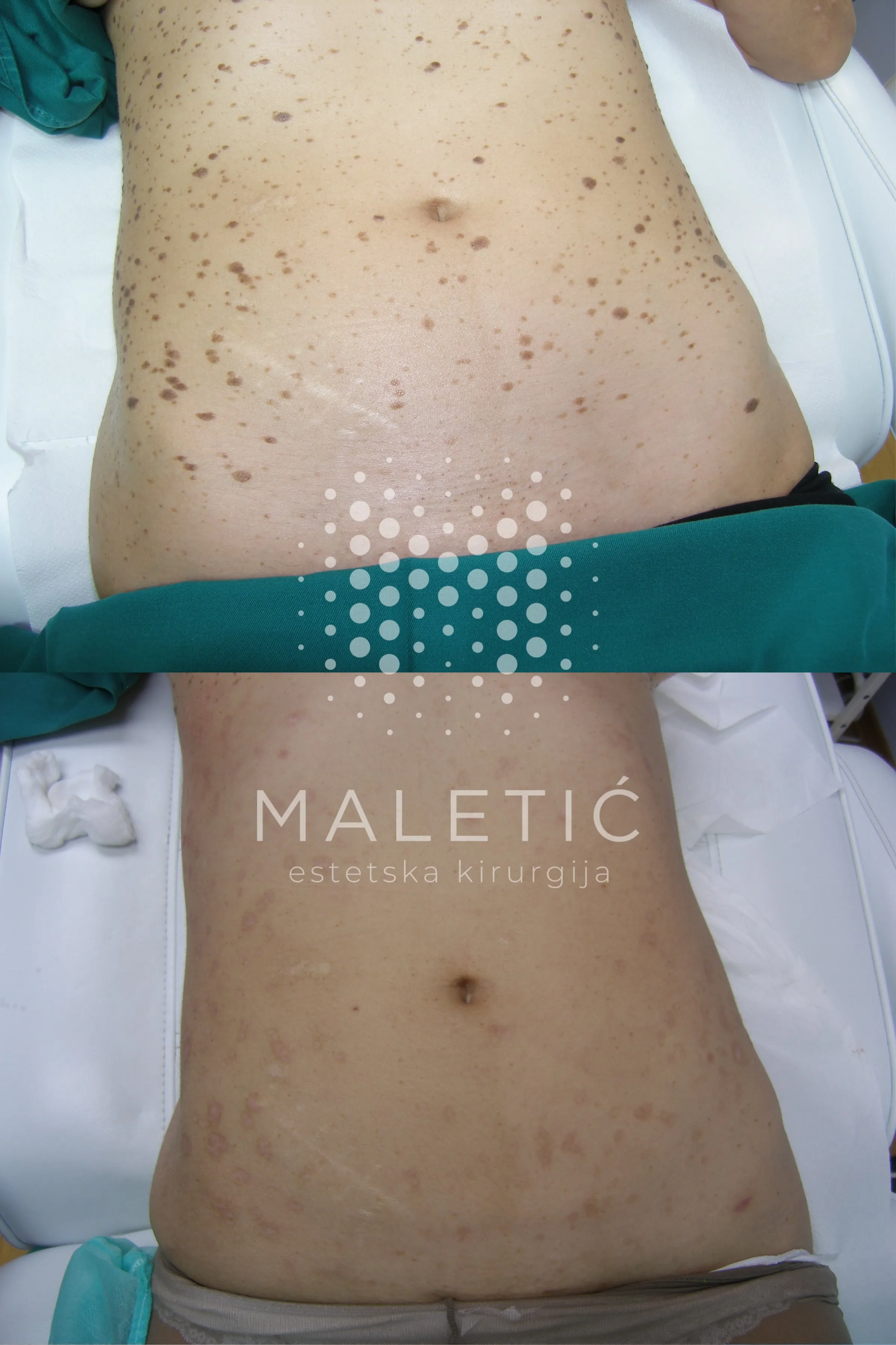
Seborrheic keratoses are benign lesions, but by appearance they can sometimes resemble lesions that require further work-up. That is why a physician assesses the type of lesion before removal. Benign keratoses confirmed by examination can be removed with an Er:YAG laser.
Is this for me?
What keratoses are and why they appear
Keratoses are skin lesions linked to a thickening of the skin’s surface layer. The term usually refers to seborrheic keratoses — rough, waxy growths that can look as if they were stuck onto the skin. Actinic keratosis is a separate type of lesion that is assessed and treated differently.
Before removal, it therefore has to be established which type of lesion is involved and whether laser is the appropriate method.
Seborrheic keratoses, the most common type
Seborrheic keratoses are benign lesions made of cells from the skin’s surface layer. They can be yellowish-brown to almost black, rough to the touch, and look as if they were stuck onto the surface of the skin. They appear more often in middle and older age, and their number can increase over the years.
Seborrheic keratoses are not viral and not contagious; they are not passed to other people or from one part of the body to another. Their number can grow with age because new lesions appear, not because existing ones spread. Removing a clearly benign keratosis is not medically necessary — unless the lesion gets irritated, bleeds from friction, or bothers you by its appearance.
How to tell a keratosis from a more dangerous lesion
By appearance, a seborrheic keratosis can resemble a mole or other skin lesions, including skin cancer, so it cannot always be recognized reliably without a medical assessment.
A sudden change in color or size, irregular edges, bleeding without a clear cause, and a lesion that differs from the others all call for further assessment. Caution is also needed when a large number of new lesions appears within a short period, because such a finding can be linked to other health conditions. In those situations, laser removal is not used — instead, a procedure that allows histopathological analysis is chosen.
How it is performed
What laser keratosis removal looks like with us
We remove keratoses on an outpatient basis in Zagreb and Daruvar. Since 2008, Polyclinic Maletić has served as an education center in cooperation with the Fotona Laser & Health Academy, where physicians from other countries are trained.
Why an Er:YAG laser
For keratosis removal we use an erbium, or Er:YAG, laser. Its energy is absorbed mostly in the surface layers of the skin, which allows the lesion to be removed in thin layers with minimal involvement of the surrounding tissue. Because it works this way, it is also used on visible regions such as the face and scalp.
The lesion is removed gradually and in a controlled way. What remains after the procedure is a shallow surface wound that heals without stitches.
The course of the procedure and recovery
- Examination. The physician assesses each lesion and establishes whether the findings match a benign keratosis.
- Treatment plan. We determine which lesions can be removed in one visit and when it is more appropriate to split the procedure.
- Anesthesia. Depending on the size and location of the lesion, anesthetic cream or local anesthesia is applied.
- Removal. The Er:YAG laser removes the lesion layer by layer.
- Aftercare and follow-up. You receive instructions for care and sun protection, and a follow-up examination.
- Number of visits
- most often a single treatment
- Anesthesia
- as a rule, anesthetic cream or local anesthesia
- Recovery
- the crust falls off within 7–14 days
- Performed by
- Ines Maletić, MD, or Mario Bartol, MD
A small crust forms where the keratosis was removed — an expected part of healing.
The first few days
Keep the area clean and dry, following the instructions you receive.
Within 7–14 days
The crust falls off on its own; do not pick it off, as that increases the risk of scarring and pigmentation changes.
Over the following weeks
Temporary redness or a slight difference in color may remain and gradually fades.
Throughout healing
Protect the treated area from the sun, because exposure increases the risk of darker pigmentation.
The technology behind the results
The lasers we work with
At Polyclinic Maletić we work exclusively with lasers made by Fotona, a cooperation that dates back to 2008, when we also became its education center. The device, though, is only one part — the outcome of a procedure is decided by the knowledge behind it.
Physicians from the United States, Canada, Australia, Dubai, Russia, Israel, Turkey, and other parts of the world come to our Polyclinic to learn about laser procedures and see how we work. In Daruvar, an education hall carries a live feed from the operating room, so learning happens on real clinical cases.
Our physicians — Ines Maletić, Duško Maletić, MD, MSc, and Mario Bartol — regularly take part in Fotona’s international meetings, which bring together experts in laser medicine. What they learn there, we apply in our work with patients.
We remove keratoses with an erbium (Er:YAG) laser, which takes the lesion off layer by layer with minimal involvement of the surrounding skin.
- Education center since 2008
- Fotona Laser & Health Academy
- Live feed from the operating room

Why us
Why choose us for laser keratosis removal
Education center since 2008
In cooperation with the Fotona Laser & Health Academy, we train physicians from other countries in laser procedures.
Exclusively Fotona lasers
We remove keratoses with a medical Er:YAG Fotona laser.
Examination and follow-up
The procedure is performed by a physician in the Polyclinic’s outpatient clinic, with an examination before removal and a check-up afterward.
An Er:YAG laser for layer-by-layer removal
The lesion is removed layer by layer, with minimal involvement of the surrounding skin.
Lesions that need analysis are not removed by laser
If histopathology is needed, we choose a procedure that preserves a tissue sample.
Removal is not always necessary
A benign keratosis confirmed by examination that does not bother you does not have to be removed.
A family polyclinic since 1998
Two generations of the Maletić family work at the Polyclinic today, in Zagreb and Daruvar.
Zagreb and Daruvar
At both locations, procedures are performed according to the Polyclinic Maletić protocol.
Why trust us
Why keratoses come back, and what to do about it
A removed keratosis does not usually reappear in the same spot, but the tendency to develop seborrheic keratoses remains. New lesions can therefore appear over time, most often on other parts of the skin.
The appearance of new keratoses is not a sign that the previous procedure failed — it is a feature of the tendency to develop them. The number of seborrheic keratoses can increase with age regardless of earlier removal. Regular skin monitoring is important, so that new or changed lesions that need an examination are spotted in time.
“A removed keratosis usually does not come back in the same spot, but the tendency to develop them remains. That is why it is important to keep monitoring your skin and have any lesion that looks different from the others examined.”
When laser is not the right choice
Laser removal is used for benign keratoses confirmed by examination. If the findings are not typical, if histopathological analysis is needed, or if the lesion does not bother you, a different procedure — or monitoring without removal — may be recommended.
“Laser removal comes after the examination in which we confirm that the findings match a benign keratosis.”
When a lesion goes for analysis
The laser removes tissue by ablation, so after the procedure no sample remains for histopathological analysis. For a clearly benign keratosis, that is not an obstacle. If a lesion is not typical, is irregularly colored, grows quickly, changes shape, or bleeds without a clear cause, a procedure that preserves a tissue sample for analysis is chosen instead.
“A lesion that requires histopathological analysis is not removed by laser. In that case we remove it surgically and send it for analysis.”
When it is an actinic keratosis
Actinic keratosis differs from seborrheic keratosis. It develops on skin exposed to the sun over many years and is considered a precancerous lesion, because in a share of patients it can progress to skin cancer. The risk of an individual lesion progressing cannot be reliably predicted in advance, and actinic keratoses often appear in larger numbers.
They therefore require a medical assessment, monitoring, and, according to the findings, appropriate treatment. If the examination points to an actinic keratosis, further work-up is recommended instead of purely cosmetic removal.
A benign keratosis confirmed by examination that causes no symptoms does not have to be removed. If it is removed purely because of its appearance, that is an aesthetic indication, not a medical one.
The long-term effect
What remains once the lesion is gone
Removing a keratosis puts an end to the snagging and repeated irritation in places exposed to friction, shaving, or combing. The examination before the procedure also clarifies what kind of lesion it was. After removal, it is still important to monitor your skin, because new lesions can appear over the years — including ones that are not keratoses and require a medical assessment.
Real results
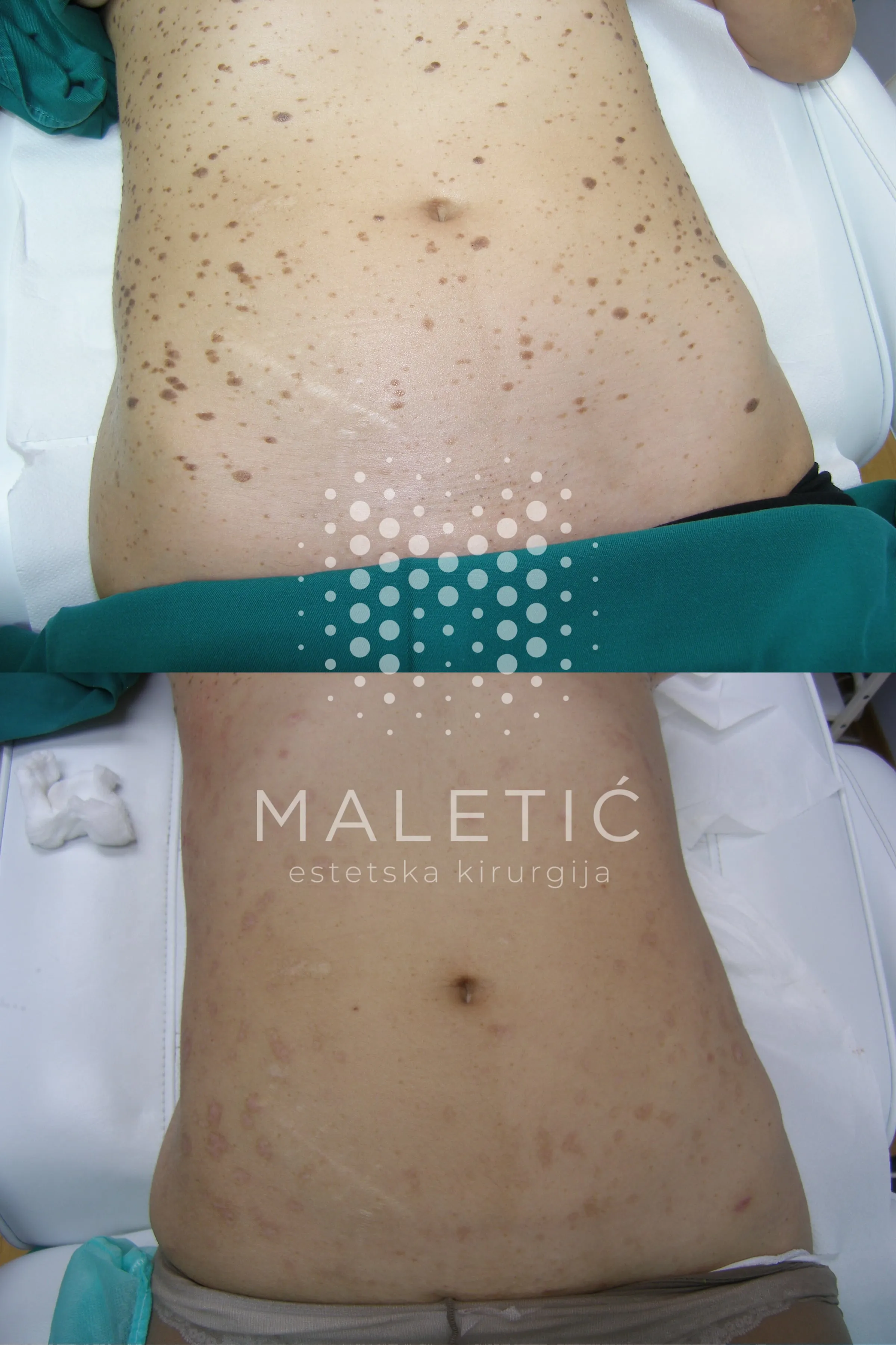
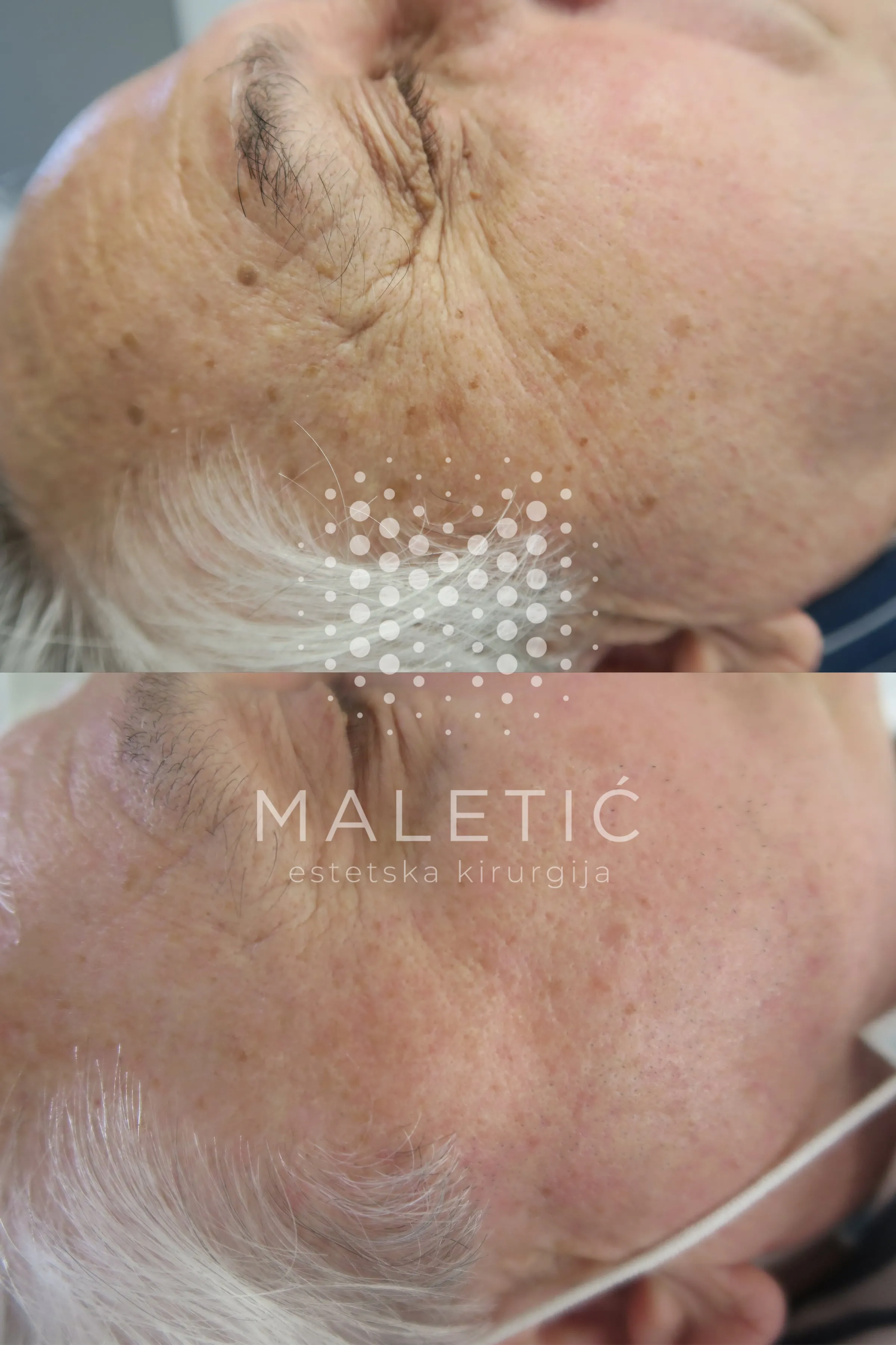
Before and after laser keratosis removal
We show our patients’ results discreetly and only with their consent.
Who we are
Who will be taking care of you
Polyclinic Maletić is a family polyclinic operating since 1998, today in Zagreb and Daruvar. Since 2008 it has also served as an education center in cooperation with the Fotona Laser & Health Academy.
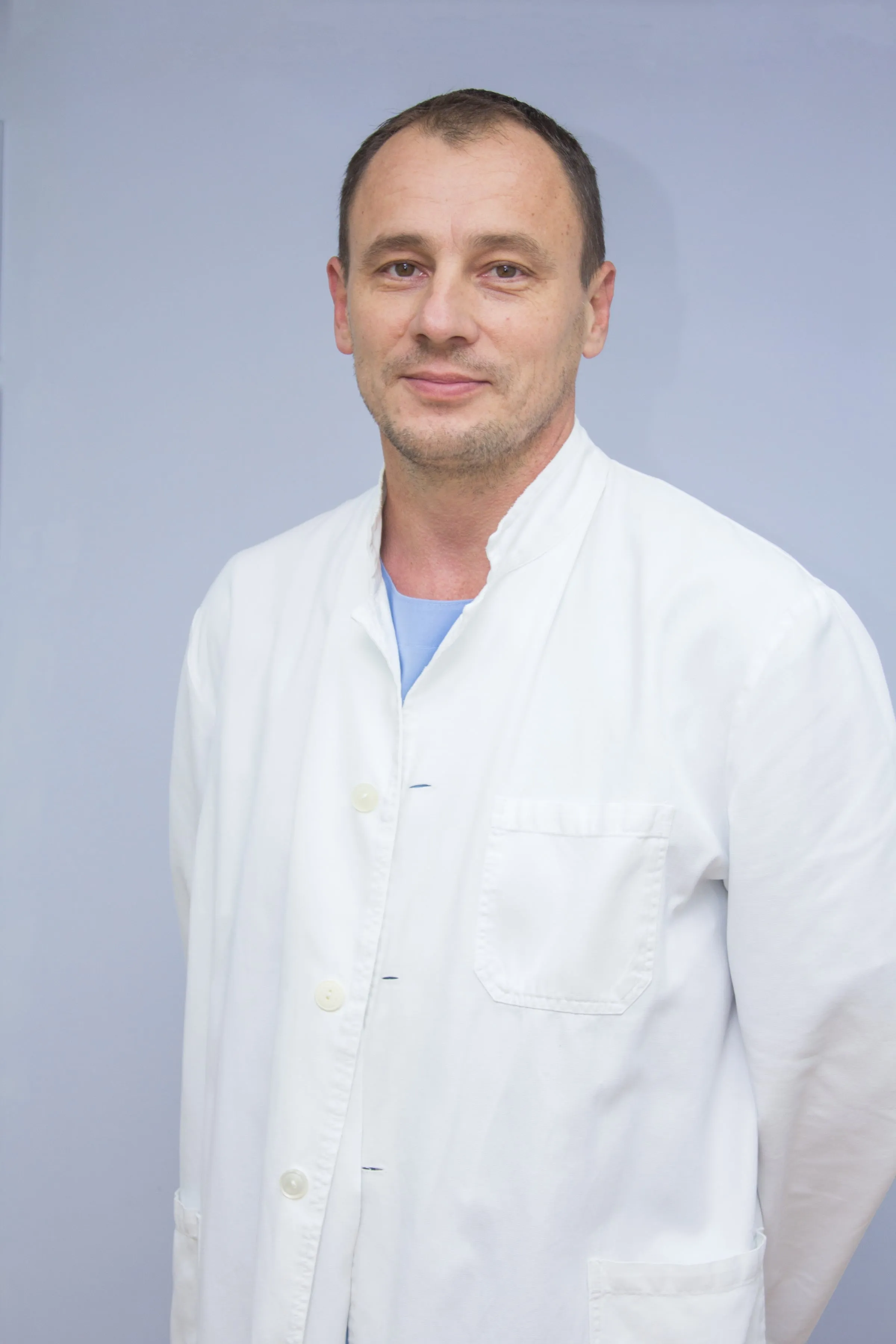
Laser keratosis removal is performed by Ines Maletić, MD, or Mario Bartol, MD, depending on the location and appointment. Ines Maletić is an Expert Clinical Lecturer at the Fotona Laser & Health Academy and a co-founder of the Polyclinic.
Meet the whole team
Price
The price of laser keratosis removal
The price of laser keratosis removal depends on the number, size, and distribution of the lesions, so the exact amount is set after the examination.
If a lesion needs to be removed surgically and sent for histopathological analysis, the price of the analysis is listed in the price list and is known before the procedure. The full price list is available on the Prices page.
If you are not sure what kind of lesion you have, book an examination. The physician will assess the findings and recommend laser removal, monitoring, or further work-up.
-
Histopathology analysis (PHD)
Patient reviews
What our patients say
Reviews taken from our Google Business profiles, Zagreb and Daruvar, translated from Croatian.
★★★★★
“I recently had a varicose vein procedure. All praise to the whole team.”
★★★★★
“Since high school I watched the double chin I inherited from my father become more and more pronounced — and 15 years later, the double chin is gone. A big thank you to Dr. Maletić and the whole team for fulfilling my wish. The procedure was painless, as was the recovery, and the results were visible within a few days. The whole team was extremely kind and cheerful, and the atmosphere very pleasant. I left the polyclinic satisfied, and when, two days after the swelling went down, I saw that the double chin was gone, my satisfaction knew no bounds. I warmly recommend Polyclinic Maletić.”
★★★★★
“My experience with breast augmentation with Dr. Maletić in Daruvar was excellent. I am extremely satisfied with the result. All the nurses are very kind and professional. I absolutely recommend them.”
★★★★★
“All praise for Polyclinic Maletić in Daruvar! I had lip augmentation with fillers and I am very satisfied with the result. I would especially like to praise Dr. Mario Bartol, who is extremely kind, professional, and has a wonderful approach to patients, which made me feel comfortable and safe throughout the treatment. All the nurses are also very kind, helpful, and professional. I warmly recommend them to anyone thinking about aesthetic treatments!”
★★★★★
“Laser acne treatment is the only treatment that has helped me, and I would not choose any other facial treatment over it. Dr. Ines is one of the kindest people I have ever met and always has useful advice. Kind staff and top service — I warmly recommend her to everyone!”
★★★★★
“I had a wart on my face removed with a laser. Very professional service with excellent results. The wart was quite large, but after just one treatment it was gone. All recommendations!”
★★★★★
“Blepharoplasty, 4D laser, and double chin. Perfect. All recommendations!”
★★★★★
“The best team of physicians, extremely professional and kind. I have been loyal to Polyclinic Maletić for more than 10 years and I am always satisfied with the results. Thank you.”
★★★★★
“I came to Dr. Maletić with a big problem and a lot of stress. I was met with such warm empathy and kindness, and patience in answering all my questions. Thank you, Dr. Maletić, for your advice and sincere support. I know I can always turn to her for advice, and that means a lot to me. The staff of the Zagreb polyclinic are also very helpful and kind. Thanks to them as well.”
★★★★★
“I can only recommend Dr. Maletić’s practice, both in Daruvar and in Zagreb — and I have had several procedures there — because I felt very comfortable and in expert hands!”
Questions and answers
Frequently asked questions
Are keratoses dangerous?
Seborrheic keratoses are benign skin lesions and do not turn malignant. They can, however, resemble other skin lesions, and actinic keratosis is a separate condition that is assessed and treated differently. That is why a medical examination is needed before removal.
How can you tell a keratosis from a melanoma?
The difference cannot always be established reliably by visual inspection alone, without a professional assessment. A sudden change in color or size, irregular edges, bleeding without a clear cause, and a lesion that stands out from the others all call for extra attention. If the findings are not typical of a benign keratosis, the lesion is not removed by laser but by a procedure that allows histopathological analysis.
Do keratoses come back after laser removal?
A removed keratosis usually does not come back in the same spot. The tendency to develop them remains, though, so new lesions can appear over time, most often elsewhere. That is related to the nature of seborrheic keratoses, not to a failure of the previous procedure.
Does laser keratosis removal hurt?
Depending on the size and location of the lesion, anesthetic cream or local anesthesia is applied before the procedure. During the treatment you may feel warmth and mild stinging, and after the procedure the treated area can be temporarily sensitive.
Does removing a keratosis leave a scar?
The Er:YAG laser removes the lesion layer by layer with minimal involvement of the surrounding skin, so scarring is rare. Healing still depends on the size and location of the lesion and the individual properties of your skin. After the procedure, temporary redness or a slight difference in color may remain and fades over several weeks, and sun protection reduces the risk of darker pigmentation.
Can I scrape a keratosis off myself?
Scraping, picking, or using home remedies is not recommended, because they can cause irritation, bleeding, inflammation, and incomplete removal of the lesion. The additional problem is that without a medical examination, it has not been confirmed that the lesion really is a benign keratosis.
How many keratoses can be removed in one visit?
Most often, all the lesions agreed on at the examination are removed in a single appointment. If there are very many of them, or they are spread over several regions, the procedure can be split into two visits so the skin does not have to heal in too many places at once. The plan is set according to the number, size, and distribution of the lesions.