
Since 1998 · Zagreb & Daruvar
Laser Varicose Vein Surgery in Croatia
With endovenous laser ablation, the diseased vein is closed from the inside, through a small entry point in the skin and without a classic surgical incision. The procedure is performed under tumescent local anesthesia, and walking is encouraged right after it.
Varicose veins can cause heaviness, swelling, and pain in the legs — but the vein you can see is not always the real source of the trouble. That is why treatment begins with a color Doppler examination, which assesses how the venous valves are working and establishes whether laser surgery is the right method.
Is this for me?
Varicose veins: when your legs feel heavy by evening
Varicose veins, or varicosities, develop when the venous valves stop closing properly. Part of the blood then flows backward and pools in the vein, venous pressure rises, and the vein gradually widens, becomes tortuous, and shows under the skin.
Possible symptoms include a feeling of heaviness and tiredness in the legs, tension, burning, itching, ankle swelling, and night cramps. The symptoms are often worse after long standing or sitting and toward the end of the day. Hereditary predisposition, pregnancy, age, body weight, and prolonged standing or sitting can all contribute to the development of varicose veins.
When veins are only cosmetic — and when they are a medical problem
A visible vein without other symptoms may be mostly a cosmetic concern. Heaviness, swelling, cramps, or skin changes can point to chronic venous disease, but the cause and stage of the disease are confirmed by a medical examination and color Doppler.
Creams, gels, and tablets cannot restore the function of a damaged venous valve. Compression stockings, regular movement, and adjusted habits can ease the symptoms, and whether a procedure is needed is assessed from your symptoms and the ultrasound findings.
Diagnostics before any decision
Why the decision starts with a color Doppler examination
A clinical examination shows the visible changes, but on its own it does not always reveal the source of the venous reflux. Color Doppler makes it possible to assess veins that cannot be seen from the outside and to establish which of them is linked to the symptoms.
Color Doppler is a non-invasive ultrasound examination that, together with a conversation and a clinical examination, forms the basis for planning treatment. It shows us:
- whether your venous valves are working, and exactly where they are failing
- which vein is the cause of the symptoms, and which is only a consequence
- whether the laser is the right method for your findings — or not
- whether it should be combined with other methods, such as miniphlebectomy
Based on the examination, we determine whether a procedure is needed and which method, or combination of methods, best matches the findings.
“With color Doppler we first establish where the symptoms are coming from. Only then can we assess whether a procedure is needed and which method matches the findings.”
How it is performed
What laser varicose vein surgery (EVLT/EVLA) looks like
Endovenous laser ablation is a method in which a vein with confirmed insufficiency is closed from the inside, using laser energy delivered through a thin laser fiber introduced through a small entry point in the skin. The vein is not pulled out of the leg, and no classic surgical incision is needed. Once closed, it gradually turns into connective tissue and shrinks over time.
Laser varicose vein surgery has been performed at Polyclinic Maletić since 2008. Dr. Mario Bartol trained in this method in Slovenia and has been a member of the Polyclinic’s team since 2008. In the video, he explains what the procedure looks like and for which findings it is used.
The procedure, step by step
- Preparation — a check of your health status, documentation, and the surgical plan.
- Ultrasound mapping — immediately before the procedure, the course of the vein is rechecked with ultrasound and the treatment area is marked.
- Local anesthesia — tumescent anesthesia is applied around the vein itself, under ultrasound guidance.
- Introducing the laser fiber — a catheter and the laser fiber are introduced into the vein through a small entry point in the skin.
- Closing the vein — when the laser is activated, the vein is thermally sealed and becomes impassable.
- Miniphlebectomy where the findings call for it — through tiny openings, enlarged subcutaneous vein tributaries that the endovenous laser alone cannot close are removed.
- Compression — a bandage and a medical compression stocking are applied.
The procedure takes about 60 minutes, depending on the findings and the extent of treatment. Walking is encouraged afterward, and patients generally go home the same day.
- Duration
- About 60 minutes
- Anesthesia
- Tumescent local anesthesia
- Recovery
- Walking is encouraged right away; a compression stocking as instructed by your physician
- Performed by
- Mario Bartol, MD
Laser, miniphlebectomy, or sclerotherapy: why the choice matters
Endovenous laser ablation may be indicated for insufficiency of certain main superficial trunk veins — the great and small saphenous veins (GSV, SSV) — when color Doppler confirms pathological reflux and suitable vein anatomy.
For spider veins, smaller superficial veins, or isolated vein tributaries without insufficiency of a trunk vein, endovenous laser ablation is not the right method. Depending on the findings, sclerotherapy or miniphlebectomy may be used instead. Where needed, the endovenous laser can be combined with miniphlebectomy so that the enlarged tributaries visible along the leg are treated as well.
The Polyclinic performs endovenous laser ablation, miniphlebectomy, and sclerotherapy, and the method is chosen according to the ultrasound findings and the goal of treatment.
“We have been performing laser varicose vein surgery at the Polyclinic since 2008. We apply that experience today in assessing the findings, performing the procedure, and following the recovery.”See the full price list
Why us
Why choose us for laser varicose vein surgery
Laser vein surgery since 2008
The first laser varicose vein surgery in Croatia was performed by Mario Bartol at Polyclinic Maletić in 2008, and the Polyclinic has worked with this method continuously longer than anyone in Croatia.
Treatment based on the ultrasound findings
A color Doppler examination shows which vein is causing the symptoms and which method matches the findings.
More than one way to treat veins
Depending on the findings, we use laser, miniphlebectomy, sclerotherapy, or a combination of them.
A family polyclinic since 1998
The Polyclinic has been operating since 1998, and today two generations of the Maletić family work here.
Zagreb and Daruvar
Examinations and procedures are available in Zagreb and Daruvar, following the same professional protocols.
A training center for laser procedures
Since 2008 the Polyclinic has operated as a training center in cooperation with the Fotona Laser & Health Academy, where physicians from other countries come to train.
Controlled operating conditions
The Polyclinic has four operating rooms in total, in Zagreb and Daruvar, equipped with controlled air-exchange systems.
Why trust us
When a laser procedure is not needed
If the color Doppler does not show insufficiency of a vein for which the endovenous laser is indicated, we may recommend conservative measures, monitoring, or another method of treatment. The recommendation depends on your symptoms, the ultrasound findings, and your general health.
Where the blood goes once the vein is closed
After an insufficient superficial vein is closed, blood is rerouted through the functional veins that maintain venous return to the heart. The treated vein no longer serves any useful purpose, because its valves let blood flow in the wrong direction. How your symptoms change after the procedure depends on the initial findings and on other possible causes of leg complaints.
Will the veins come back
The treated vein usually stays closed, but over time it can partially reopen — this is called recanalization. At the same time, the procedure does not remove the underlying tendency to chronic venous disease, so new varicose veins can appear in other places. That is why follow-up examinations are planned according to the findings and your physician’s advice.
The risks, openly
Endovenous laser ablation is a minimally invasive procedure, but like any medical procedure it has possible side effects and complications. Bruising, mild soreness, and a feeling of tightness can appear along the treated vein, and usually settle gradually over a few days or weeks. Temporary changes in sensation, such as tingling or a pins-and-needles feeling, are also possible, especially when the treated area lies close to superficial nerves. Other possible complications include infection, thrombosis, and skin discoloration, and their risk is assessed individually. At the examination, the physician will explain what you can expect before and after the procedure, given your findings and health status.
Recovery after the procedure
Right after the procedure
You get up and walk — a walk is encouraged. You go home the same day.
The first few days
Bruising, mild soreness, and a feeling of tightness are possible. A return to desk work is often possible within a few days, depending on the extent of the procedure and your physician’s advice.
The first one to two weeks
Walking is encouraged, while intense running, jumping, and lifting heavier loads are limited as instructed by your physician.
Compression stocking
Worn after the procedure for as long as your physician recommends, often around four weeks.
Follow-up examination
The treated vein is assessed with a clinical examination and ultrasound.
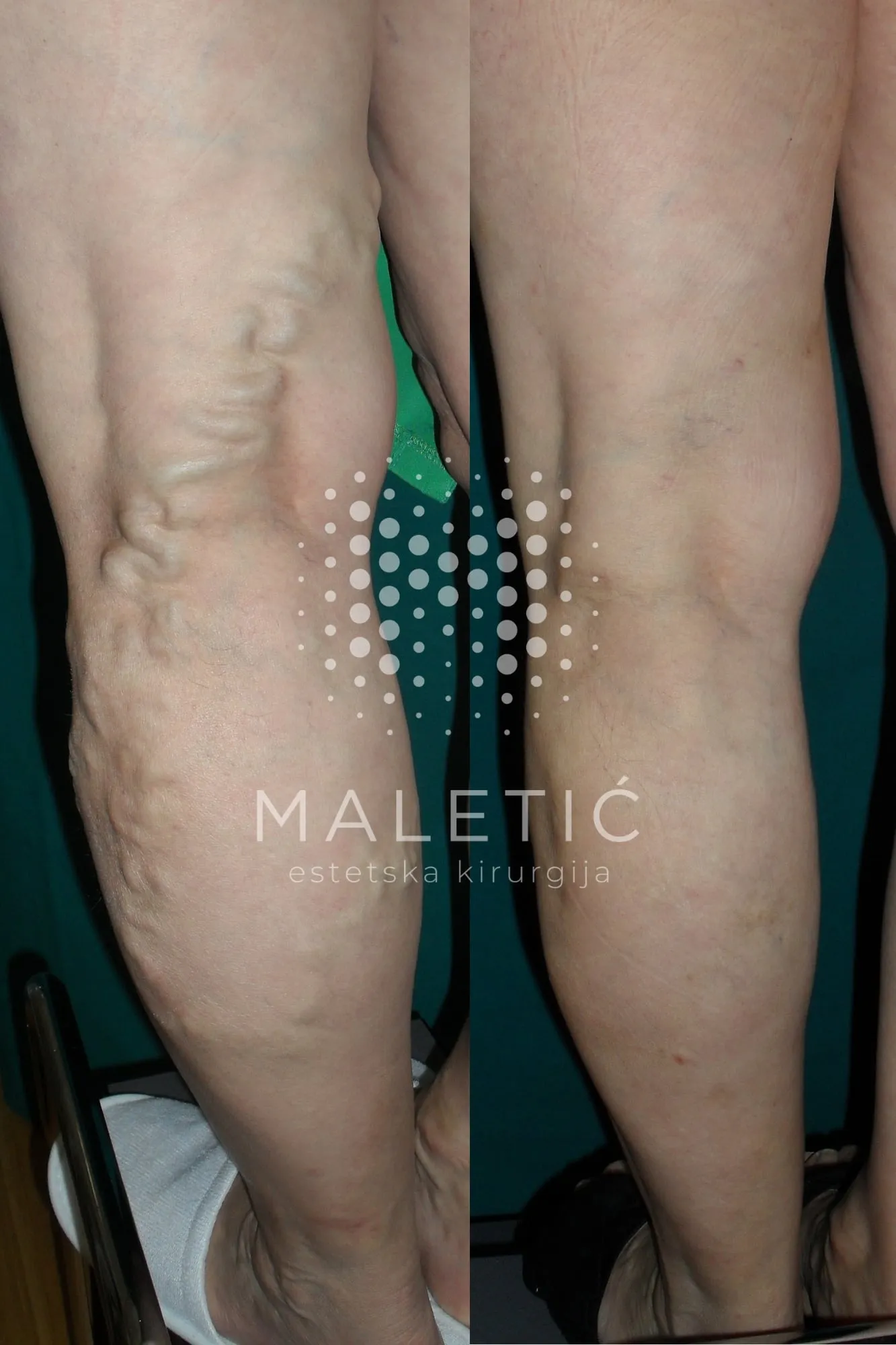
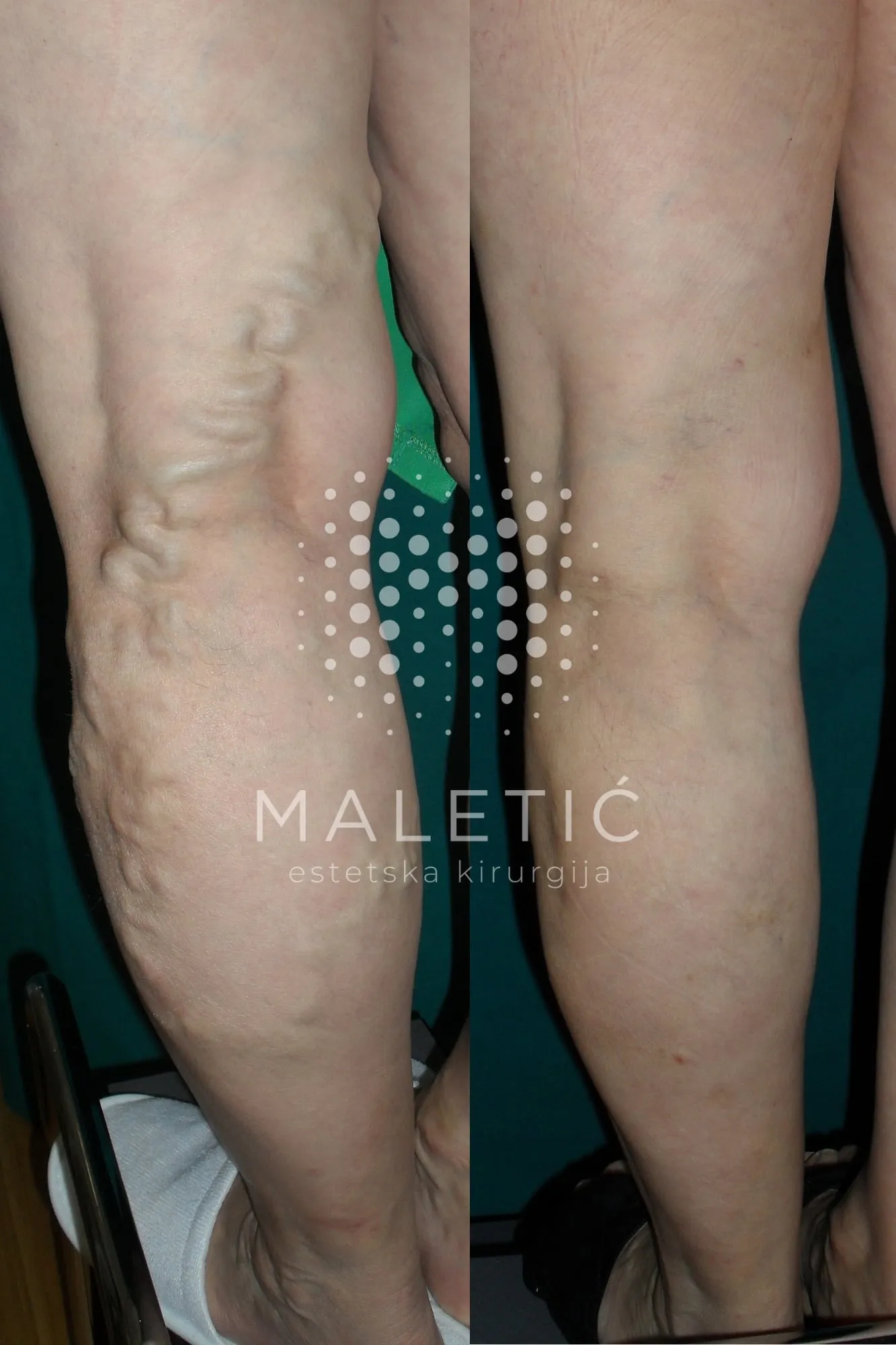
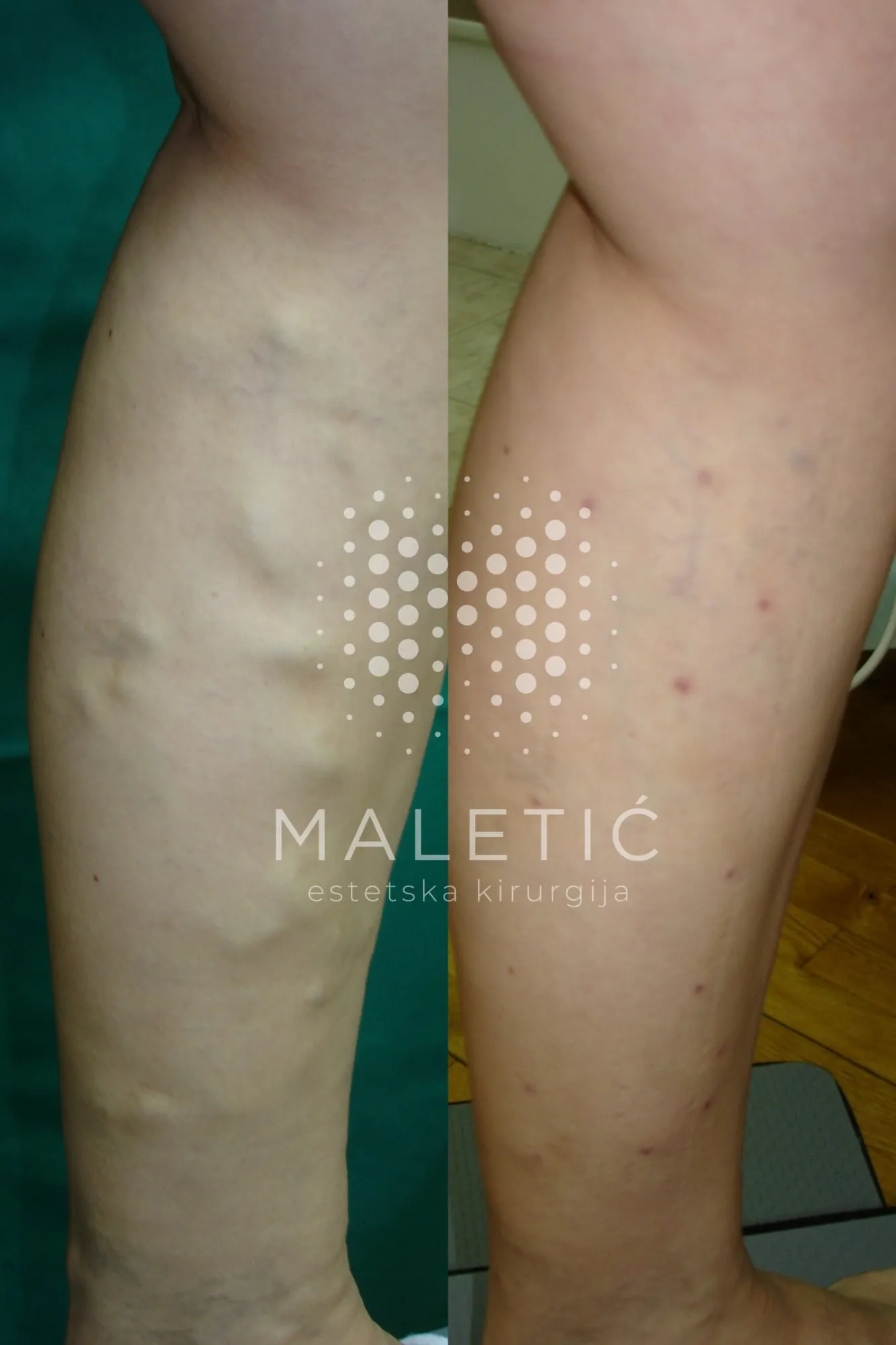
Real results
Before and after laser varicose vein surgery
We show our patients’ results only with their consent.
What to expect
How the leg looks a few months on
Symptoms such as heaviness and swelling can gradually ease over the first weeks after the procedure, but the pace of recovery depends on the initial findings and the extent of the venous disease. Changes in the leg’s appearance come more gradually, over several weeks or months — especially if enlarged tributaries were treated alongside the trunk vein.
Brownish skin pigmentation around the ankle, which can develop from long-standing venous hypertension, does not disappear immediately after the procedure. It may fade gradually, and in some patients it remains partly permanent.
Who we are
Who will be taking care of you
The procedure is performed by Mario Bartol, MD, a specialist in surgery and subspecialist in traumatology and orthopedics. He trained in endovenous laser ablation of the veins in Slovenia, and in 2008 he performed the first laser varicose vein surgery in Croatia, at Polyclinic Maletić. He has been a member of the Polyclinic’s team since that same year.
The Polyclinic has been operating since 1998, and since 2008 it has served as a training center for laser procedures in cooperation with the Fotona Laser & Health Academy. The nursing team takes part in preparing you for the procedure, caring for you immediately afterward, and organizing your follow-up examinations.
Examinations and procedures are available in Zagreb and Daruvar, following the same professional protocols.
Meet the whole team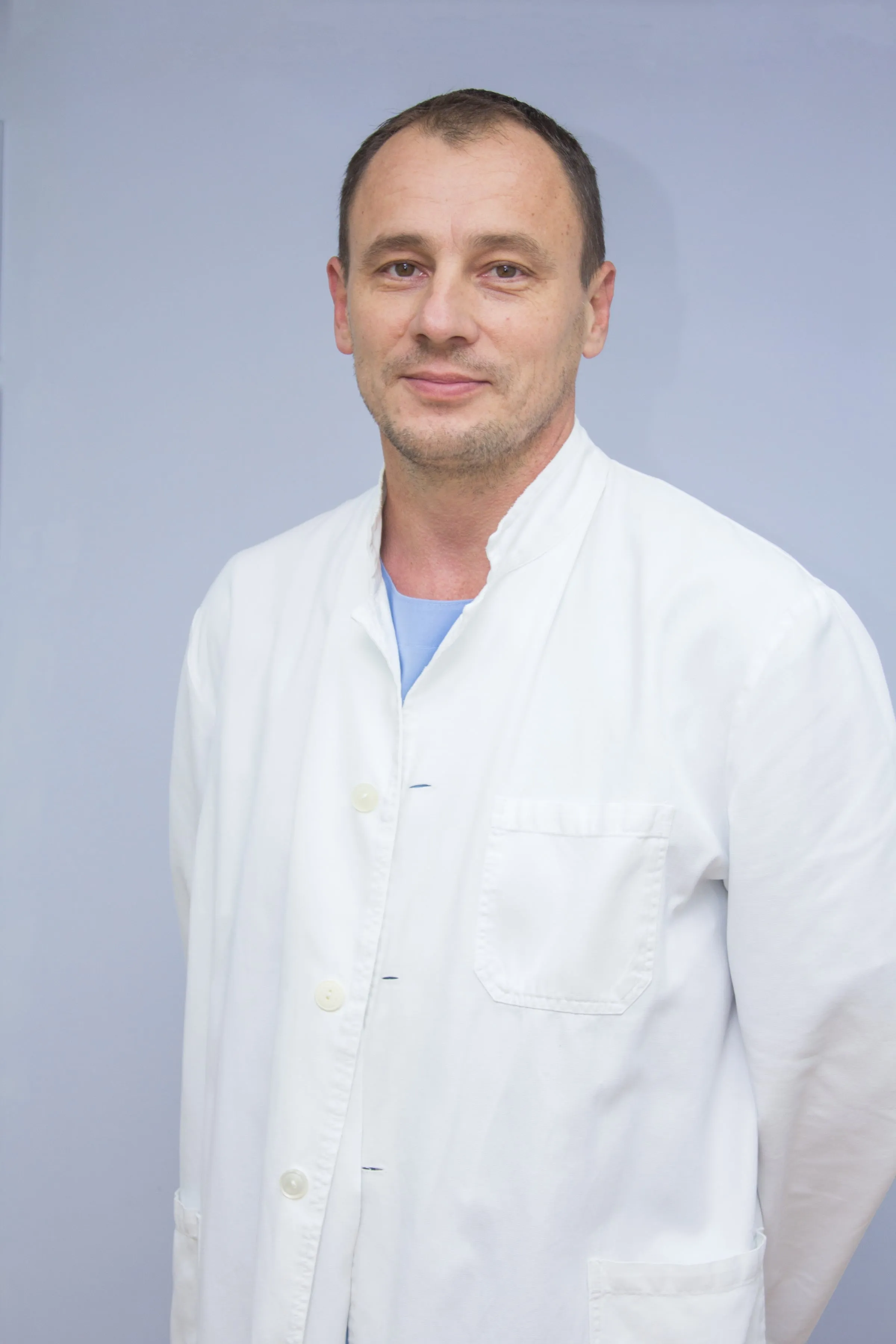
Price
Price and the first step
A color Doppler examination of the veins forms the basis for assessing the venous circulation and planning further treatment. Prices for the examination, laser varicose vein surgery under ultrasound guidance and surgery combined with miniphlebectomy are listed in the table below. The procedure is performed under local anesthesia.
After the examination, the physician will explain which procedure is indicated and which price from the price list applies to it. You can also see the prices of all procedures in the price list.
-
Color Doppler ultrasound of the veins
-
Laser Varicose Vein Surgery (under ultrasound guidance)
-
Laser Varicose Vein Surgery with miniphlebectomy (under ultrasound guidance)
Patient reviews
What our patients say
Reviews taken from our Google Business profiles, Zagreb and Daruvar, translated from Croatian.
★★★★★
“I recently had a varicose vein procedure. All praise to the entire team.”
★★★★★
“Since high school I watched the double chin I inherited from my father become more and more pronounced — and 15 years later, it is gone. A big thank you to Dr. Maletić and the whole team for granting my wish. The procedure was painless, as was the recovery, and the results were visible within a few days. The entire team was exceptionally kind and cheerful, and the atmosphere very pleasant. I left the polyclinic satisfied, and when the swelling went down two days later and I saw the double chin was gone, my satisfaction knew no bounds. I warmly recommend the Maletić Polyclinic.”
★★★★★
“My experience with breast augmentation with Dr. Maletić in Daruvar was excellent. I am extremely satisfied with the result. All the nurses are very kind and professional. I absolutely recommend them.”
★★★★★
“All praise for Polyclinic Maletić in Daruvar! I had a lip augmentation with fillers and I am very satisfied with the result. I would especially like to commend Dr. Mario Bartol, who is exceptionally kind, professional, and has a wonderful approach to patients, which made me feel comfortable and safe throughout the whole treatment. All the nurses are also very kind, helpful, and professional. I warmly recommend it to anyone considering aesthetic treatments!”
★★★★★
“Laser acne treatment is the only treatment that has helped me, and I would not choose any other facial treatment over it. Dr. Ines is one of the kindest people I have ever met and always has useful advice. Kind staff and excellent service — I warmly recommend it to everyone!”
★★★★★
“I had a wart on my face removed with a laser. A very professional service with excellent results. The wart was quite large, but after just one treatment it was gone. Highly recommended!”
★★★★★
“Blepharoplasty, 4D laser and double chin. Perfect. Highly recommended!”
★★★★★
“The best team of physicians, exceptionally professional and kind. I have been loyal to Polyclinic Maletić for more than 10 years and I am always satisfied with the results. Thank you.”
★★★★★
“I came to Dr. Maletić with a big problem and a lot of stress. I was met with such warm empathy and kindness, and patience in answering all my questions. Thank you, Dr. Maletić, for your advice and sincere support. I know I can always turn to her for advice, and that means a lot to me. The staff of the Zagreb polyclinic are also very helpful and kind. Thanks to them as well.”
★★★★★
“Dr. Maletić’s practice, in both Daruvar and Zagreb — and I have had several procedures — I can only recommend, because I felt very comfortable and in expert hands there!”
Questions and answers
Frequently asked questions
Does laser varicose vein surgery hurt?
The procedure is performed under tumescent local anesthesia, which is applied around the vein under ultrasound guidance. You may feel needle pricks while the anesthetic is given, and pressure or mild discomfort during the procedure. In the first days afterward, mild soreness and a feeling of tightness along the treated vein are possible.
Where does the blood go once the vein is closed?
After the procedure, blood is rerouted through the healthy, functional veins. The treated vein has valves that no longer work, which is why blood pools in it and flows in the wrong direction. Closing it therefore does not interrupt the normal return of venous blood to the heart.
Will the veins come back after laser surgery?
The treated vein usually stays closed, but over time it can partially reopen — this is called recanalization and is detected by ultrasound. Because the underlying tendency to venous disease remains, new varicose veins can also develop in other places over the years. That is why follow-up examinations are scheduled as your physician recommends.
When can I go back to work?
Walking is encouraged right after the procedure, and patients generally go home the same day. A return to desk work is often possible within a few days, with regular standing up and walking. Running, jumping, and lifting heavier loads should be avoided for as long as your physician recommends.
Do I have to wear a compression stocking, and for how long?
The compression stocking is worn as your physician recommends, often for about four weeks. It can help reduce swelling, bruising, and discomfort after the procedure.
Can varicose veins be treated with creams, tablets, or stockings?
Creams, gels, and tablets cannot restore the function of a damaged venous valve. Compression stockings, movement, and adjusted habits can ease the symptoms, and for some patients conservative measures may be enough. Whether a procedure is needed is assessed from the symptoms and the color Doppler findings.
Is this the same as laser removal of spider veins?
No. Endovenous laser ablation is used for insufficiency of certain larger superficial veins and is performed inside the vein, through a catheter. Spider veins and small surface vessels are treated with other methods that work from the outside.
How do I know if I am a candidate for laser varicose vein surgery?
A color Doppler examination shows whether your venous valves are working, which vein is causing the symptoms, and whether its anatomy is suitable for a laser procedure. The physician also takes into account your symptoms, your general health, and possible contraindications.