
Since 1998 · Zagreb & Daruvar
Ear Surgery (Otoplasty) in Croatia
Ear surgery corrects the position and shape of the ears, in children from the age of five and in adults. In children, before the procedure we assess age, cooperation, and readiness for the operation and the recovery.
Ear surgery is performed in children from the age of five and in adults, with no upper age limit. At the examination we assess the anatomy of the ear, the possibilities of correction, and the patient's readiness for the procedure and the recovery.
Is this for me?
What otoplasty is and who it is for
Otoplasty is the surgical correction of the shape and position of the outer ear. It is most often performed because of protruding ears. The procedure brings the ear closer to the head and shapes the fold that in protruding ears is usually not sufficiently developed. The angle of the ear relative to the head changes, while its size stays the same.
Protruding ears occur in about five percent of people. It is a congenital anatomical feature — not the result of anything the parents or the child did.
Why ears protrude
Most often there is one of two anatomical reasons, and sometimes both are present. In some patients the fold of cartilage that bends the ear toward the head is not sufficiently developed, while in others the cartilage in the bowl of the ear is too large and pushes the ear outward. That is why the surgical technique is chosen according to the findings of each ear.
Protruding ears do not affect hearing
Protruding ears do not affect hearing and are not a health problem in themselves. The operation is therefore not urgent, and the decision can be made after an examination and a conversation, without any rush.
For children
Ear surgery in children: when the time is right
In children, the timing of the operation depends on two factors: the development of the ear and the child's own readiness for the procedure and the recovery.
Why we do not operate before the age of five
By the age of five or six, the ear reaches roughly 90 percent of its final size. Before that, the cartilage is too soft to hold the sutures reliably, so as a rule the procedure is not performed. A younger child may also find it harder to tolerate wearing the bandage and to follow the instructions after the operation, which matters for preserving the result.
The child's readiness matters just as much. At Polyclinic Maletić the procedure is almost always performed under local anesthesia, which requires that the child understands why the operation is being done, wants it, and can cooperate during the procedure. If the child is not ready or does not want the operation, the decision should be postponed.
Correction with a splint at the earliest age
In newborns the ear cartilage is still soft and pliable, so in the first few months of life the shape can, in a share of cases, be corrected with a splint, without surgery. That option exists only very early, up to roughly the sixth month of life, and it is discussed with the pediatrician. If markedly protruding ears are noticed in a newborn, it is worth asking about the options for correction in that early period.
For adults
Ear surgery in adults
A large share of the patients who come to us because of protruding ears are adults, most often between the ages of twenty and forty. The reasons for the operation are individual and can include long-standing dissatisfaction with the position or shape of the ears and the wish for a correction that was never carried out earlier.
“There is no upper age limit for ear surgery. Adults often decide on the procedure after long consideration, and the technique is adapted to the findings and the firmness of the cartilage.”
In adulthood the cartilage is firmer than in childhood, so the technique is chosen according to the findings, but there is no upper age limit for this procedure.
Why adults are usually treated under local anesthesia
In adult patients the procedure is almost always performed under local anesthesia. The patient is awake and can talk with the surgeon during the operation, and after the procedure and a short rest goes home. Local anesthesia requires no recovery from general anesthesia. General anesthesia is also possible and is agreed individually, in which case the tests before the procedure are additionally extended.
How many days off work to plan
Most people return to office work after 5 to 7 days, while physically demanding work calls for a few extra days of recovery. Since a bandage is worn around the head for the first days, it helps to plan the procedure around a weekend or a few days off. For the first two weeks, pressure on the ears should be avoided, including the pressure of eyeglass frames.
When surgery is not the answer
When we do not recommend the operation
In children, the decision about the operation is not based only on the anatomical findings and the parents' wishes, but also on whether the child wants the procedure and is ready for the recovery.
British clinical guidelines recommend performing the procedure when the child themselves wants it. If a parent requests the operation preventively, to forestall teasing that has not yet happened, the recommendation is to wait until the child expresses the wish for a correction. If the child does not see their ears as a problem or does not want the operation, the decision should be postponed and reconsidered if the child later brings up the subject on their own.
“We recommend the operation when the child themselves wants the correction and is ready for the procedure and the recovery. If the child does not see the appearance of their ears as a problem, it is appropriate to postpone the decision.”
The procedure can also be postponed or not recommended when the protrusion of the ear is very mild, when expectations of the result are not realistic, or when the child is not ready to wear the bandage and follow the instructions needed for recovery and for preserving the result.
Postponing does not mean the procedure can never be done. Ear surgery is performed in adulthood as well, with no upper age limit, and the timing can be adapted to the patient's readiness and circumstances.
How it is performed
How we perform ear surgery
Before the procedure, an examination and the necessary tests are carried out; the tests are additionally extended if the operation is performed under general anesthesia. At the examination we plan how far the ears will be brought toward the head. The goal is not to press them flat against the head, but to reach a position in keeping with the anatomy of the ear and the proportions of the head.
The procedure itself takes about an hour, sometimes a little longer. The incision is made on the back of the ear, in the fold next to the head. Through it the surgeon reaches the cartilage, which — depending on the findings — is reshaped and secured with sutures in its new position. Finally the skin is closed, and the ears are immobilized with a bandage.
- Duration
- about an hour, sometimes a little longer
- Anesthesia
- usually local; general anesthesia is agreed individually
- Recovery
- head bandage for 5–6 days; a sports headband overnight for the next three weeks
- Performed by
- Duško Maletić, MD, MSc, and Mario Bartol, MD
“The incision is made on the back of the ear, in the natural fold next to the head. The procedure corrects the position and shape of the existing ear, in keeping with its anatomy.”
The patient goes home the same day with written instructions. In children, a parent is with the child before the procedure and immediately after it, without exception.
See the full price listWhy us
Why choose us for your ear surgery
Aesthetic surgery since 1998
more than 27 years of experience in aesthetic surgery
The child takes part in the decision
in children, the procedure is recommended when the child wants it and is ready for the recovery
Trust across generations
many patients have been with us for years, and today they bring their own children to appointments
You know who performs the surgery
the operation is performed by Duško Maletić, MD, MSc, and Mario Bartol, MD
An anesthesiologist follows the whole procedure
Ines Maletić, co-founder and anesthesiologist, stays with the patient from preparation to waking
Incision in the natural fold behind the ear
the scar sits on the back of the ear and is as a rule barely noticeable
A parent stays with the child
the parent is with the child before the procedure and immediately after it, without exception
Zagreb and Daruvar
the same team follows you from the consultation to the last follow-up
Recovery
Recovery after ear surgery: step by step
- The first 24 to 72 hours — the ears are tender and pain is possible. If the pain increases instead of gradually easing, contact the physician right away.
- Days 5–6 — a bandage is worn around the head. The bandage stabilizes the ears in their new position and reduces the risk of blood collecting under the skin.
- Days 7–14 — the bandage comes off, and the ears can still be reddish and slightly swollen. In this period adults return to work, and children to kindergarten or school.
- The next three weeks — a sports headband is worn overnight to protect the ears from pulling and pressure during sleep. Consistent wearing of the headband is important for preserving the position of the ears while they heal.
- About a month — a break from sports, physical education, and activities that carry a risk of a blow to the ear is recommended.
Honest about the risks
Possible risks and complications
Ear surgery is among the procedures with a low complication rate, but possible risks exist and are explained before the operation. In pooled data from the professional literature, covering more than three thousand patients, the following complications were reported:
- blood collecting under the skin, in about 2.5 percent of procedures — the most serious early complication, and the reason a compression bandage is worn
- wound-healing problems, in about 3 percent
- difficulties with the sutures, in about 1.8 percent
- problems with the scar, in about 1.6 percent
- infection, in about 0.8 percent
- a return of the protrusion or the need for a repeat procedure, in about 5 percent
Pain and itching during the healing period are reported by about 13 percent of patients, and this is considered an expected part of recovery, not a complication. No surgeon can guarantee perfect symmetry, because the ears are not fully symmetrical even before the procedure, and small differences between the left and right side are common without surgery as well.
After it is all done
The result and the limits of ear surgery
In the professional literature following children and adults after the correction of protruding ears, less avoidance of social situations and easier participation in them have been recorded.
The procedure changes the position and shape of the ear, but by itself it does not resolve other dissatisfactions with appearance, nor does it guarantee a change in self-confidence or social experiences.
Real results
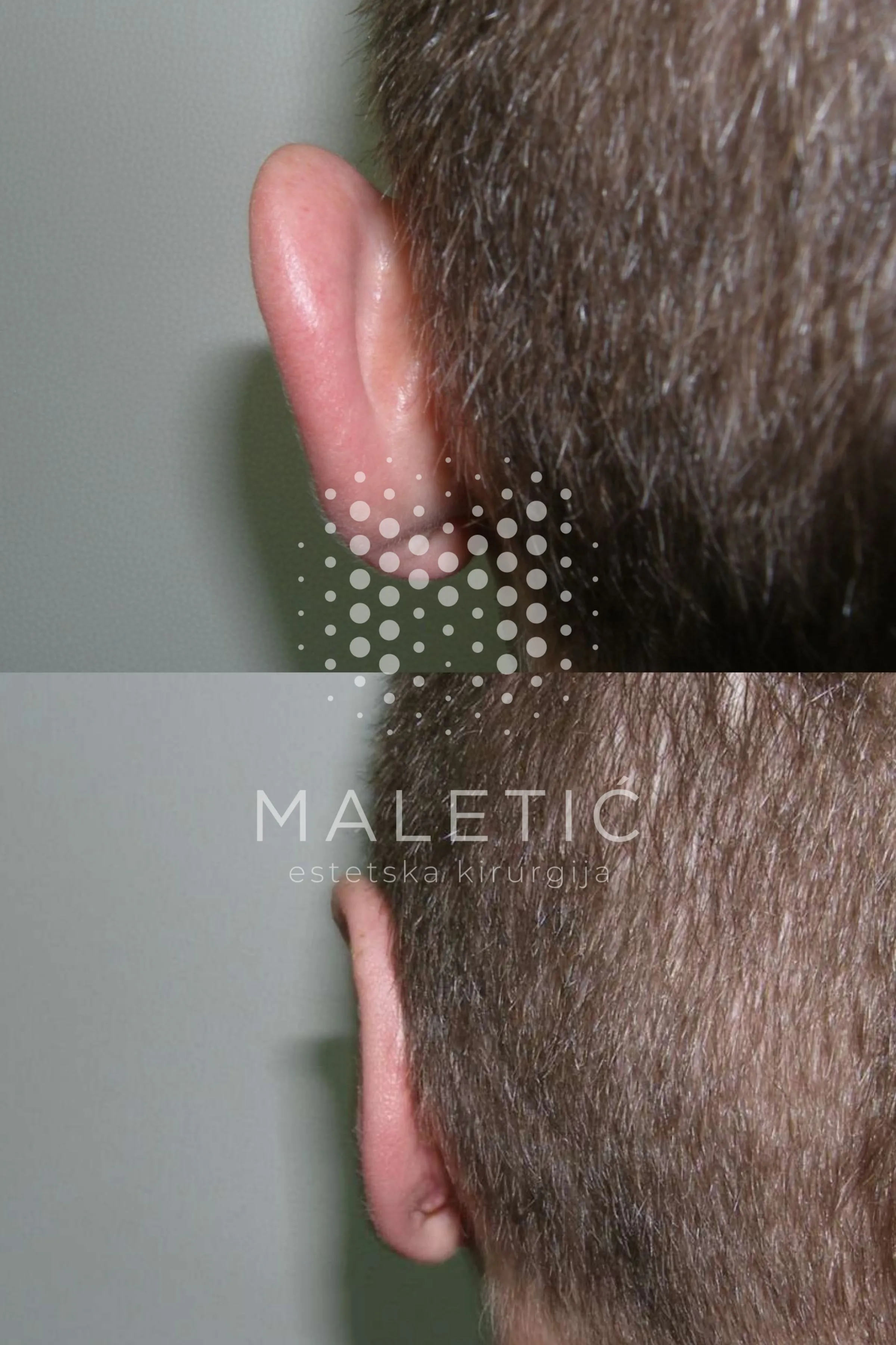
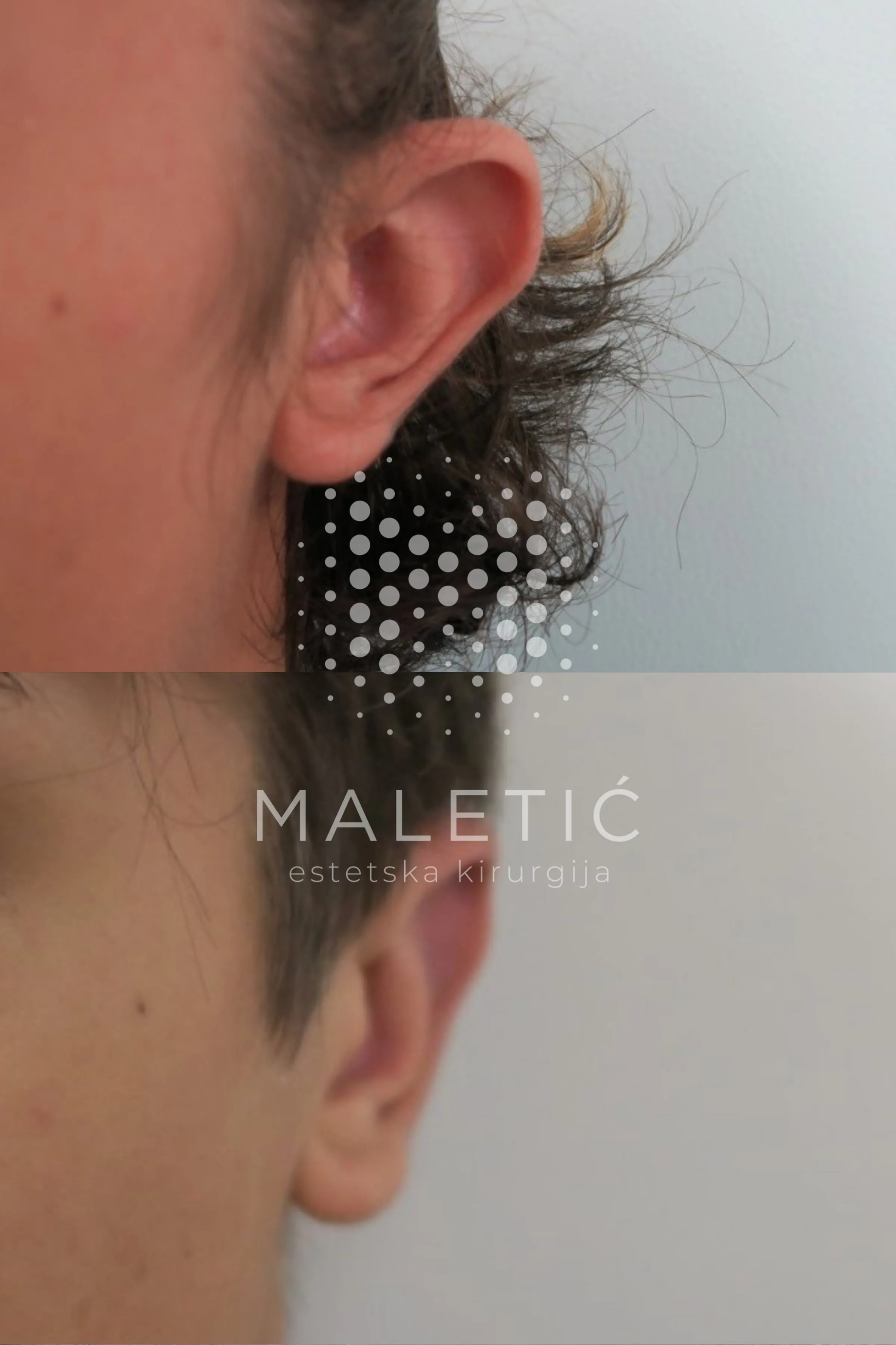
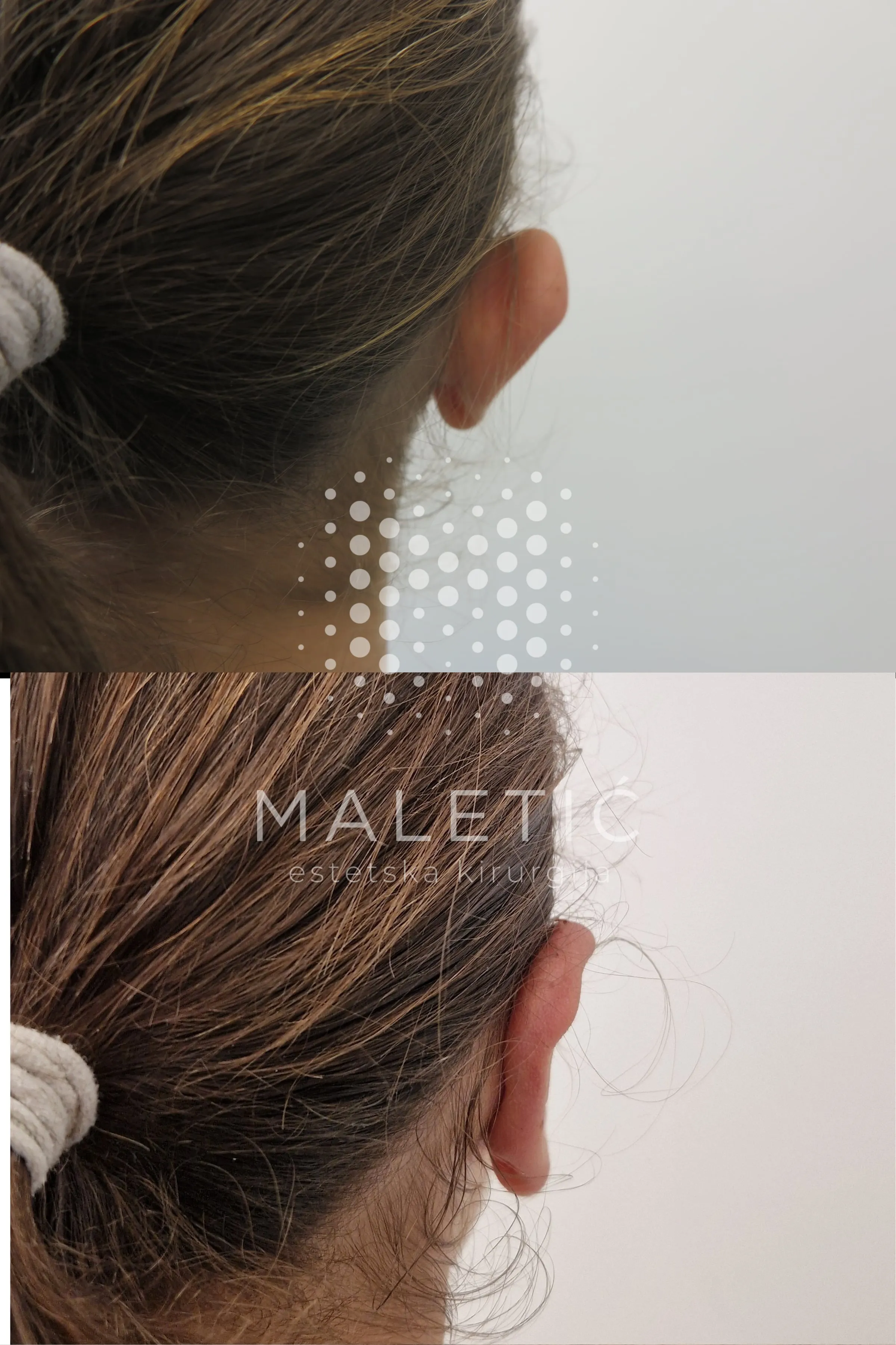
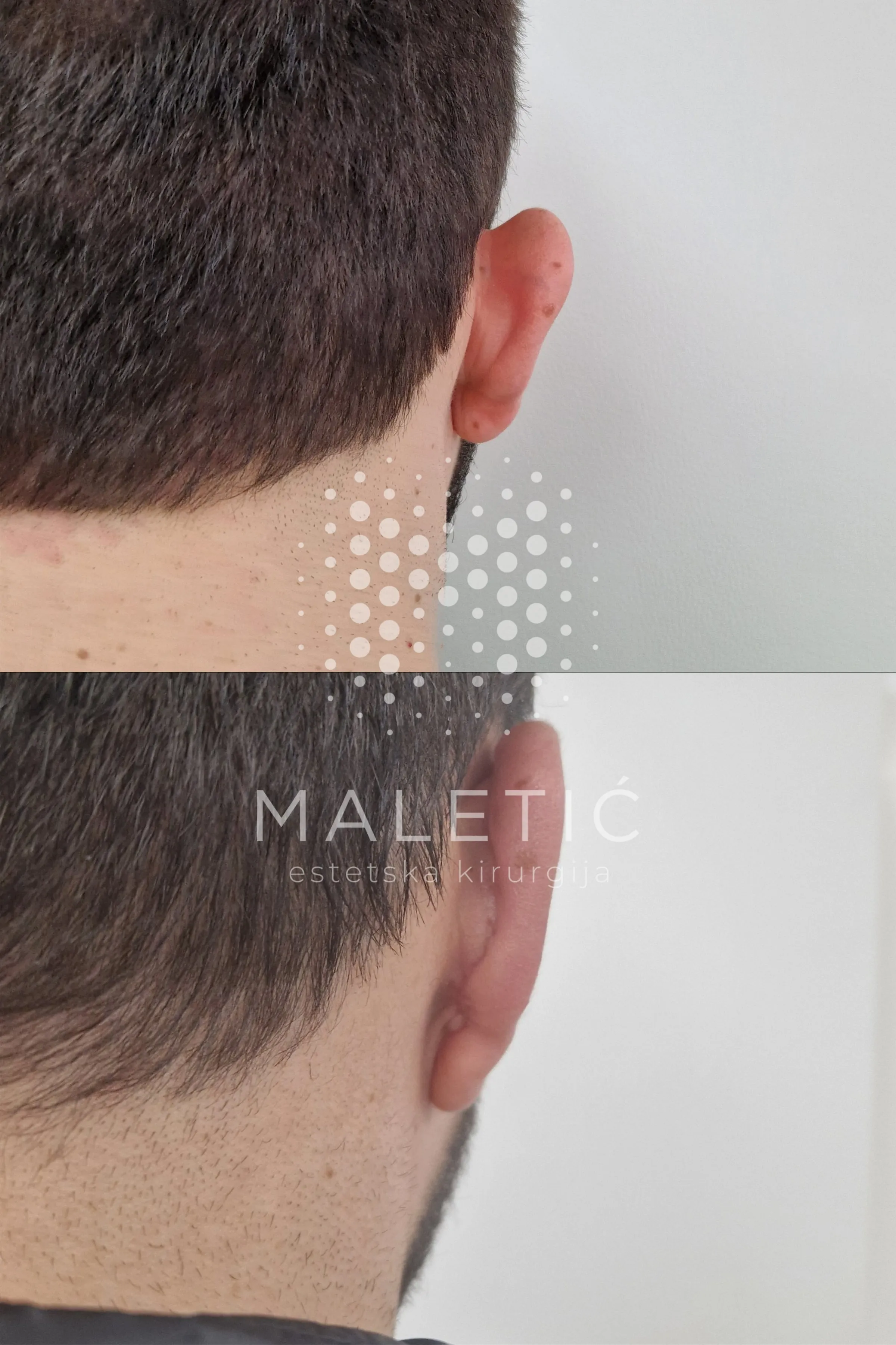
Before and after ear surgery
We show our patients' results discreetly and only with their consent.
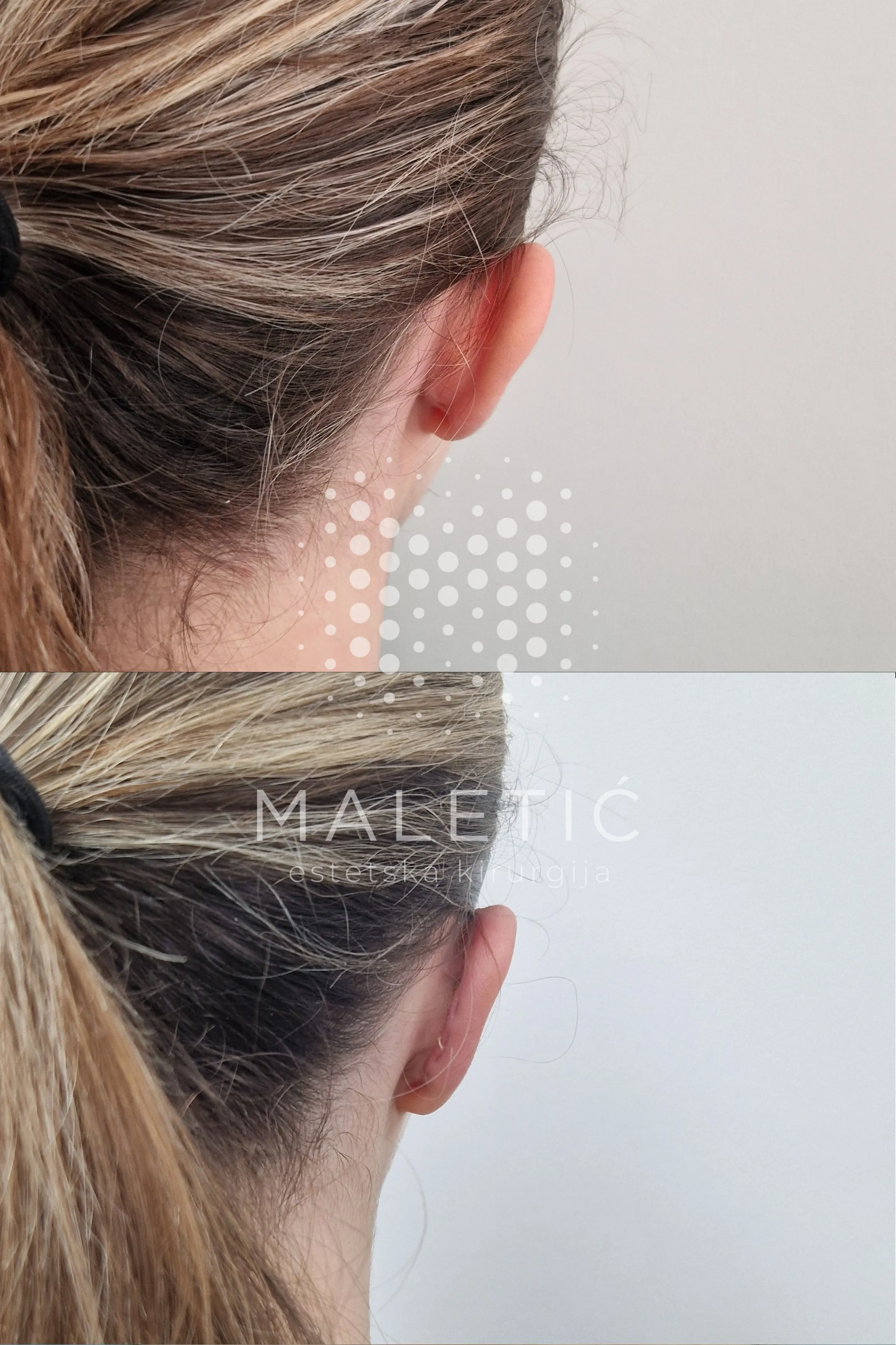
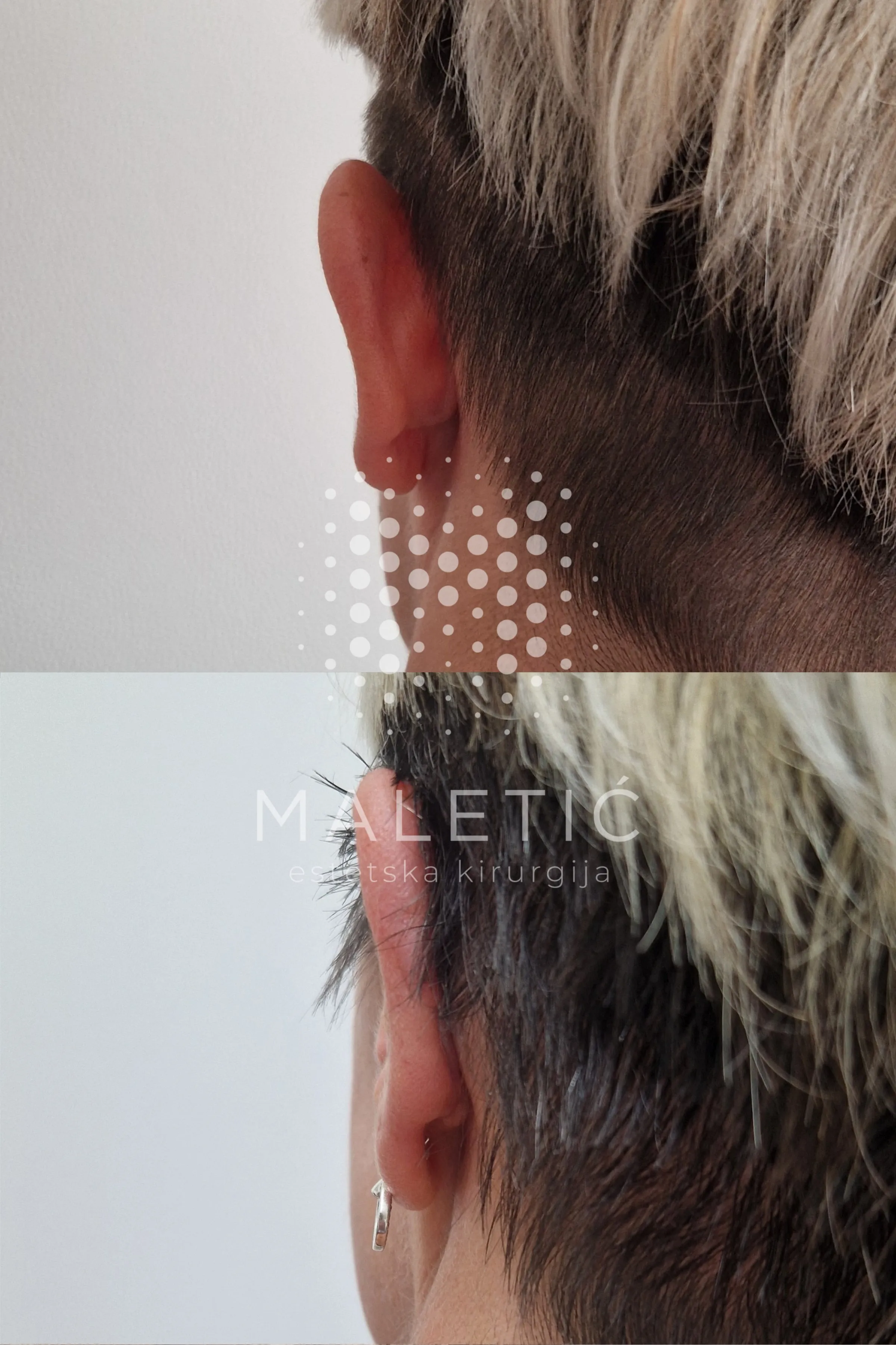
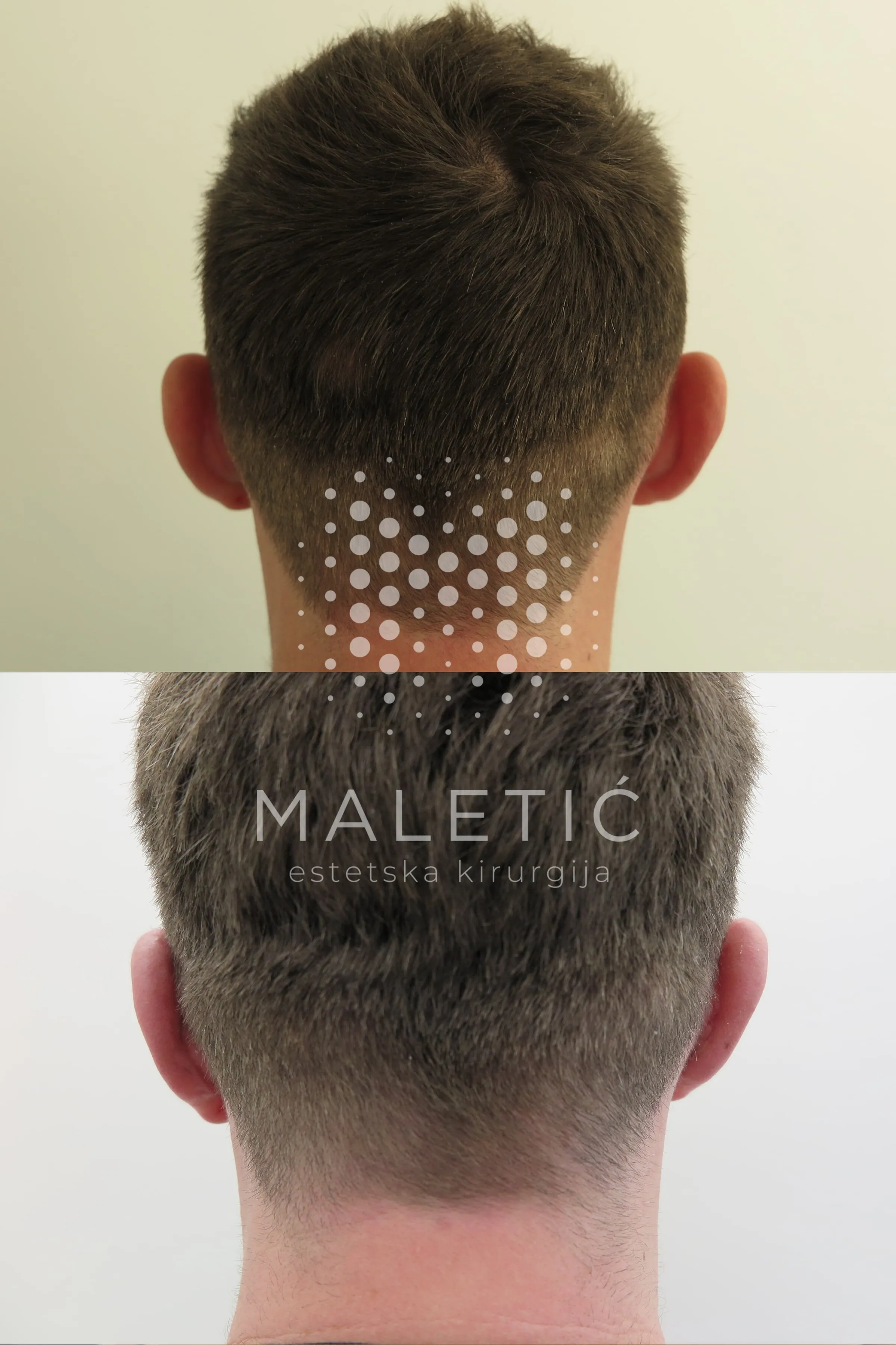
Who we are
Who will be taking care of you
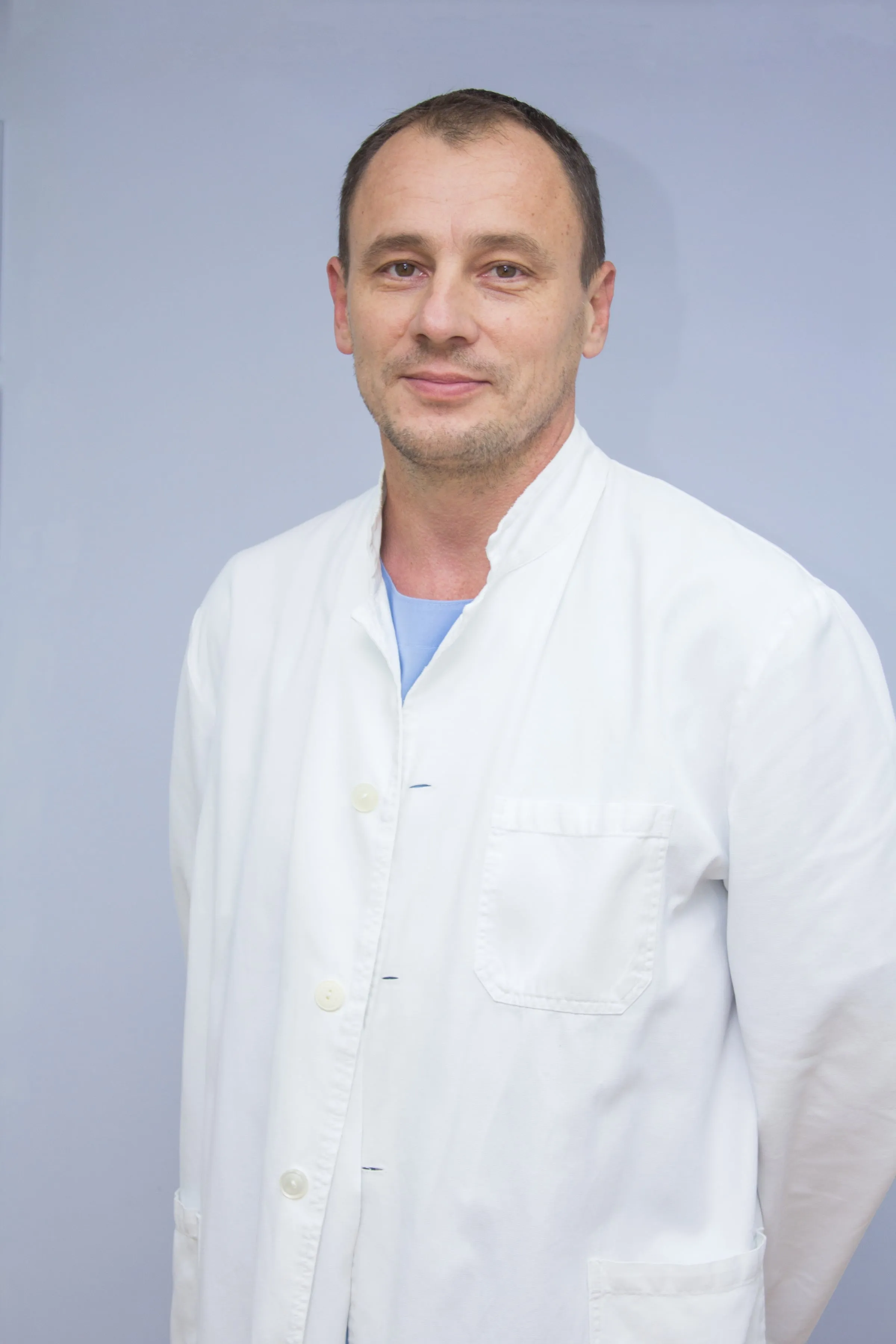
Ear surgery at Polyclinic Maletić is performed by Duško Maletić, MD, MSc, a specialist in surgery and urology and co-founder of the Polyclinic, and Mario Bartol, MD, a specialist in surgery and a member of the professional team since 2008. The safety of procedures under anesthesia is overseen by Ines Maletić, anesthesiologist and co-founder of the Polyclinic, who stays with the patient from preparation to waking.
Polyclinic Maletić was founded in 1998 in Daruvar and operates as a family polyclinic. Many patients have been with us for years, and today they bring their own children to appointments.
Alongside the physicians, the same nurses accompany the patient through the procedure and the recovery. The continuity of a familiar team is especially important with children, because it contributes to a sense of safety before and after the operation.
Meet the whole team
Price
The price of ear surgery
In the price list, the procedure appears as Surgery for protruding ears, which refers to the ear surgery described on this page.
The price of surgery for protruding ears is listed in the table below. As a rule, the procedure is performed under local anesthesia. If general anesthesia is agreed with the surgeon, the surcharge for general anesthesia is listed in the price list. The price of the procedure does not change with the technique, which is chosen according to the findings.
-
Surgery for protruding ears
A complete overview of the prices of all procedures is in our price list. For an examination, an assessment of the indication, and a conversation about the options for ear surgery, you can reach us through the contact page or by phone, in Zagreb or Daruvar.
Related facial procedures include rhinoplasty and eyelid surgery. You can browse the other procedures on the aesthetic surgery page.
Patient reviews
What our patients say
Reviews taken from our Google Business profiles, Zagreb and Daruvar, translated from Croatian.
★★★★★
“Greetings from Makarska! I have no words that I would not, of course, address to all of you in superlatives. From the very welcome, and my fear before the operation, the nurses guided me so kindly through everything I had to go through before the procedure — and I have to stress, with a huge smile on their faces. Since I had not slept for a few days beforehand from excitement and some inner restlessness, it is unbelievable how much humor all the nurses, and the doctor herself, used to "carry me off elsewhere with conversation" just so I would not stay focused on the operation. A big thank-you to everyone, and I was especially touched by the nurse who kept my spirits up during the procedure and nearly moved me to tears with her humor. I send my greetings to the whole team and the doctor of Polyclinic Maletić in Daruvar. All the best to everyone!”
★★★★★
“I can only recommend Dr. Maletić’s practice, both in Daruvar and in Zagreb — and I have had several procedures there — because I felt very comfortable and in expert hands!”
★★★★★
“I have been their patient and admirer for years. They have always known how to make my mom and me feel comfortable and welcome. My mom had a neck lift six years ago, and today I came in for PRP for hair growth. I cannot recommend them enough. Thank you, Ana!”
★★★★★
“Since high school I watched the double chin I inherited from my father become more and more pronounced — and 15 years later, the double chin is gone. A big thank-you to Dr. Maletić and the whole team for making my wish come true. The procedure was painless, as was the recovery, and the results were visible within days. The entire team was extremely kind and cheerful, and the atmosphere very pleasant. I left the polyclinic satisfied, and when, two days after the swelling went down, I saw that the double chin was gone, my satisfaction knew no bounds. I warmly recommend Polyclinic Maletić.”
★★★★★
“My experience with breast augmentation with Dr. Maletić in Daruvar was excellent. I am extremely satisfied with the result. All the nurses are very kind and professional. I absolutely recommend them.”
★★★★★
“All praise for Polyclinic Maletić in Daruvar! I had a lip augmentation with fillers and I am very satisfied with the result. I would especially like to praise Dr. Mario Bartol, who is extremely kind, professional, and has a wonderful approach to patients, which made me feel comfortable and safe throughout the treatment. All the nurses are also very kind, helpful, and professional. I warmly recommend them to anyone considering aesthetic treatments!”
★★★★★
“Laser acne treatment is the only treatment that helped me, and I would not choose any other facial treatment over it. Dr. Ines is one of the kindest people I have ever met and always has useful advice. Kind staff and top-level service — I warmly recommend her to everyone!”
★★★★★
“I had a wart on my face removed by laser. Very professional service with excellent results. The wart was quite large, but it disappeared after just one treatment. All recommendations!”
★★★★★
“I recently had a varicose vein procedure. All praise to the whole team.”
★★★★★
“Blepharoplasty, 4D laser, and double chin. Perfect. All recommendations!”
Questions and answers
Frequently asked questions
From what age can ear surgery be performed?
As a rule, the procedure is not performed before the age of five. By the age of five or six the ear reaches about 90 percent of its final size, and before that the cartilage is too soft to hold the sutures reliably. There is no upper age limit, so the operation is also performed in adulthood.
Is it too late to have ear surgery as an adult?
No. A large share of our patients are adults who waited years to make this decision. In adulthood the cartilage is firmer than in childhood, so the technique is chosen according to the findings, but there is no age limit for the procedure.
Does ear surgery hurt?
The procedure is performed under anesthesia so that pain during the operation is kept to a minimum. For the first few days the ears can be tender and sore, and the discomfort is eased with a painkiller as instructed by the physician. If the pain increases instead of gradually easing, you should contact the physician, because that can be a sign of a hematoma.
How many days off work or school are needed?
Adults most often return to office work after 5 to 7 days, and children to school or kindergarten after 7 to 14 days. A break of roughly a month from sports and physical education is recommended.
Does ear surgery leave a scar?
The incision is made on the back of the ear, in the natural fold next to the head. Every incision leaves a scar, but its position as a rule makes it barely noticeable in everyday life. Problems with the scar are reported in about 1.6 percent of procedures.
Can the ears return to their previous position after surgery?
A partial return of the protrusion is possible and is the most common late complication of this procedure. In pooled data from the professional literature, a repeat procedure or a return of the protrusion occurs in about 5 percent of cases. Consistent wearing of the bandage and the headband is important for reducing that risk.
Is the procedure performed under local or general anesthesia?
At Polyclinic Maletić, ear surgery is almost always performed under local anesthesia, in adults and in older children who are motivated and able to cooperate. General anesthesia is also possible and is agreed individually with the surgeon, in which case the tests before the procedure are additionally extended.