
Since 1998 · Zagreb & Daruvar
Nose Surgery in Croatia
Nose surgery can correct aesthetic irregularities, functional problems, or both. The surgical plan is determined by an exam of the shape, anatomy, and function of the nose.
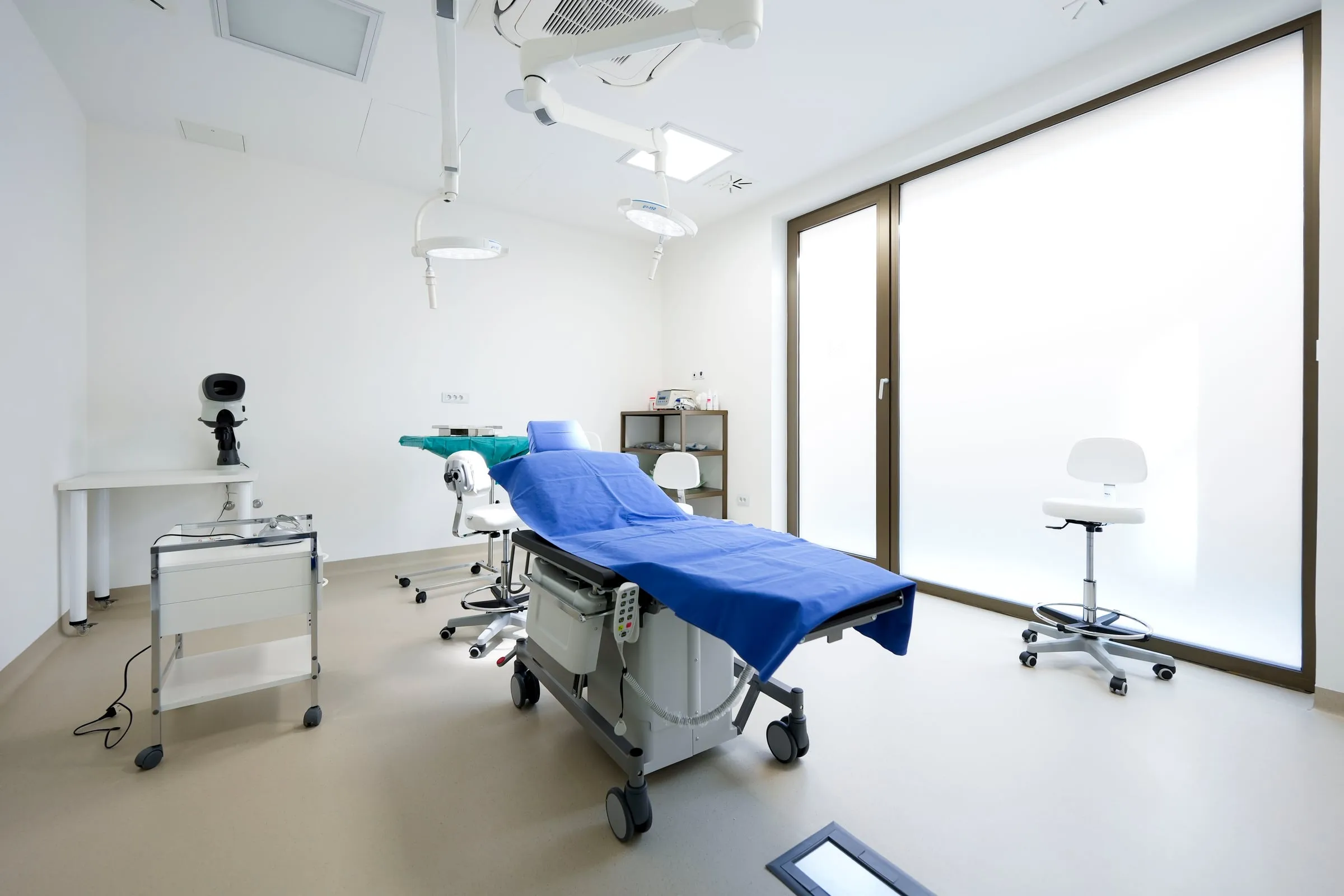
The reasons for nose surgery can be aesthetic, functional, or combined. Some people are bothered by a hump, the shape of the tip, the width, or the asymmetry of the nose, while others struggle to breathe through one or both nostrils, snore, or feel tired from poor sleep. At the exam we assess the shape and function of the nose, establish the cause of the symptoms, and explain what the procedure can achieve and what its limits are.
Is this for me?
What nose surgery can change — and what it cannot
Nose surgery, or rhinoplasty, is a surgical procedure that changes the shape of the nose, its function, or both. Because the nose sits at the center of the face, even small changes can affect the overall look — which is why the procedure is planned precisely around the anatomy and facial proportions of each patient.
The procedure can remove a hump, lower or raise the tip of the nose, narrow a nose that is too wide, soften asymmetry, and, when needed, improve the airway. Surgery cannot copy the shape of a nose from someone else's photograph, nor does it change the quality of the skin. It also cannot resolve dissatisfaction with one's appearance that is not connected to the shape or function of the nose.
Aesthetic rhinoplasty
Aesthetic nose surgery is performed when the patient is bothered by the nose's shape. The most common reasons are a hump on the bridge of the nose, a tip that is too large, too high, or too drooping, a nose that is too wide, and visible asymmetry — which can also be linked to an old injury the patient no longer remembers.
How visible the change will be depends on the starting shape of the nose and the proportions of the face. A change of a few millimeters can look restrained on one face and very noticeable on another, so the expected extent of the change is explained before the operation.
Functional nose surgery
Functional nose surgery is performed to improve breathing. Symptoms can include difficulty breathing through one or both nostrils, a feeling of constant congestion, snoring, a dry mouth and throat in the morning, and tiredness from poor sleep. The most common cause is a deviation — a crookedness of the nasal septum — but difficult breathing can have other causes as well.
Aesthetic and functional surgery are not the same procedure, although they can be performed together. If, alongside a deviated septum, there is also an aesthetic indication, both parts can be performed during the same operation — with one anesthesia and one recovery.
“The goal of the operation is not to make the nose stand out from the rest of the face, but to bring its shape into harmony with the proportions of the face while preserving or improving breathing. That is why, before the procedure, we talk about the change you want and about what is achievable given the anatomy of your nose.”
When surgery is not the answer
When we will not recommend nose surgery
Before deciding on an operation, we assess whether there is a clear aesthetic or functional indication, whether the expectations are achievable, and whether the patient is ready for the procedure and the recovery.
When the profile's proportions play a part. The impression of a nose that is too large sometimes comes from its relationship with the chin and the other proportions of the profile. In such cases nose surgery can bring a smaller change than the patient expects. That is why we assess the whole profile at the exam and explain how much change is realistically achievable.
When difficult breathing has another cause. Not all difficult breathing is caused by a deviated septum. If the exam shows that the cause is not connected to the septum or the other structures corrected by nose surgery, an aesthetic procedure would not resolve the functional symptoms. In that case, appropriate further workup is recommended before deciding on an operation.
When expectations are not achievable. A photograph of someone else's nose can help in discussing the change you want, but the result depends on the skin, cartilage, bones, and facial proportions of each patient. If the expected shape cannot be achieved on your specific nasal anatomy, surgery is not recommended on the basis of that expectation.
When preoccupation with the look of the nose is extremely intense. If thinking about the appearance of the nose takes up a large part of every day, an operation most often does not bring the expected relief. In that situation we recommend postponing the decision and first examining in detail the expectations attached to the operation.
When facial growth is not finished, or the patient is not ready for the recovery. The procedure is performed only after the facial bones have finished growing. Recovery after nose surgery takes months and requires following instructions and restrictions, so the decision should be postponed if the right conditions for such a recovery do not currently exist.
“Difficult breathing is not always caused by a deviated septum. At the exam we first establish the cause of the symptoms, and then assess whether it can be treated with nose surgery.”
How it is performed
What nose surgery looks like with us
An exam before any decision
The first visit is for conversation and examination — no surgery date is set then. We assess the external shape of the nose and the airflow through the nostrils, to distinguish the aesthetic from the functional part of the problem. You describe what specifically bothers you and what change you expect.
Before the procedure, the necessary tests are also done, since the operation is performed under general anesthesia.
A plan built around your face
The surgical plan is drawn up individually, according to the anatomy and facial proportions of the patient. The quality and thickness of the skin, the firmness of the cartilage, and the state of the bones are all taken into account, because those factors affect how much change is possible and how the nose will look once the swelling resolves.
Photographs you bring can help in discussing what kind of change you like. They do not serve as a template that can be copied onto your face, nor as a promise of a particular result.
Anesthesia and the course of the operation
The procedure takes approximately one to two hours, depending on the extent, and is performed under general anesthesia. Through the incisions, the surgeon reaches the bones and cartilage, which are then shaped, removed, or repositioned. Where needed, the nasal septum is corrected during the same operation.
After the procedure a splint is placed on the nose for protection and stabilization during the initial phase of recovery, and packing is placed in the nostrils. The patient wakes under the supervision of the anesthesiologist and, after recovering from the anesthesia, goes home with written care instructions.
- Duration
- 1–2 hours
- Anesthesia
- general, included in the price
- Recovery
- nasal splint for 7 days; back to work most often after 10–14 days
- Performed by
- Duško Maletić, MD, MSc and Mario Bartol, MD
Why us
Why choose us for your nose surgery
Aesthetic surgery since 1998
more than 27 years of experience in aesthetic surgery, with the continuity of a family-run Polyclinic
Aesthetic and functional assessment
the exam establishes whether the problem concerns the look of the nose, its function, or both
Planned around your anatomy
the procedure is planned according to the proportions of your face and the anatomy and function of your nose
Shape and function in one procedure
if a deviated septum interferes with breathing, the aesthetic and functional parts can be performed within the same operation
General anesthesia included in the price
general anesthesia is included in the quoted price of the operation and is not charged extra
An anesthesiologist and our own operating rooms
the procedure is performed in our operating rooms with air-recuperation systems, with Ines Maletić, anesthesiologist and co-founder, following the patient from preparation to waking
You know who performs the procedure
nose surgery is performed by Duško Maletić, MD, MSc and Mario Bartol, MD
Continuity of care
the same team follows the patient from the exam and preparation through the procedure, recovery, and follow-ups
Recovery
Recovery after nose surgery: what to expect, day by day
- Day one — the splint is on the nose and the packing is in the nostrils, so breathing is through the mouth. Pressure and congestion can be felt, more than pain, and the head should be kept elevated.
- 1–2 days — the packing is removed, after which breathing through the nose becomes easier, although swelling can still temporarily restrict it.
- 2–3 days — bruising around the eyes is at its most pronounced in this period, after which it gradually begins to fade.
- 7 days — the splint comes off. The nose is still swollen and its look is not final.
- 10–14 days — the bruising has mostly resolved and most patients return to office work.
- 2–4 weeks — exertion, sport, and activities that carry a risk of a blow to the nose are avoided. The nose is not blown until the physician allows it.
- The following months — the swelling gradually subsides and the shape of the nose continues to change.
Realistic expectations
Why the final result of nose surgery takes time
Removing the splint does not mean recovery is over. After the initial phase comes the gradual resolution of the swelling and the further shaping of the nose.
The swelling does not resolve evenly. It lasts longest at the tip of the nose, where the skin is thicker, so for several months the tip can look fuller than its final shape. During that period the look of the nose can vary through the day, and one side can occasionally look different from the other. Such changes are a normal part of healing.
Most of the swelling disappears within a year, which is when the final result is generally assessed. For the same reason, any additional correction is not planned earlier, because the nose is still changing during that period.
“The nose you see a few weeks after the operation is not the final result. The swelling resolves gradually, and we assess the final shape only after about a year.”
Honest about the risks
Possible risks and complications
Nose surgery ranks among the more demanding procedures of aesthetic surgery and, like any surgical procedure, carries risks. The patient should be familiar with the possible complications before deciding on the operation.
- bleeding, infection, and a reaction to anesthesia, as with any operation
- contour irregularities of the nose — small unevennesses or asymmetry visible only once the swelling resolves
- weakening of the nose's support, which can change the shape over time
- worsening of breathing through the nose, which is possible even when the procedure is performed correctly
- temporary numbness of the tip of the nose, which can last for months
- tiny red dots on the skin from burst capillaries, which are usually inconspicuous but can remain permanently
- the need for an additional procedure, if after healing the result proves unsatisfactory
No surgeon can guarantee perfect symmetry, because the nose and the face are not perfectly symmetrical even before the procedure. Before the operation we discuss the expected extent of the change, possible deviations, and the limits of the procedure.
In the long run
The long-term result of nose surgery
Once recovery is complete, the aesthetic result — and, in functional procedures, the airflow through the nose — is assessed. Patient follow-ups even several years after the operation show that improved nasal airflow can be maintained long-term, not just during the first months.
Nose surgery changes certain anatomical features of the nose, but it does not necessarily change a person's overall relationship with their appearance, nor resolve dissatisfaction that is not connected to the nose.
Who we are
Who will be taking care of you
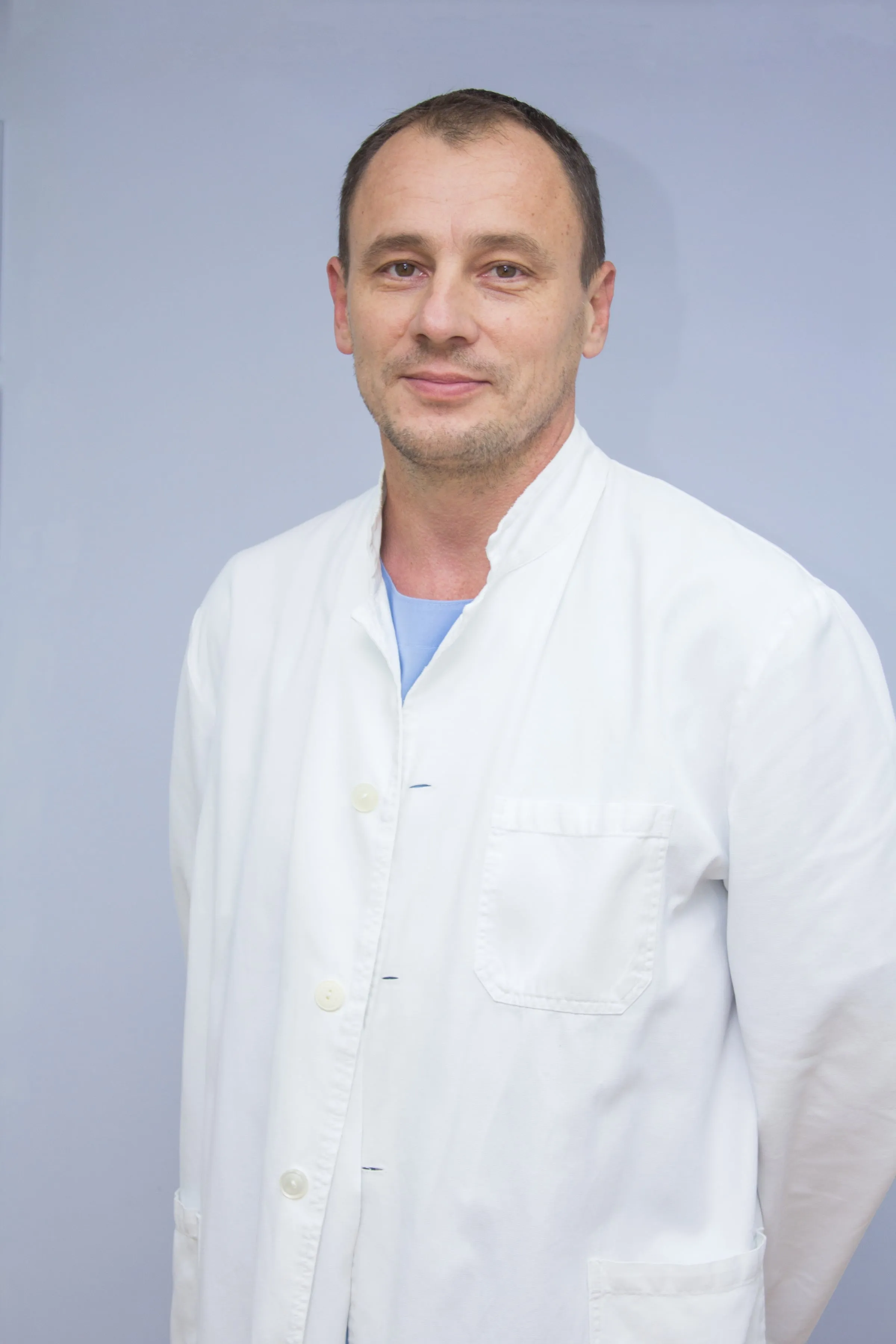
Nose surgery at Polyclinic Maletić is performed by Duško Maletić, MD, MSc, a specialist in surgery and urology and co-founder of the Polyclinic, and Mario Bartol, MD, a specialist in surgery and a member of the professional team since 2008. The safety of the procedure under general anesthesia is the responsibility of Ines Maletić, anesthesiologist and co-founder of the Polyclinic, who follows the patient from preparation to waking.
Polyclinic Maletić was founded in 1998 in Daruvar and operates as a family-run polyclinic. The same professional team follows the patient through preparation, the procedure, recovery, and follow-ups.
Meet the whole team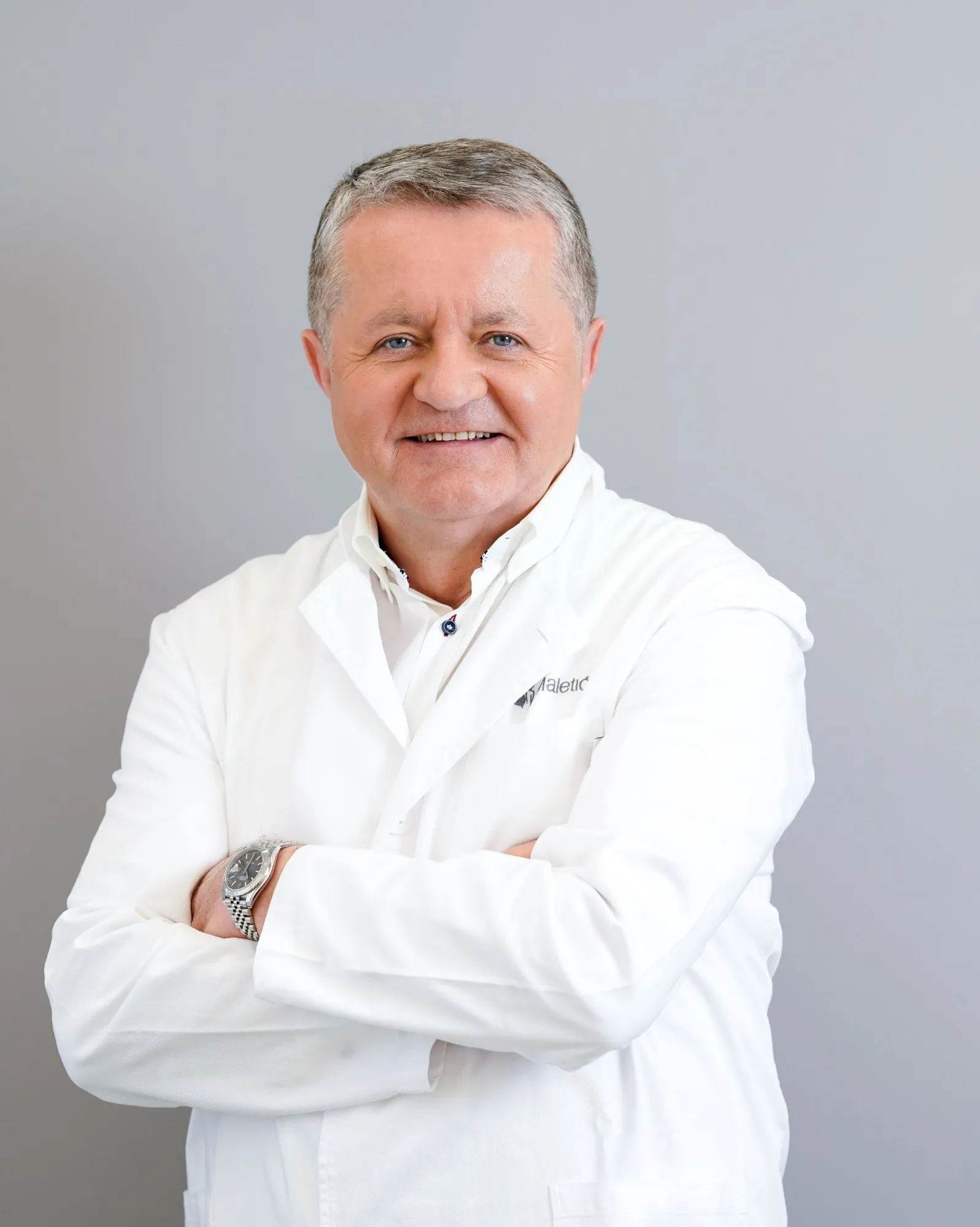
Price
The price of nose surgery
Aesthetic nose surgery costs €4,000.00, and functional nose surgery also costs €4,000.00. Both amounts include general anesthesia, which is not charged extra.
The exact extent of the operation is determined at the exam. If, alongside the aesthetic indication, there is also a deviated septum that interferes with breathing, the extent of the combined procedure and the final price are established before the surgery date is agreed.
-
Nose surgery (aesthetic)
-
Nose surgery (functional)
A complete overview of prices can be found in our price list. To have the indication and the possibilities of nose surgery assessed, you can arrange an exam through the contact page or by phone, in Zagreb or Daruvar.
Smaller irregularities of the nose can sometimes be softened with dermal fillers, without surgery — but fillers do not change the size of the nose or improve breathing. Related facial procedures include ear surgery (otoplasty) and eyelid surgery (blepharoplasty). You can browse the other procedures on the aesthetic surgery page.
Patient reviews
What our patients say
Reviews taken from our Google Business profiles, Zagreb and Daruvar, translated from Croatian.
★★★★★
“Greetings from Makarska! I have no words that would not, of course, be superlatives for all of you. From the very welcome, and my fear before the operation, all the nurses guided me so nicely through everything I had to go through before the procedure — and I have to point out, with a huge smile on their faces. Since I had not slept for a few days beforehand out of excitement and some inner restlessness, it is incredible how much humor all the nurses, and the doctor herself, used to “carry me off elsewhere with conversation” just so I would not stay focused on the operation. A big thank you to everyone, and I was especially touched by the nurse who kept me entertained during the procedure and nearly moved me to tears with her humor. I would like to take this opportunity to greet the whole team and the doctor of Polyclinic Maletić in Daruvar. All the best to everyone!”
★★★★★
“My experience at Polyclinic Maletić in Daruvar was extremely positive. From the very beginning I was delighted by the professionalism and kindness of the entire staff. The physicians took the time to inform me about all the procedures in detail, which gave me a feeling of safety and trust. The whole team was exceptionally professional and attentive, and the result exceeded all my expectations. I would definitely recommend Polyclinic Maletić to anyone looking for quality, personalized healthcare.”
★★★★★
“The best team of physicians, exceptionally professional and kind. I have been loyal to Polyclinic Maletić for more than 10 years and I am always satisfied with the results. Thank you.”
★★★★★
“Since high school I watched the double chin I inherited from my father grow more and more pronounced — and 15 years later, the double chin is gone. A big thank you to Dr. Maletić and the whole team for granting my wish. The procedure was painless, and so was the recovery, and the results were visible after just a few days. The entire team was exceptionally kind and cheerful, and the atmosphere very pleasant. I left the polyclinic satisfied, and when, two days after the swelling went down, I saw the double chin was gone, my satisfaction knew no bounds. I warmly recommend Polyclinic Maletić.”
★★★★★
“My experience with breast augmentation with Dr. Maletić in Daruvar was excellent. I am extremely satisfied with the result. All the nurses are very kind and professional. I absolutely recommend them.”
★★★★★
“All praise for Polyclinic Maletić in Daruvar! I had lip augmentation with fillers and I am very satisfied with the result. I would especially like to commend Dr. Mario Bartol, who is exceptionally kind, professional, and has a wonderful approach to patients, which made me feel comfortable and safe throughout the whole treatment. All the nurses are also very kind, accommodating, and professional. I warmly recommend them to anyone considering aesthetic treatments!”
★★★★★
“Laser acne treatment is the only treatment that has helped me, and I would not choose any other facial treatment over it. Dr. Ines is one of the kindest people I have ever met and always has useful advice. Kind staff and top-level service — I warmly recommend her to everyone!”
★★★★★
“I had a wart on my face removed by laser. A very professional service with excellent results. The wart was quite large, but after just one treatment it was gone. All recommendations!”
★★★★★
“I recently had a varicose vein procedure. All praise to the entire team.”
★★★★★
“Blepharoplasty, 4D laser, and double chin. Perfect. All recommendations!”
Questions and answers
Frequently asked questions
How long is the recovery after nose surgery?
The splint comes off the nose after about a week, and the packing is removed from the nostrils earlier, most often after one to two days. Bruising and swelling around the eyes are most pronounced in the first few days and generally resolve over two to three weeks. Most people return to office work after 10 to 14 days, and rest from exertion and sport is recommended for a few more weeks.
Does nose surgery hurt?
The procedure is performed under general anesthesia, so the patient is not aware of the operation while it takes place. After the operation, patients rarely describe pronounced pain — more often pressure and a feeling of congestion, because while the packing is in the nostrils, breathing is through the mouth. The discomfort is eased with a painkiller as directed by the physician.
When is the final result of nose surgery visible?
The shape of the nose after the splint comes off is not yet final. The swelling subsides gradually, lasting longest at the tip of the nose, so the final result is generally assessed only after about a year. For the same reason, any additional correction is not planned before that healing period is over.
Will people notice that my nose was operated on?
The procedure is planned so that the shape of the nose is in harmony with the proportions of the rest of the face. The plan is built around your anatomy, not around a photograph of someone else’s nose. The expected extent and visibility of the change are assessed and explained before the operation.
Can the look of the nose be corrected and breathing improved in the same operation?
Yes, and it is a common case. If, alongside the aesthetic indication, there is also a deviated septum that interferes with breathing, both parts can be performed during the same operation. The decision is made after the exam, because not all difficult breathing is caused by a deviated septum.
At what age can the nose be operated on?
The procedure is performed only after the facial bones have finished growing, because an earlier operation could affect the further development of the nose. In girls, growth finishes somewhat earlier than in boys, and the assessment is made by the physician at the exam. There is no set upper age limit — the possibility of the procedure is assessed individually.
Is there a scar after nose surgery?
When the entire procedure is performed through the nostrils, there are no external incisions and no visible external scars. If the nostrils are narrowed, small scars can remain at their base, which are generally inconspicuous. With the approach through the strip of skin between the nostrils, a thin scar remains that fades with time.