
Since 1998 · Zagreb & Daruvar
Testicular Prosthesis Implantation in Croatia
A testicular prosthesis replaces the absent testicle in appearance and volume, but it does not restore its hormonal or reproductive function. At Polyclinic Maletić, the prosthesis is implanted by Duško Maletić, MD, MSc, specialist in surgery and urology, and the decision is preceded by a conversation about the size, the position, the feel, the limitations, and the risks of the procedure.
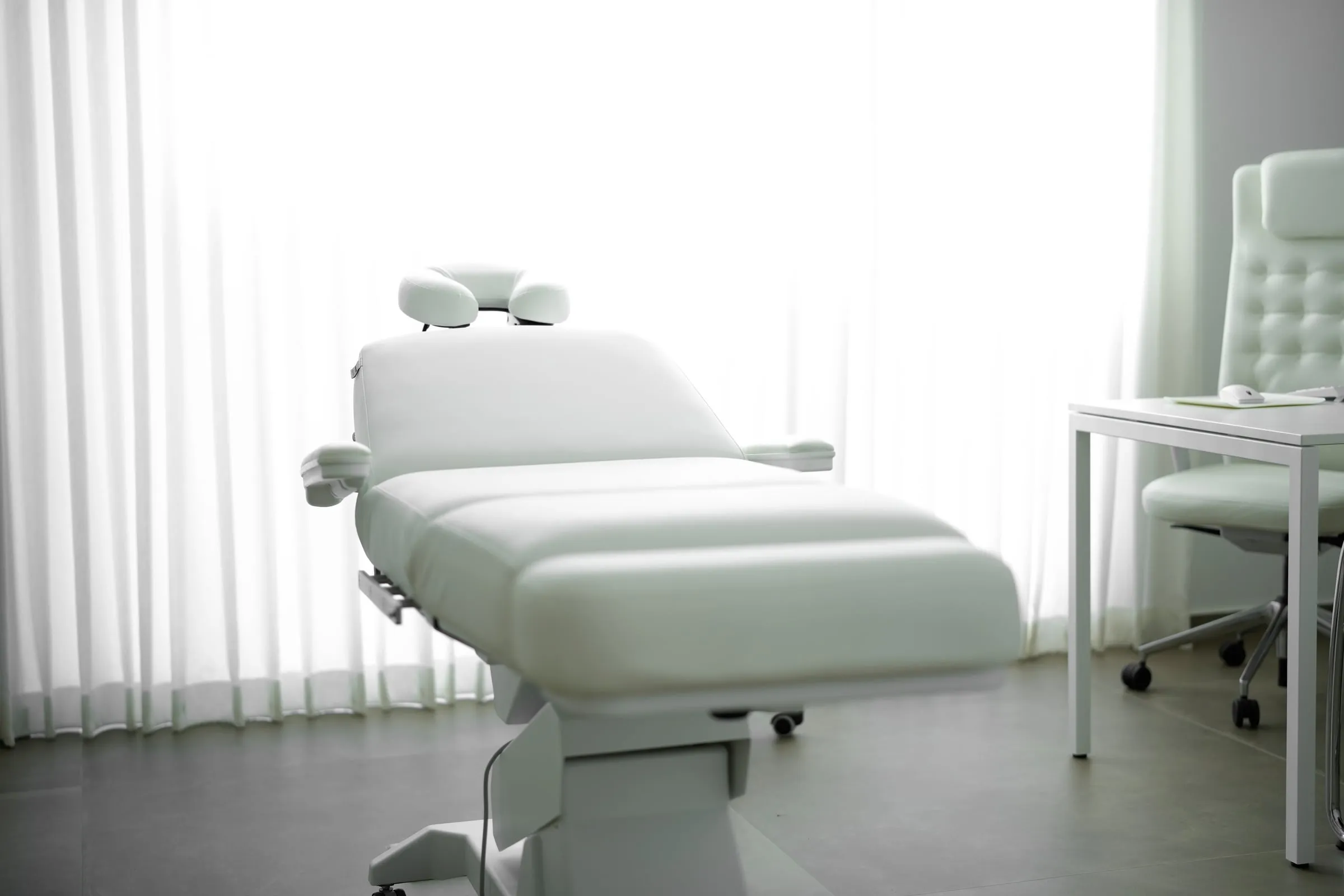
A testicular prosthesis can be considered after removal of a testicle due to a tumor, torsion, or injury, as well as when the testicle did not develop or has atrophied. The procedure replaces the volume and shape of the absent testicle, but it does not restore its function. Before the decision, it is important to talk about the size, the position, the firmness of the prosthesis to the touch, the possible complications, and the limits of the result.
Is this for me?
When a testicular prosthesis is implanted
A testicular prosthesis is an implant that replaces the volume of an absent testicle. The reasons for the absence can vary, and the appearance and degree of asymmetry depend on the anatomy of the scrotum, the position and size of the existing testicle, and previous procedures.
After removal of a testicle
A testicle may be removed because of a tumor, a torsion in which the tissue could not be preserved, or a severe injury. After such an operation, a prosthesis can be considered to replace the volume and reduce the visible asymmetry of the scrotum.
The prosthesis can be implanted at the same time as testicle removal or as a separate procedure once the previous operation has fully healed. The appropriate moment is determined by the underlying disease, the condition of the tissue, and the treatment plan.
When the testicle did not develop or lagged in growth
In some patients the testicle did not develop — professionally called agenesis — or it was undescended and atrophied over time. At a younger age, the decision about implantation includes assessing growth, the available implant sizes, and the possibility that the prosthesis will later need to be replaced.
In published pediatric series, a higher complication rate was recorded when more than a year had passed between testicle removal and prosthesis implantation. That finding is weighed together with age, growth, the condition of the tissue, and the possibility of a later implant replacement.
Honest up front
What a prosthesis is — and what it is not
Understanding the possibilities and limitations of a prosthesis matters before making the decision.
The prosthesis replaces volume and reduces asymmetry. The size is set according to the anatomical findings and the existing testicle, aiming for the most harmonious appearance possible. Complete equality in size, position, and feel is not possible.
The prosthesis does not restore the testicle’s function. It does not produce sperm or testosterone and does not, by itself, improve fertility. One healthy testicle can as a rule maintain hormonal and reproductive function, but that is assessed, if needed, through a separate urological workup.
The prosthesis is firmer to the touch than a real testicle. In patient surveys conducted in several countries, consistency is the most common complaint, cited by between 44 and 70 percent of men, depending on the study (review in Asian J Androl 2020). In addition, between 20 and 39 percent feel the prosthesis sits somewhat higher in the scrotum than they would like. In the research, both of these points are directly linked to later regret about the decision.
These data do not mean the procedure is unsuitable; they show why expectations need to be aligned with the actual properties of the implant.
Little known
When the possibility of a prosthesis is discussed
In an international survey of nearly four hundred urologists, 53 percent of respondents said they always offer a prosthesis to a patient whose testicle is being removed. In a patient survey conducted in the United States, roughly half of the men said their physician had mentioned the option to them. The conversation about a prosthesis can be affected by the urgency of the underlying treatment, the assessed risk of infection, the condition of the tissue, and other circumstances related to the operation.
In one study, 31 percent of men rated the conversation before implantation as too short, and a further 8.5 percent as insufficient. These results show the importance of a detailed conversation about the firmness of the prosthesis, its size and position, the possible complications, and the limits of the expected result.
How we work
What testicular prosthesis implantation looks like
Before the procedure, preoperative tests are carried out, and their scope depends on your health and the type of anesthesia. The existing testicle, the space in the scrotum, and the condition of the skin are assessed in order to choose the appropriate implant size and plan the surgical approach.
The type of anesthesia is set according to the findings and the agreement with the surgeon. Through the surgical approach, the space for the implant is prepared, the prosthesis is placed in the planned position, and the wound is closed with resorbable sutures that do not need to be removed.
The position of the incision can affect the risk of complications. In the professional literature, an approach outside the scrotal skin, closer to the groin, is associated with a lower risk of prosthesis extrusion than an incision through the scrotal skin — among other reasons because the wound is farther from the implant. The specific surgical approach is chosen by the surgeon according to the anatomical findings, the condition of the tissue, and the chosen technique.
- When it is performed
- can be performed at the same time as testicle removal or as a separate procedure later
- Anesthesia
- the type is set according to the findings and the agreement with the surgeon; it is included in the price
- Recovery
- a few days of rest from walking and standing
- Performed by
- Duško Maletić, MD, MSc, specialist in surgery and urology
Why us
Why choose us for testicular prosthesis implantation
Surgeon and urologist in one person
Duško Maletić, MD, MSc, is a specialist in surgery and urology, and prosthesis implantation is a urological procedure
A family polyclinic since 1998
we have practiced aesthetic and general surgery for more than 27 years, under the same family
A prosthesis is a personal choice
implantation is not a medical obligation, and the decision can be made after a conversation about the possibilities, limitations, and timing of the procedure
Size according to the anatomical findings
the size of the prosthesis is set according to the existing testicle and the available space in the scrotum
An anesthesiologist in-house
Ines Maletić, co-founder and anesthesiologist, follows the procedures from preparation to waking
Anesthesia included in the price
the type of anesthesia is agreed with the surgeon, and the price does not change because of it
Confidentiality of medical data
the consultation and your records are handled in accordance with the rules of physician–patient confidentiality and personal data protection
Zagreb and Daruvar
the same team is with you from the consultation to the last follow-up
From the research
Results and experiences described in the research
In several studies, patients were surveyed a few years after implantation. The results differ between studies, but they show, at the same time, high overall acceptance of the procedure and frequent specific complaints about the firmness, size, or position of the prosthesis.
- The overall outcome was rated good or excellent by 73 to 85 percent of men, depending on the study (Yossepowitch et al., J Urol 2011).
- 86 to 88 percent of them would choose a prosthesis again.
- The prosthesis is too firm for 44 to 70 percent of respondents, depending on the study.
- Its position in the scrotum is too high for 20 to 39 percent of them.
- Roughly a quarter consider the prosthesis too small.
- Around 15 percent say it bothers them somewhat during physical activity or intercourse.
- In a separate study, no association was found between the prosthesis and erectile dysfunction or premature ejaculation.
The data show that overall satisfaction with the decision can be high even when the patient at the same time reports a specific complaint about the firmness, size, or position of the prosthesis. The overall rating of the procedure and the rating of an individual property of the implant are therefore not the same measure.
The position of the prosthesis and the appearance of the scrotum are assessed after the initial swelling and sensitivity subside. The professional literature links prosthesis implantation with a better body image in some men after the loss of a testicle, but that psychological effect is not the same in everyone and cannot be guaranteed in advance. A prosthesis changes the shape and what can be felt, but it does not change the experience of the illness, the injury, or the previous operation.
A realistic assessment
When the procedure should be postponed or further considered
Implanting a prosthesis is a personal choice, not a medical obligation.
If a patient expects the prosthesis to behave, in firmness and feel, entirely like a natural testicle, the limitations of the implant need to be clarified further before the decision is made. The procedure replaces volume and shape, but it cannot remove all the emotional consequences of the illness, the injury, or the loss of the testicle. If the main source of distress is tied to that experience, the prosthesis alone may not bring the expected change.
The procedure is postponed when the scrotal skin is inflamed, injured, or considerably thinned after previous operations, because in such conditions the risk of infection and prosthesis extrusion rises. Implantation is reconsidered once the condition has settled and the quality of the tissue has been assessed.
If you are not sure, you do not have to decide right away. In adults, delayed implantation is often possible, but the appropriate timing depends on the condition of the tissue, previous operations, age, and other health circumstances.
Open about the risks
Possible risks and complications
Testicular prosthesis implantation is a surgical procedure that places an implant in the body, so it also includes the risks associated with foreign material. In published series, complications directly related to the prosthesis occur in approximately 10 to 15 percent of patients, and the most commonly cited are:
- infection of the prosthesis pocket
- extrusion of the prosthesis through the wound, which most often follows an infection
- a collection of blood under the skin
- displacement of the prosthesis or a position higher than planned
- more rarely, longer-lasting discomfort in the area
If infection or extrusion occurs, the prosthesis usually has to be removed. The possibility of reimplantation is assessed after the infection has been treated and the tissue has completely healed.
Symmetry between the prosthesis and your own testicle will never be complete — just as no two natural testicles are identical.
Recovery
Recovery, step by step
- The first day — after recovering from the anesthesia, rest is recommended. Sensitivity, swelling, and bruising are possible.
- The first few days — a break from longer walking and standing is recommended. Supportive cotton underwear can reduce movement and discomfort.
- The first weeks — the wound is cared for and dressed according to the instructions received, and the resorbable sutures gradually break down. Sport, lifting, and cycling are postponed until the physician’s approval.
- After the initial healing — at the follow-up, the wound, the position of the prosthesis, and the course of recovery are assessed.
Who we are
Who will be taking care of you
Testicular prosthesis implantation at Polyclinic Maletić is performed by Duško Maletić, MD, MSc, a specialist in surgery since 1984 and in urology since 1988, and co-founder of the Polyclinic. The urological assessment is an important part of planning the procedure, because it covers the condition of the scrotum, the existing testicle, and previous operations. When the procedure requires anesthesiological monitoring, that part is led by Ines Maletić, anesthesiologist and co-founder, who follows the patient from preparation to waking.
The Polyclinic was founded in 1998 in Daruvar and is run by the Maletić family. During preparation, the procedure, and recovery, the patient is followed by the Polyclinic’s medical team.
The consultation and your medical records are confidential and handled in accordance with the rules of physician–patient confidentiality and personal data protection. The examination and consultation serve to assess the possibilities of the procedure and do not commit the patient to an operation.
Meet the whole team
Price
The price of testicular prosthesis implantation
Anesthesia is included in the price, and its type is set according to the findings, your health, and the agreement with the surgeon.
A complete overview of the prices of all procedures is in our price list. If you would like to talk about whether a prosthesis is the answer for you, reach us through the contact page or by phone, in Zagreb or Daruvar.
Related procedures in the same area: circumcision and penis enlargement. You can browse all the procedures of this pillar on the aesthetic surgery page.
Patient reviews
What our patients say
Reviews taken from our Google Business profiles, Zagreb and Daruvar, translated from Croatian.
★★★★★
“The best team of physicians, extremely professional and kind. I have been loyal to Polyclinic Maletić for more than 10 years and I am always satisfied with the results. Thank you.”
★★★★★
“I came to Dr. Maletić with a big problem and a lot of stress. I was met with such warm empathy and kindness, and patience in answering all of my questions. Thank you, Dr. Maletić, for your advice and sincere support. I know I can always turn to her for advice, and that means a lot to me. The staff of the Zagreb polyclinic are also very accommodating and kind. My thanks to them as well.”
★★★★★
“I can only recommend Dr. Maletić’s practice, both in Daruvar and in Zagreb — and I have had several procedures — because I felt very comfortable there and in expert hands!”
★★★★★
“I come from the United Kingdom and I had an extremely positive experience here. From the moment I arrived I felt welcome and cared for, the team is incredible, and the doctor is outstanding! They offer a large number of treatments, and mine went perfectly and without any problems. If I need another treatment in the future, I would definitely choose them again. I absolutely recommend them!”
★★★★★
“My experience at Polyclinic Maletić in Daruvar was extremely positive. From the very beginning I was delighted by the professionalism and kindness of the entire staff. The physicians took the time to inform me about all the procedures in detail, which gave me a sense of safety and trust. The whole team was exceptionally professional and attentive, and the result exceeded all my expectations. I would certainly recommend Polyclinic Maletić to anyone looking for quality, personalized healthcare.”
★★★★★
“Greetings from Makarska! I have no words that would not, of course, be in superlatives for all of you. From the welcome itself, and my fear before the operation, all the nurses guided me so nicely through everything I had to go through before the procedure — and I must point out, with a huge smile on their faces. Since I had not slept for a few days beforehand from excitement and some inner restlessness, it is incredible how much humor all the nurses, and the doctor herself, used to draw my thoughts elsewhere just so I would not stay focused on the operation. A big thank you to everyone, and I was especially touched by the nurse who kept my spirits up during the procedure and with her humor nearly moved me to tears. I send my regards to the whole team and the doctor of Polyclinic Maletić in Daruvar. All the best to everyone!”
★★★★★
“Polyclinic Maletić deserves all the praise! The team is exceptionally professional, expert, and kind. The whole procedure was explained to me in detail, and the result is excellent. The atmosphere at the polyclinic is pleasant, and the approach to patients warm and approachable. I recommend them to anyone looking for a top-level service.”
★★★★★
“An exceptionally professional, pleasant, and expert team who know and love their work. It is a good feeling to be in the hands of some of the greatest experts in their field, who provide the kind of service I would wish for and recommend to anyone.”
Questions and answers
Frequently asked questions
Does the prosthesis feel like a real testicle?
Not entirely. The size and shape can be similar, but the prosthesis is usually firmer to the touch than a natural testicle. In patient studies, firmness is among the most commonly cited complaints. That is why it is important to understand before the procedure that a prosthesis replaces shape and volume, but cannot fully imitate natural tissue.
Can I have a prosthesis implanted years after the operation?
A prosthesis can be implanted at the same time as testicle removal or as a separate procedure later, including several years after the first operation, if the local findings allow it. In boys, the timing requires a separate assessment, because in published series a higher complication rate was recorded when more than a year had passed between testicle removal and implantation.
Does the prosthesis restore fertility or hormone production?
No. The prosthesis replaces the appearance and volume of the absent testicle, but it does not produce sperm or testosterone. If there is one healthy testicle, it can as a rule maintain hormonal and reproductive function, but that is assessed through a urological workup independently of the prosthesis.
How is the size of the prosthesis chosen?
The size is set according to the existing testicle, the available space in the scrotum, and the available implant sizes, with additional measurement if needed. The goal is the most harmonious possible relationship between the two sides, but complete symmetry is not possible. In studies, about a quarter of men said their prosthesis seemed too small, so the expected size should be discussed before the procedure.
Can the body reject the prosthesis?
This is not rejection in the immunological sense. More serious complications include infection and extrusion of the prosthesis through the wound. In published series, prosthesis-related complications occur in approximately 10 to 15 percent of patients, and the literature links the position of the incision with differences in risk. If the prosthesis has to be removed, the possibility of reimplantation is assessed once the infection and the tissue have fully settled.
Does the prosthesis interfere with sport or intercourse?
In a study conducted several years after the procedure, about 15 percent of men said the prosthesis bothered them somewhat during physical activity or intercourse. In a separate study, no association was found between prosthesis implantation and erectile dysfunction or premature ejaculation.
Does a visible scar remain?
Every surgical incision leaves a scar, and how noticeable it is depends on the position of the incision, the way it heals, and an individual tendency to scarring. The wound is closed with resorbable sutures that do not need to be removed. The position of the incision is chosen by the surgeon according to the anatomical findings, the chosen technique, and the risk assessment.